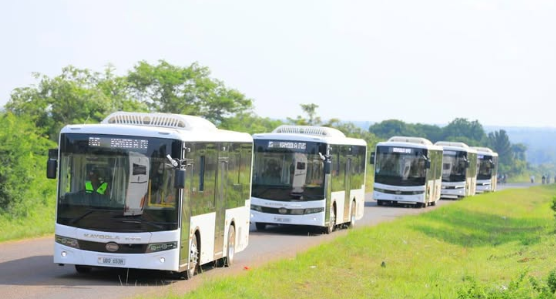
Uganda is making one of the most ambitious e-mobility declarations on the African continent. While many nations are still debating timelines and pilot programmes, Uganda has set a clear, bold target: a fossil-fuel-free public transport system by 2030. This is not just a climate commitment — it is a full-scale national strategy with billions of dollars behind it.
Here is what you need to know about what Uganda is planning, what it means for the country, and why the rest of Africa should be paying close attention.
More Than Just Going Electric
It would be easy to read Uganda’s e-mobility target as simply swapping petrol buses for electric ones. But that framing undersells the ambition of what is actually being proposed.
Uganda’s strategy is being described by observers as a national industrialisation agenda — one designed simultaneously to create jobs, strengthen local manufacturing, improve urban air quality, and position Uganda as a regional hub for electric vehicle production and trade.
In other words, Uganda is not just trying to clean up its transport sector. It is using the EV transition as the foundation for a broader economic transformation. That is a fundamentally different and more powerful approach than what most African nations have attempted so far.
The Key Numbers Behind the Plan
The scale of Uganda’s e-mobility programme becomes clear when you look at the figures attached to it:
- $1.7 billion committed to the public transport electrification programme
- Electrification of buses and boda-bodas (motorcycle taxis — the backbone of last-mile transport in Uganda)
- 500,000+ green jobs projected to be created through the transition
- 12.5% contribution to GDP estimated from the industrialisation effects of the programme
- 25% reduction in transport-related emissions targeted by 2040
- 3,500 public charging stations to be deployed by 2030
- 65% local manufacturing content targeted by 2030 — meaning the majority of components in Uganda-made EVs should be locally produced
That last figure is particularly striking. A 65% local manufacturing content target places Uganda firmly in the territory of industrial policy, not just transport policy.
Kiira Motors Corporation: Uganda’s EV Manufacturing Engine
Central to Uganda’s plan is Kiira Motors Corporation (KMC), the state-owned automotive manufacturer that has already made history as one of the few African companies to design and prototype electric vehicles locally.
KMC is positioned to be the engine of Uganda’s local EV manufacturing ambitions. Expanding its production capacity and deepening its supply chain relationships will be critical to hitting the 65% local content target. If Uganda succeeds in scaling KMC into a genuine regional manufacturer, it would be a landmark achievement — not just for Uganda, but for the narrative of African industrial capability more broadly.
Boda-Bodas: The Real Electrification Battleground
Uganda has an estimated 3.5 million registered boda-bodas — motorcycle taxis that serve as the primary mode of transport for millions of Ugandans every day. They are also significant contributors to urban air pollution and fuel import costs.
Electrifying the boda-boda sector is therefore not a side note to Uganda’s plan — it is arguably the most consequential part of it. Electric boda-bodas are already proving popular in neighbouring markets like Kenya and Rwanda, where companies are offering battery-swap services that eliminate the range anxiety associated with charging. If Uganda can replicate and scale that model, the impact on both emissions and disposable income for boda-boda operators would be substantial.
For Ugandan drivers and transport operators tracking developments in this space, automag.ug covers the latest automotive and e-mobility news, car reviews, and transport trends tailored specifically for the Ugandan market.
Infrastructure: 3,500 Charging Stations by 2030
One of the most common objections to EV adoption in developing markets is infrastructure. Uganda’s plan addresses this directly with a target of 3,500 public charging stations deployed by 2030 — an average of roughly 500 new stations per year from now.
That is an aggressive build-out, and it will require coordinated investment from both the public sector and private operators. Solar-powered charging will likely play a major role, given Uganda’s renewable energy potential and the need to keep running costs low for operators and end users.
For individuals already considering an EV purchase while the infrastructure builds out, EV24.africa offers import options for electric cars, providing access to a growing range of EV models suited to African road conditions and charging realities.
What This Means for Ugandan Car Buyers Today
Uganda’s 2030 ambitions exist on a national policy level, but they have direct implications for individual car buyers making decisions right now.
The direction of travel is clear: EVs will become more supported, more incentivised, and more practically viable in Uganda over the coming years. Buyers who adopt early will benefit from lower running costs and, potentially, favourable policy treatment as the government pushes adoption.
For those in the market for a vehicle today — whether electric or conventional — auto24.ug offers a reliable platform for buying second-hand cars in Uganda, with listings that reflect the current market and a growing selection of EV options becoming available.
For broader automotive coverage — including buying guides, road tests, and transport news relevant to Ugandan drivers — carkibanda.com is a trusted resource covering the Ugandan automotive landscape.
The Bigger African Picture
Uganda’s declaration matters beyond its own borders. Across Africa, transport emissions are rising as vehicle ownership increases and urban populations grow. The continent’s transport sector is overwhelmingly dependent on ageing, imported petrol and diesel vehicles — many of them end-of-life models no longer sold in their countries of origin.
Uganda’s approach — pairing an emissions target with a manufacturing strategy and a job creation agenda — offers a template that other African nations can learn from. The EV transition, done right, is not just about environmental outcomes. It is about economic sovereignty, industrial capacity, and long-term competitiveness.
As one observer put it: the race toward sustainable mobility in Africa is accelerating. Uganda just made a very strong statement.
Final Thoughts
Uganda’s fossil-fuel free transport target for 2030 is bold. Whether every element of the plan is delivered on schedule remains to be seen — large-scale government programmes rarely proceed without complications. But the direction, the ambition, and the integrated thinking behind the strategy are genuinely impressive.
What is perhaps most significant is the framing: Uganda is not positioning the EV transition as a sacrifice or a compliance exercise. It is positioning it as an opportunity — to industrialise, to create jobs, to clean its cities, and to lead.
That kind of vision, backed by a credible financial commitment and a local manufacturing agenda, is exactly what Africa’s e-mobility story needs more of.