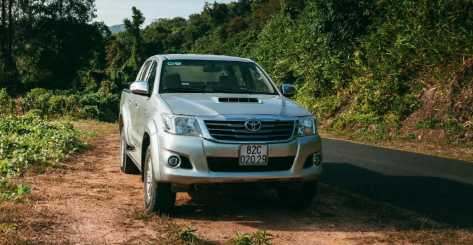
If you drive a Toyota Hilux in Kampala, you already know the score: potholes the size of craters, unpaved back roads in estates like Bweyogerere and Naalya, and surprise flood crossings during the rainy season. The Hilux has earned its legendary reputation as one of the toughest pickups ever made — but even the toughest truck needs regular care to stay fighting fit on Uganda’s demanding roads.
Whether you use your Hilux for daily commuting, business errands, or weekend getaways upcountry, proper maintenance is the difference between a reliable workhorse and a costly breakdown on the Kampala-Jinja Highway. In this guide, we break down the essential maintenance tips every Hilux owner in Kampala needs to know — practical, actionable, and tailored to our local conditions.
For more driving tips and automotive news relevant to Ugandan roads, automag.ug is a great resource to bookmark.
1. Prioritise Suspension and Shock Absorber Checks
Kampala’s road network — as much as it has improved — still serves up a generous helping of bumps, speed humps, and broken tarmac daily. The suspension system on your Hilux takes the biggest beating, and neglecting it leads to poor handling, uneven tyre wear, and in serious cases, loss of control.
What to do:
• Inspect shock absorbers every 20,000 km or roughly every six months. Listen for knocking sounds or a bouncy, uncontrolled ride — both are warning signs.
• Check leaf springs (on older Hilux models) and coil springs for cracks, sagging, or deformation.
• Inspect suspension bushings and ball joints for wear, especially if you frequently drive on unpaved roads in areas like Wakiso or Mukono districts.
• After a serious pothole impact, get the suspension geometry (alignment and balance) checked immediately.
Pro tip: Genuine Toyota suspension parts, though pricier upfront, outlast cheap alternatives significantly — especially under the stress of Kampala’s roads.
2. Change Your Engine Oil Regularly — and Use the Right Grade
Engine oil is your Hilux’s lifeblood. In Kampala’s stop-and-go traffic — think Wandegeya roundabout at 5pm or the Kampala Road gridlock — engines work much harder than they would on open highways. Heat builds up faster, and oil degrades more quickly than the manufacturer’s general schedule assumes.
Recommended practice:
• Change engine oil every 5,000 km if you’re doing mostly city driving, or every 7,500–10,000 km for mixed use (city and highway).
• Use the oil viscosity grade recommended in your Hilux owner’s manual. For Uganda’s warm climate, a 5W-30 or 10W-40 full synthetic or semi-synthetic oil typically works well.
• Always replace the oil filter at every oil change — a clogged filter defeats the purpose of fresh oil.
• Check oil levels monthly between services. A quick dipstick check takes two minutes and can prevent catastrophic engine damage.
3. Keep the Air Filter Clean — Kampala’s Dust is Relentless
Construction sites, unpaved side roads, and dry-season dust mean Kampala’s air is far from the cleanest. Your Hilux’s air filter works overtime to keep grit and debris out of the engine. A clogged air filter reduces engine performance, increases fuel consumption, and over time causes premature engine wear.
Maintenance tips:
• Inspect the air filter every 10,000 km, and replace it every 20,000–25,000 km — or sooner if you drive frequently on unpaved roads.
• If you regularly travel upcountry on murram roads (Mbarara Highway, Masaka Road, etc.), check the air filter every 5,000–8,000 km.
• Consider upgrading to a high-performance, washable air filter if you do a lot of off-road driving — it saves money over time and performs better in dusty conditions.
4. Check and Rotate Your Tyres Frequently
Tyres are your only contact with the road, and on Kampala’s varied surfaces — smooth tarmac, rocky back roads, flooded patches — the right tyres in good condition are non-negotiable for safety.
Tyre care essentials:
• Check tyre pressure monthly. Kampala’s heat can cause pressure to fluctuate. Under-inflated tyres wear out faster and handle poorly; over-inflated tyres reduce grip on rough surfaces.
• Rotate tyres every 10,000–12,000 km to ensure even wear across all four wheels.
• Inspect tyres regularly for cuts, bulges, or embedded nails — common hazards on construction-heavy Kampala routes like Entebbe Road.
• Replace tyres when tread depth reaches 1.6mm (the legal minimum). For off-road or upcountry driving, replacing at 3mm is safer.
• Consider all-terrain (AT) tyres if you frequently drive beyond Kampala — they handle both tarmac and murram roads well.
5. Inspect and Flush the Cooling System
Kampala sits at about 1,200 metres above sea level, which helps somewhat, but sustained traffic congestion means engines regularly run hot. A well-functioning cooling system prevents overheating, which is one of the most damaging — and avoidable — engine problems.
Cooling system maintenance:
• Check coolant levels monthly. Never open the radiator cap when the engine is hot.
• Flush and replace coolant every two years or per manufacturer specification. Old coolant loses its anti-corrosion properties and can damage radiator internals.
• Inspect radiator hoses for cracks, swelling, or leaks — Kampala’s heat ages rubber components faster than cooler climates.
• Clean the radiator fins periodically. Insects and debris can block airflow, reducing cooling efficiency.
• If your temperature gauge climbs abnormally in traffic, pull over safely and investigate before it becomes a full overheating incident.
6. Maintain the Brakes — Your Life Depends on It
Kampala’s unpredictable traffic — boda bodas weaving in from nowhere, minibuses stopping suddenly, pedestrians crossing mid-road — demands brakes that respond instantly. Brake maintenance is not optional.
Brake care guide:
• Inspect brake pads every 20,000 km. Replace when pad thickness drops below 3mm.
• Check brake discs (rotors) for scoring, warping, or excessive wear. Warped rotors cause vibration during braking — a clear warning sign.
• Bleed brake fluid every two years or if the fluid has darkened. Contaminated brake fluid reduces braking effectiveness and can cause brake fade in heavy traffic.
• If you tow heavy loads (common use of Hilux in Uganda), your brakes wear significantly faster — inspect more frequently.
7. Look After the Transmission and Drivetrain
One of the Hilux’s great strengths is its drivetrain, particularly for 4WD variants popular in Uganda. Whether navigating flood crossings during the rainy season or climbing steep terrain around Fort Portal or Kabale, the transmission and drivetrain take considerable stress.
Drivetrain maintenance tips:
• Change automatic or manual transmission fluid every 40,000–60,000 km, or as specified in your owner’s manual.
• If you have a 4WD Hilux, use the 4WD system periodically even when not strictly necessary — it prevents seals from drying out and mechanisms from seizing.
• Inspect the propeller shaft and universal joints (CV joints on some models) for wear, looseness, or vibration.
• Check differential oil levels — front, rear, and centre differentials where applicable.
8. Protect the Underbody Against Rust and Road Damage
Uganda’s dual challenges of dust and heavy rain create a perfect environment for underbody rust, especially if the Hilux is used for crossing streams or driving through waterlogged areas during the rainy seasons in April and November.
Underbody protection tips:
• Have the undercarriage inspected and cleaned regularly, especially after flood crossings or off-road driving.
• Apply underbody sealant or rust-proofing treatment annually — particularly important for Hilux trucks used upcountry.
• After heavy rain seasons, thoroughly inspect the underside for mud accumulation in crevices, which holds moisture and accelerates rust.
• Check exhaust system components for rust, loose mountings, or leaks — telltale signs include louder engine noise or unusual exhaust smells.
9. Don’t Neglect Electrical and Battery Health
Vehicle electrical systems are often overlooked until something stops working. In Kampala’s heat and humid conditions, battery life is shorter than in cooler climates, and electrical connections are prone to corrosion.
Electrical maintenance:
• Test the battery every 12 months. Most car batteries in Uganda last 2–3 years under our climate conditions.
• Clean battery terminals regularly to prevent corrosion buildup, which can cause starting problems.
• Check the alternator output — a faulty alternator drains the battery even with the engine running.
• Inspect all exterior lights (headlights, indicators, brake lights) and replace bulbs promptly. Kampala’s night-time roads are unpredictable, and working lights are a safety must.
10. Use Genuine Parts and a Trusted Mechanic
Finally, the quality of the parts you use and the mechanic who fits them matters enormously. Kampala has many auto spare parts shops — especially around Kiseka Market and Nakawa — but not all parts sold as “genuine” are authentic.
Best practices:
• Buy parts from authorised Toyota dealers or reputable suppliers. Counterfeit parts may cost less initially but fail prematurely, often causing secondary damage.
• Build a relationship with a certified mechanic who knows the Hilux’s quirks. A mechanic who has worked on your specific vehicle understands its history.
• Keep a maintenance logbook. Record every service, part replacement, and repair. This is invaluable for diagnosing recurring problems and maintaining resale value.
• Follow the service intervals in your Toyota Hilux owner’s manual as a baseline — then adjust for Kampala’s demanding conditions as described in this guide.
Looking to Buy or Upgrade Your Toyota Hilux in Uganda?
If you’re considering purchasing a Toyota Hilux — whether new to Uganda’s roads or upgrading from another vehicle — knowing where to find quality second-hand options is half the battle. To find reliable second-hand cars, including various Hilux models listed for sale in Uganda, check out auto24.ug, a trusted platform for buying used cars locally. With listings across Kampala and other regions, it makes the search for your next vehicle straightforward and transparent.
Auto24 regularly features popular models suited to Uganda’s terrain — from tough pickups like the Hilux to SUVs and sedans ideal for city use. It’s a handy starting point for any buyer doing their research.
For additional car buying guidance and in-depth automotive reviews written with the Ugandan driver in mind, carkibanda.com is another excellent resource. It covers everything from vehicle comparisons to driving tips on local roads.
Thinking Beyond Petrol? Electric Vehicles Are Arriving in Uganda
While the Toyota Hilux remains powered by petrol or diesel engines for now, the broader conversation around sustainable mobility is gaining real momentum in East Africa. For forward-thinking Ugandan drivers curious about electric vehicles, EV24.africa offers import options for electric cars, expanding choices for drivers ready to explore cleaner, lower-running-cost transportation. As Uganda’s road infrastructure continues to improve and charging infrastructure develops, EVs are increasingly worth considering as part of your future vehicle planning.
Final Thoughts
The Toyota Hilux is built to take punishment — but it’s not invincible. Kampala’s roads and Uganda’s varied driving terrain are genuinely demanding, and the difference between a Hilux that lasts 300,000 km and one that starts falling apart at 150,000 km often comes down to consistent, attentive maintenance.
Stay on top of your suspension, oil, tyres, brakes, and cooling system. Use quality parts. Find a mechanic you trust. And don’t wait for something to break before you take action — on Kampala’s roads, prevention is always cheaper than the cure.
For the latest automotive news, car reviews, and driving tips tailored to Uganda, visit automag.ug regularly — it’s one of the best local sources for staying informed as a Ugandan driver.