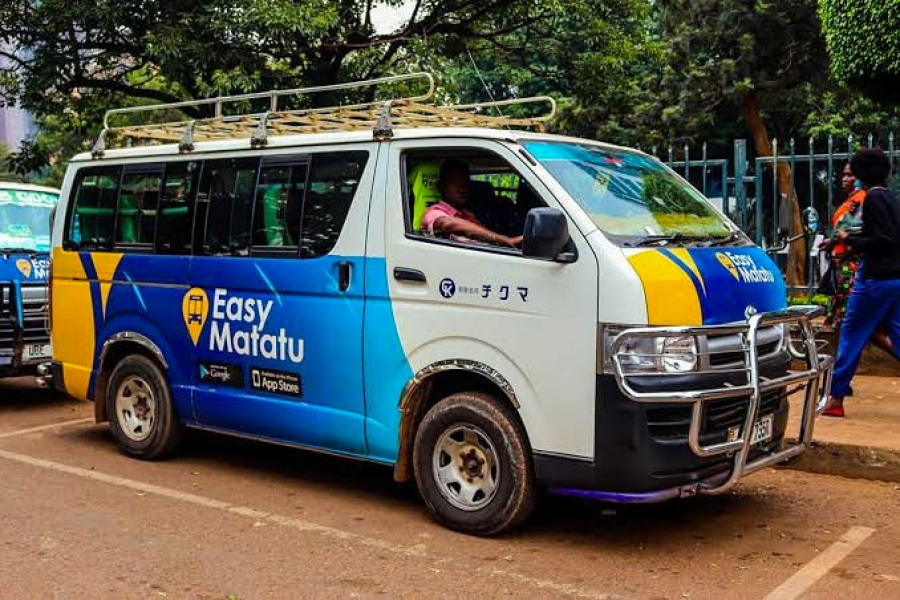
Owning a matatu in Uganda is one of the most straightforward paths into the transport business. With over 15,000 taxis operating in Kampala alone — and thousands more on routes connecting towns like Masaka, Mbarara, Gulu, Mbale, and Jinja — the demand for affordable public transport is as steady as ever. For entrepreneurs, salaried workers looking for a second income, or small fleet operators scaling up, a used matatu is a proven, revenue-generating asset.
But this market has its traps. Uganda’s second-hand minibus market is full of overpriced vehicles, tampered mileage, hidden mechanical problems, and documentation headaches that can turn your investment into a money pit before the first month is out. Sellers know the market; many buyers do not. That gap is where money gets lost.
This guide is designed to close that gap. From choosing the right model and understanding fair market prices, to inspecting a matatu like a professional and navigating all the paperwork — everything you need to buy a reliable used matatu in Uganda without overpaying is right here.
For the latest automotive news, buying guides, and vehicle tips tailored for Ugandan drivers and transport entrepreneurs, visit automag.ug — Uganda’s leading automotive resource.
Understanding Uganda’s Matatu Market Before You Buy
In Uganda, the term “matatu” broadly refers to the 14-seater minibus taxis that form the backbone of public urban and inter-town transport. These are almost universally Toyota Hiace models — specifically the standard and high-roof variants, locally nicknamed “Kigege” (standard) and “Drone” (high-roof). The dominance of the Toyota Hiace in Uganda’s matatu market is so complete that when most people say “matatu,” they mean a Hiace.
Other models do exist in the commercial passenger transport space — the Nissan Caravan, Toyota HiAce Commuter, and occasionally Isuzu vans — but the Toyota Hiace is the undisputed market standard for good reasons: spare parts are widely available and affordable across Uganda, mechanics who know the Hiace inside-out can be found in every town, and the vehicle’s reputation for durability under heavy use is unmatched.
Understanding this market context before you buy is important because:
- Prices are not fixed — they are negotiated, and sellers set asking prices based on what they think you know (or don’t know)
- Many used matatus have previously been in daily taxi service — meaning high mileage, worn components, and sometimes poor maintenance history
- Documentation gaps are common — particularly with older imports or vehicles that have changed hands multiple times
- The right Hiace model and year makes a significant difference in reliability and running costs
Let’s break down exactly how to navigate all of this.
Step 1: Choose the Right Toyota Hiace Model for Your Needs
Not all Toyota Hiace minibuses are equal. Before you start looking at listings, understand which variant fits your intended use.
Toyota Hiace Standard Roof (“Kigege”) — The Urban Workhorse
The standard roof Hiace is the most common matatu in Kampala’s taxi parks and on urban routes. It is lower-slung, fits 14 passengers, and is easier to manoeuvre in tight Kampala traffic. It is also generally cheaper to buy and runs on the same well-understood engine options as the high-roof version.
Best for: Urban and peri-urban routes in Kampala and district towns where frequent stops, tight streets, and lower fares-per-trip demand a lower operating cost.
Toyota Hiace High Roof (“Drone”) — The Long-Distance Hauler
The Drone variant is taller, roomier, and generally more comfortable for passengers. It is the preferred choice for upcountry routes — Kampala to Masaka, Kampala to Mbarara, Kampala to Mbale — where passengers are seated for longer periods and luggage capacity matters. The high roof Drone also commands slightly higher fares per passenger, giving operators a better revenue-per-trip figure on long routes.
Best for: Inter-district routes and upcountry services where comfort and luggage capacity add fare premium.
Engine Options to Know
The Toyota Hiace in Uganda’s used market is typically powered by one of two diesel engines:
- 2KD-FTV (2.5-litre turbodiesel) — found in earlier models, reliable but showing its age in high-mileage units
- 1KD-FTV (3.0-litre turbodiesel) — the preferred engine for commercial operators; more torque, better suited to fully loaded runs, and still widely available in the used market
Always prioritise a 1KD diesel over petrol variants if your matatu will be in daily commercial service. Diesel is more fuel-efficient under load, has better torque at low speeds, and the 1KD engine is extremely well-supported by mechanics and parts suppliers across Uganda.
Step 2: Know the Market Prices — So No One Can Fool You
One of the most powerful things you can do before entering any negotiation is know what a matatu is actually worth. Sellers will always start high; your job is to anchor the conversation with real market data.
As of 2025, here are the approximate price ranges for used Toyota Hiace matatus in Uganda:
| Model & Year | Approximate Price (UGX) |
| Toyota Hiace Kigege (2000–2005) | 18–30 million |
| Toyota Hiace Kigege (2006–2012) | 28–45 million |
| Toyota Hiace Drone (2005–2010) | 30–50 million |
| Toyota Hiace Drone (2011–2015) | 45–75 million |
| Toyota Hiace Drone (2016–2020) | 70–100 million |
Prices vary significantly based on mileage, service history, overall condition, and how urgently the seller needs to offload the vehicle. A seller with a cash flow problem and a perfectly fine 2012 Drone may accept UGX 45 million; another seller with the same vehicle and no urgency may hold firm at UGX 60 million.
Pro Tip: Browse current listings on auto24.ug before you meet any seller. Auto24 Uganda lists a range of commercial vehicles and passenger vans, allowing you to compare prices for different models, years, and conditions in real time. Looking at what similar vehicles are actually listed for — not what sellers say they are worth — gives you powerful price intelligence before you walk into any negotiation.
You can also browse carkibanda.com, which features used vehicle listings, car reviews, and buying guides tailored to the Ugandan market. Knowing the numbers before you talk puts you firmly in the driver’s seat.
Step 3: Where to Find a Matatu for Sale in Uganda
Once you know your budget and your preferred model, it is time to find the right vehicle. Here are the main channels, with their respective advantages and risks.
Car Bond Yards in Kampala
Uganda’s car bond yards — concentrated in Kireka, Ntinda, Katwe, and along the Kampala-Entebbe road — carry large stocks of used minibuses and commercial vans. You can physically inspect vehicles, compare multiple units in one place, and negotiate on the spot. The downside is that bond yard sellers are experienced negotiators and prices often start significantly above fair market value. Always walk into a bond yard knowing your numbers.
Private Sellers and Operators
Buying directly from a taxi operator who is selling their own vehicle can sometimes yield the best value — especially if the vehicle has been personally maintained and the seller is in a hurry. Ask for service records, find out how long they ran the vehicle and on what route, and check for outstanding traffic fines. Be cautious of vehicles sold by third parties who are selling on behalf of someone else — “my boss is travelling” situations can complicate documentation and legitimacy.
Online Platforms
auto24.ug is one of Uganda’s most trusted digital platforms for used vehicle sales, including commercial vans and passenger minibuses. It provides verified listings with photos, asking prices, and seller contact details. Online platforms are particularly useful for comparing prices across many sellers before committing to visit any specific vehicle.
Fellow Operators and SACCO Networks
Uganda’s taxi and transport SACCOs (savings and credit cooperatives) are a valuable but often overlooked source of good vehicles. When a SACCO member upgrades or exits the business, they frequently sell to fellow members first — and at more honest prices, since both parties are known within the same network. If you are joining the matatu business, consider connecting with a transport SACCO before you start shopping.
Step 4: Inspect the Vehicle Like a Professional
This is the most important step in the entire process. A matatu that looks clean and starts well can still have serious hidden problems that will cost you far more than you saved on the purchase price.
Never skip a professional inspection. If you are not mechanically knowledgeable, hire a trusted independent mechanic — not one suggested by the seller — to accompany you. Here is what to check, systematically:
Engine Inspection
Start the engine from cold and listen carefully. A healthy Hiace diesel should start immediately and settle into a smooth idle within 30 seconds without excessive smoke. Watch the exhaust:
- White smoke on startup that clears quickly: usually normal condensation
- Blue or grey smoke that persists: indicates oil burning — worn piston rings or valve stem seals
- Black smoke under load: could indicate a clogged air filter, injector problems, or a failing turbocharger
- No smoke but rough idle: potential injector or fuel system issues
Check for oil leaks around the engine bay. Look at the engine oil on the dipstick — clean, amber oil is healthy; black, thick oil or oil with white froth (which indicates coolant mixing) are serious warning signs.
Mileage Verification
High mileage is not automatically a deal-breaker — a well-maintained Hiace with 350,000 km is often better than a poorly maintained one with 150,000 km. What matters is whether the mileage reading is honest.
Check the dashboard odometer and compare it to the wear on the vehicle: seat fabric, pedal rubbers, steering wheel grip, and dashboard plastic. A vehicle claiming 100,000 km but showing heavy wear on these surfaces has likely had its odometer tampered with — a common practice in Uganda’s used matatu market.
If the seller has an auction sheet from Japan, the mileage at export should be verifiable. Ask for it.
Chassis and Body Integrity
Walk around the entire vehicle and look for:
- Panel misalignment: gaps between doors, bonnet, or sliding door that are uneven indicate accident damage and possible frame repairs
- Paint inconsistencies: different paint sheen or texture on panels indicates respraying after accident repair or rust treatment
- Rust: check the undercarriage, wheel arches, sill panels, and floor inside the cabin — especially near the driver’s footwell where water ingress often begins
- Sliding door function: the Hiace sliding door is a high-use component in a matatu. It should slide smoothly without grinding, dropping, or requiring force. A stiff or misaligned sliding door is both a safety issue and a clue to structural damage or neglect.
Car Care Tip: After purchase, lubricate the sliding door rail with silicone spray every three months and inspect the door rollers for wear. A sliding door that derails mid-route is a common breakdown that disrupts service and frustrates passengers.
Brakes and Suspension
With a mechanic, test the brakes during a drive — they should respond immediately with no grinding, squealing, or pulling to one side. Spongy brake pedal feel indicates air in the brake lines or worn master cylinder.
Check the front suspension by pushing down firmly on each front corner. The vehicle should rebound once without continuing to bounce. Drive over a speed bump at slow speed and listen for any clunking, rattling, or creaking — these indicate worn ball joints, tie rod ends, or shock absorbers.
For a matatu that carries up to 14 passengers daily, worn suspension is both a safety risk and a guarantee of expensive breakdowns.
Transmission and Gearbox
A Hiace used as a daily matatu places enormous stress on the gearbox and clutch. During a test drive:
- Engage all gears (1 through 5) and confirm clean shifts with no grinding
- Drive up a slight incline in second gear and release the accelerator — the engine should slow the vehicle without the transmission jumping out of gear
- Check for clutch slip by accelerating hard in third gear — the engine RPM should rise in sync with vehicle speed, not race ahead of it
A clutch replacement on a Hiace costs between UGX 300,000 and UGX 600,000, depending on parts quality. A gearbox rebuild is significantly more expensive. Factor these into your offer if wear is evident.
Interior Condition and Passenger Safety
For a commercial passenger vehicle, the interior needs to function safely and decently for paying passengers. Check:
- Seat condition: torn, broken, or missing seats need replacing and affect passenger comfort and safety
- Seatbelts: Uganda’s PSV regulations require functional seatbelts — check every position
- Roof lining: staining or sagging roof lining indicates a history of water leaks, which can damage electrical systems
- Ventilation: test the heater and fan — in Uganda’s variable climate, a functional ventilation system matters on mountain routes
Step 5: Check the Documentation Thoroughly
In Uganda, paperwork problems are one of the most common ways buyers get burned on used matatu purchases. A vehicle with mechanical issues can be fixed; a vehicle with bad documentation can trap you in legal and regulatory problems that are far more expensive to resolve.
The Logbook (Vehicle Registration)
The logbook is the primary proof of vehicle ownership in Uganda. Before any money changes hands:
- Verify the logbook is original and not a photocopy
- Confirm the chassis number and engine number on the logbook match those physically stamped on the vehicle — check the engine block and the VIN plate on the dashboard
- Verify the registered owner’s name matches the identity of the person selling to you
- Check the logbook for any recorded liens or encumbrances — some vehicles are still under bank financing from a previous owner
You can verify logbook details through the Uganda Revenue Authority (URA) e-services portal. Do not skip this step.
PSV (Passenger Service Vehicle) Licence
For a matatu to legally operate in Uganda, it must hold a valid PSV licence issued through the Ministry of Works and Transport and registered with KCCA for Kampala routes. Confirm the vehicle has a valid PSV licence and that the route permit corresponds to the route you intend to operate.
If the vehicle’s PSV licence has lapsed or was never issued, you will need to go through the registration process from scratch — which takes time and money. Factor this into your purchase decision.
Route Chart
The route chart assigns a specific route to a specific vehicle and is issued by the Ministry of Works and Transport. Buyers of existing operational matatus should confirm the route chart is current and transferable. Route charts are linked to the vehicle, not the owner, so this document comes with the vehicle upon legal transfer.
Fitness Certificate
All PSVs in Uganda are required to hold a valid fitness certificate, issued after a government inspection confirming the vehicle meets roadworthiness standards. A matatu without a valid fitness certificate cannot operate legally and will be stopped at checkpoints. Ask for the certificate and verify its authenticity.
Traffic Fine Status
Before completing any purchase, check whether the vehicle has outstanding traffic fines or unpaid parking tickets. You can do this using the Uganda Police Force mobile app (UPF Mobi). Inherited fines become your problem after transfer, and some busy route matatus accumulate fines running into millions of shillings.
Step 6: Negotiate Confidently and Protect Yourself at the Closing
Armed with your inspection results, your knowledge of market prices, and a clear picture of the vehicle’s documentation status, you are now ready to negotiate.
Use Findings to Anchor Your Price
Every problem you discover during inspection is a legitimate basis to reduce the asking price. Create a mental (or written) list of:
- Any mechanical repairs needed (clutch, brakes, suspension, tyres)
- The cost to address cosmetic issues (seats, interior, bodywork)
- Documentation gaps that will require time or money to resolve
- Outstanding traffic fines to clear
Present these to the seller calmly and professionally. You are not trying to insult them — you are explaining why the asking price needs to reflect the vehicle’s actual condition.
Get a Written Sale Agreement
Once the price is agreed, document everything in a written sale agreement. This should include:
- Full names, NINs, and contacts of both buyer and seller
- Vehicle make, model, year, registration number, chassis number, and engine number
- Agreed purchase price and payment method
- Date of transaction
- Any conditions (e.g., seller will clear outstanding fines before transfer)
- Both parties’ signatures
Keep an original copy.
Transfer Ownership Through URA
Never operate a matatu that is still registered under the previous owner’s name. Complete the ownership transfer through the URA e-portal immediately. The process typically takes two to five working days and protects you from liability for any incidents, fines, or claims after you take ownership.
Step 7: Immediate Maintenance After Purchase
Even a well-inspected, well-priced matatu will benefit from a thorough service before it enters daily commercial operation. Before running your first passenger, do the following:
- Full engine service: change oil and filter, air filter, and fuel filter
- Check and bleed the brake system: replace any soft or spongy lines and top up with fresh fluid
- Inspect and replace tyres if tread depth is below 2mm on any wheel
- Check and tighten all wheel nuts — a serious safety check after a vehicle has changed hands
- Replace wiper blades if worn — relevant for safety during Uganda’s rain seasons
- Service the cooling system: check hoses, flush and replace coolant if it is more than two years old
Car Care Tip: For a matatu in daily operation, set a strict 5,000 km service interval for oil changes — commercial vehicles under heavy load accumulate engine wear faster than private cars. Keep a logbook for every service and repair. This documentation will protect you and add to the resale value if you ever sell.
What About Alternative Commercial Vehicles?
If the Toyota Hiace market is too competitive or prices are beyond your current budget, it is worth knowing your alternatives.
The Nissan Caravan is a close substitute with similar seating capacity and good parts availability in Uganda. The Toyota HiAce Commuter is a higher-end, more modern variant increasingly popular for school transport, corporate shuttles, and premium route services.
For those considering the longer-term evolution of Uganda’s transport sector, the global transition towards electric commercial vehicles is worth watching. EV24.africa is already facilitating electric vehicle imports into Uganda and East Africa more broadly — and as electric minibus technology matures, this could become a genuinely viable and operating-cost-competitive option for forward-thinking transport entrepreneurs in Uganda.
Quick Buyer’s Checklist: Used Matatu in Uganda
Use this checklist before completing any matatu purchase:
- Decided on model (Kigege vs. Drone) and engine (prefer 1KD diesel)
- Researched current market prices on auto24.ug
- Located vehicle through reputable channel (bond yard, online listing, or known seller)
- Hired independent mechanic for full inspection
- Engine checked (no smoke, no leaks, clean oil)
- Mileage verified against physical wear indicators
- Brakes and suspension tested during drive
- Gearbox and clutch assessed
- Chassis and body inspected for rust, accident damage, and panel alignment
- Sliding door checked for smooth, safe operation
- Logbook verified (original, chassis/engine numbers match, no liens)
- PSV licence confirmed current and valid
- Route chart confirmed and transferable
- Fitness certificate present and valid
- Traffic fines checked via UPF Mobi app
- Written sale agreement prepared and signed
- Ownership transfer initiated through URA
- Full service completed before entering daily operation
Frequently Asked Questions
How much does a good used matatu cost in Uganda in 2025? A reliable 2010–2015 Toyota Hiace Drone in fair-to-good condition typically runs between UGX 45–70 million. Older models cost less but carry higher maintenance risk. Always benchmark against current listings on auto24.ug before negotiating.
Is it better to buy a matatu that was previously in taxi service or a private one? A vehicle previously in private use (tours, school run, corporate transport) is generally preferable — it has been driven less hard and often maintained more carefully. Taxis in daily urban service accumulate enormous mileage quickly. That said, a well-maintained taxi with documented service history can still be a better buy than a poorly maintained private vehicle. Let the inspection, not the story, guide you.
What documents should transfer with the matatu when I buy it? You need the original logbook, valid PSV licence, current route chart, valid fitness certificate, import documents (if available), and service/maintenance records. The logbook transfer must be completed through URA after purchase.
Can I negotiate the price of a used matatu in Uganda? Absolutely — negotiation is expected and normal. Use the results of your mechanical inspection and any documentation gaps as leverage. Having solid price benchmarks from auto24.ug also gives you a credible anchor for the conversation.
What is the most reliable matatu model for Uganda? The Toyota Hiace 1KD diesel (3.0-litre) is the industry standard. Its combination of durability, parts availability, driver familiarity, and resale value makes it the most reliable commercial passenger vehicle in Uganda’s market.
Final Thoughts: Knowledge Is Your Best Protection
Uganda’s used matatu market rewards prepared buyers. Sellers set prices based on what they think you know, so the more you know, the better you will do. Understand the market, inspect thoroughly, verify every document, and do not rush the process just because a seller creates urgency.
A well-chosen matatu is a genuine business asset that can generate consistent daily income for years. A poorly chosen one becomes a source of constant mechanical bills, regulatory headaches, and sleepless nights. The difference is almost always in how carefully the purchase was made.
For more transport business guides, vehicle reviews, and practical automotive advice for Ugandan drivers and entrepreneurs, keep reading at automag.ug and carkibanda.com.
This article is brought to you in partnership with Auto24.ug, Uganda’s trusted platform for quality second-hand vehicles.