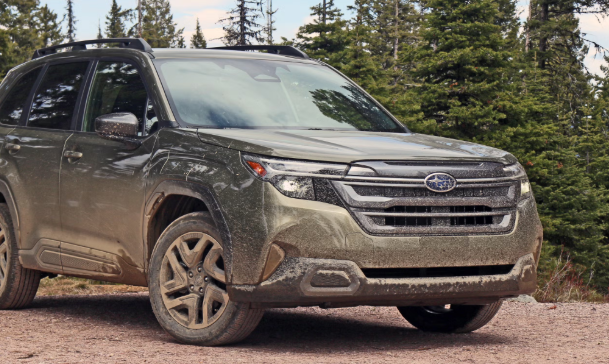
If you drive regularly between Kampala and Jinja, you already know what the road has in store for you. The Jinja Highway — officially one of Uganda’s busiest and most important arterial roads — is a mixed experience at the best of times. Stretches of smooth tarmac give way without warning to crater-sized potholes, patched sections that were never quite level, narrow bridges with speed humps that seem designed for horses rather than modern vehicles, and kamikaze boda bodas materialising from every junction.
In this environment, your choice of vehicle matters enormously. And for thousands of Ugandan drivers who make this journey daily — commuters, business owners, families heading to Jinja town or further east — the Subaru Forester has quietly become one of the most trusted companions on this stretch of road.
This is an honest, Uganda-specific review of the Subaru Forester. We’ll look at how it performs on the Jinja Highway specifically, what makes it well-suited to Uganda’s roads, what its weaknesses are, and whether it’s the right car for you.
Quick Specs: What Is the Subaru Forester?
The Subaru Forester is a compact to mid-size SUV that has been in continuous production since 1997. It’s manufactured by Subaru, a Japanese automaker that has built a devoted global following thanks to its Symmetrical All-Wheel Drive (AWD) system and horizontally-opposed “Boxer” engines — two technologies that, as we’ll discuss, make the Forester particularly well-suited to Uganda’s road conditions.
The generations most commonly found in Uganda’s second-hand market are:
- SG (2002–2008) — boxy, durable, extremely popular in Uganda due to its simplicity and cheap parts
- SH (2008–2013) — cleaner styling, improved safety, very common on Uganda’s roads
- SJ (2013–2018) — more refined, better fuel economy, increasingly available
- SK (2018–present) — latest generation, less common but growing in availability
For most Ugandan buyers, the SG and SH generations represent the sweet spot: affordable enough to be accessible, durable enough to handle hard use, and common enough that spare parts and knowledgeable mechanics are easy to find.
The Jinja Highway: What You’re Really Dealing With
Before we assess the Forester, let’s be clear about the conditions it needs to handle.
The Kampala–Jinja Highway (approximately 81 km) is a high-traffic corridor used by everything from boda bodas and private cars to heavy container trucks serving the Jinja industrial belt and cargo destined for South Sudan, Rwanda, and DRC. This traffic mix, combined with the burden of heavy goods vehicles and inconsistent road maintenance, creates a challenging surface that exposes a vehicle’s weaknesses very quickly.
What the Jinja Highway throws at your car:
- Sudden, deep potholes — some up to 30 cm deep — particularly in the Mukono, Lugazi, and Njeru sections
- Corrugated tarmac in repaired sections where patching has created uneven ridges
- Slippery, muddy verges during the rainy season
- Sharp concrete speed humps at trading centres like Mukono, Lugazi, Jinja town approaches
- Dust and stone chips on construction detour sections
- Poor drainage causing standing water across the road after heavy rain
A vehicle that handles all of this without shaking itself apart, while keeping passengers comfortable and the driver in control, earns its place on this route. Let’s see how the Forester measures up.
Suspension: The Forester’s First Line of Defence
The single most important system for road quality absorption is suspension — and this is where the Subaru Forester earns its reputation on Ugandan roads.
The Forester uses a MacPherson strut front suspension and a double wishbone rear suspension setup. This combination is well-regarded for balancing ride comfort with handling stability. In practice, on the Jinja Highway, it means:
- Pothole absorption is genuinely impressive. The Forester doesn’t crash through potholes the way a vehicle with stiff, sport-tuned suspension would. The suspension travel — the distance the wheel can move up and down — is sufficient to absorb most of the road imperfections you encounter without transmitting a jarring impact into the cabin.
- Body roll is well-controlled. Swerving around a pothole (which you’ll do constantly on the Jinja Highway) causes the Forester’s body to lean, but not excessively. The car feels planted and predictable when you change direction quickly at speed.
- The ride height helps. The Forester has approximately 220 mm of ground clearance in standard form — enough to clear most of the debris, patches, and minor flooding you’ll encounter. It’s not as high as a body-on-frame SUV like the Land Cruiser, but it’s significantly more capable than a sedan or low-slung hatchback.
One important note: The quality of the suspension experience depends heavily on the condition of the shock absorbers and bushings. Second-hand Foresters in Uganda frequently arrive with worn-out original shocks, and many have been fitted with budget replacement units of questionable quality. A Forester with fresh, genuine KYB shock absorbers feels completely different — and dramatically better — than one limping along on worn-out or counterfeit replacements.
If you’re buying a used Forester in Uganda, the suspension condition is the first thing to inspect. Push down firmly on each corner: the car should rebound once and settle. Bouncing more than twice means the shocks need replacing. Budget for this upfront rather than discovering it on the road.
All-Wheel Drive: Your Safety Net on Uganda’s Roads
Subaru’s Symmetrical All-Wheel Drive (AWD) system is one of the most compelling reasons to choose a Forester for Ugandan roads, and it’s a feature that’s easy to underestimate until you actually need it.
On the Jinja Highway, AWD becomes relevant in several scenarios:
- Rain. When the highway gets wet and those repaired patches turn glassy, having power going to all four wheels provides traction that a front-wheel drive or rear-wheel drive vehicle simply can’t match.
- Mud detours. Construction diversions, particularly around Lugazi and the Njeru bridge approaches, can involve short stretches of unpaved, muddy road where two-wheel drive vehicles frequently get stuck.
- Gravel pull-offs. If you need to pull off the highway quickly — for an emergency, a breakdown, or a police stop — the Forester handles loose gravel and uneven shoulders with much more confidence than a 2WD vehicle.
It’s worth clarifying what “Symmetrical AWD” means in practice. Unlike some basic AWD systems that only engage the rear wheels when the front wheels slip, Subaru’s system constantly sends power to all four wheels simultaneously. The weight distribution — the engine, transmission, and drivetrain all aligned along the car’s centreline — means the system is inherently balanced. In simple terms: it feels stable, not scrambled, when conditions get challenging.
The Boxer Engine: Solid, If You Respect It
The Forester’s horizontally-opposed Boxer engine is one of Subaru’s most distinctive features. Available in Uganda’s common Forester generations in 2.0-litre and 2.5-litre naturally aspirated and turbocharged variants, this engine layout places the cylinders flat on each side of the crankshaft, lowering the centre of gravity compared to conventional upright engines.
What this means for Ugandan drivers:
- Handling stability is improved. A lower centre of gravity means the car is less prone to tipping and more planted in corners — relevant when you’re swerving quickly around a pothole at 80 km/h.
- The turbocharged variants offer strong pulling power. The 2.0 turbo Forester STI and XT variants have notable performance that makes overtaking on the Jinja Highway safe and decisive.
- Fuel economy is reasonable but not exceptional. The naturally aspirated 2.0 litre returns approximately 9–12 litres per 100 km in mixed Uganda driving conditions. City driving pushes this toward the higher end; highway cruising can approach 9 litres. This is comparable to competitors like the Toyota RAV4.
The honesty section: Boxer engines have a known reputation for head gasket issues, particularly in the pre-2011 naturally aspirated 2.5-litre variants (EJ253 engine code). This is a well-documented global issue — not specific to Uganda — but it’s amplified in our environment by the heat, sometimes low-quality coolant, and the prevalence of overheating events in slow Kampala traffic before getting onto the highway.
Before buying any second-hand Forester in Uganda, have a mechanic perform a compression test and check the coolant for oil contamination (a tell-tale sign of a blown head gasket). The 2.0-litre engine (EJ20 variants) is generally more robust and is the safer choice for most buyers.
Comfort and Cabin: Can You Do This Journey in Comfort?
The Jinja Highway is an 81 km road, but depending on traffic and road conditions, it can take anywhere from 75 minutes to nearly 3 hours. Cabin comfort matters.
The Forester’s interior is practical rather than luxurious. In SG and SH generations, you get:
- Seating for five with a generous head and legroom in the front, and reasonable space in the rear — better than most competitors in this class for rear passenger comfort.
- Visibility. This is one of the Forester’s genuine strengths. The large windows, upright seating position, and wide A-pillars give the driver an excellent view of the road ahead — crucial for spotting potholes before you’re on top of them.
- Noise levels. On smooth sections, the Forester is acceptably quiet. On rough sections, you will hear and feel the road — this is an honest, utilitarian car, not a luxury sedan. Road noise through the cabin on coarse tarmac or construction diversions is noticeable.
- Air conditioning performs well and is important for the Jinja Highway in the midday heat. Ensure it’s functioning before you buy.
The SJ and SK generations bring significant interior improvements — softer materials, better infotainment, quieter cabins — at the cost of a higher purchase price and somewhat less mechanical simplicity.
Ground Clearance and Real-World Pothole Performance
Let’s get to what the title promises: how does the Forester actually handle Jinja Highway potholes?
With 220 mm of ground clearance, the Forester sits in a practical sweet spot. It’s high enough to clear the belly-scraping potholes that destroy sedans, but not so high that it becomes unwieldy or top-heavy in corners.
In real-world terms on the Jinja Highway:
- The moderate potholes (5–15 cm deep, wide) that are characteristic of the Mukono section are absorbed without drama. You feel them, but they don’t cause a jarring impact.
- The deeper, sharper potholes (20–30 cm) in the Njeru section — particularly near the bridge approaches — need to be spotted and avoided or approached at reduced speed. No vehicle handles these comfortably at highway speeds; the Forester’s advantage is that at low speed it absorbs them better than most, and its visibility makes them easier to spot in advance.
- Speed humps at trading centres are handled well at appropriate speed. The Forester’s wheelbase and suspension tuning allow it to cross a speed hump without the front and rear hitting simultaneously — a common discomfort in vehicles with shorter wheelbase.
- Flooded sections after heavy rain — the Forester’s ground clearance gives it a meaningful advantage over sedans. For moderate flooding (up to about 20 cm), it crosses without the anxiety that would accompany a lower vehicle.
The verdict on pothole performance: the Forester is genuinely good — one of the better options in its price range for this road. It’s not infallible, and it rewards drivers who read the road ahead and manage speed appropriately, but it handles Uganda’s reality with more composure than most of its competitors at comparable price points.
Reliability and Running Costs in Uganda
For a car to make sense for the Jinja Highway, it needs to be more than capable on the road — it needs to be affordable to own and easy to fix when (not if) something needs attention.
Parts availability: The Subaru Forester has a large presence on Uganda’s roads, which means the parts market is well-established. In Kisekka Market and at the established importers along Nakawa Industrial Area and Jinja Road, Forester parts are readily available. However, genuine Subaru parts are expensive — more so than equivalent Toyota parts — and this does mean that owners are sometimes tempted by the counterfeit parts that are a well-known problem in Uganda’s market.
Mechanics: This is an important consideration. Subaru Boxer engines require a mechanic who understands their specific quirks — timing belt access, oil consumption characteristics, and the head gasket vulnerability. A general mechanic who isn’t familiar with Subaru engines can do more harm than good. In Kampala, there are several specialised Subaru mechanics, but outside the capital, finding a competent Forester mechanic becomes more challenging.
Service intervals: For Uganda conditions — dusty in the dry season, muddy in the rains, with frequent slow traffic adding to thermal stress — we recommend:
- Engine oil changes every 5,000 km (not the 10,000 km sometimes quoted for easier driving environments)
- Transmission fluid change every 40,000 km
- Timing belt replacement at the manufacturer’s recommended interval (60,000–100,000 km depending on the variant) — this is non-negotiable; a failed timing belt destroys the engine
- Coolant flush every 2 years — especially important for head gasket health
Forester vs. The Competition on Ugandan Roads
How does the Forester stack up against the other popular SUVs and crossovers you’ll see on the Jinja Highway?
| Subaru Forester | Toyota RAV4 | Nissan X-Trail | Honda CR-V | |
| Ground clearance | 220 mm | 177–194 mm | 200–210 mm | 180–188 mm |
| Standard AWD | Yes (Symmetrical) | Varies by model | Yes (most variants) | Yes (most variants) |
| Head gasket risk | Yes (2.5L pre-2011) | Low | Low | Low |
| Parts cost in Uganda | Moderate–High | Low | Low–Moderate | Moderate |
| Mechanic availability | Good (Kampala) | Excellent | Good | Moderate |
| Pothole composure | Excellent | Good | Good | Good |
The RAV4 is the sensible alternative — simpler engine, cheaper parts, more mechanics. The X-Trail is a strong competitor for the same reasons. The Forester wins on all-wheel drive quality and suspension composure, but demands more commitment in terms of finding a specialist mechanic and budgeting for parts.
Who Should Buy a Subaru Forester in Uganda?
The Forester is an excellent car for the right buyer. That buyer looks like this:
- You drive the Kampala–Jinja corridor (or similar routes) regularly and need a car that handles varied road quality with composure and confidence.
- You travel with family or carry loads and need the space, ground clearance, and traction of an SUV without the running costs of a Land Cruiser.
- You’re in Kampala or a major city where specialist Subaru mechanics are accessible.
- You’re prepared to invest in proper maintenance — not cut corners on oil quality, timing belt replacement, or coolant condition.
- You value all-wheel drive and want a car that feels planted and controlled in wet conditions and on loose surfaces.
If you’re frequently driving deep off-road, the Forester’s AWD is capable, but a body-on-frame vehicle like a Land Cruiser Prado or Hilux Surf will be more at home on very severe terrain. If your main concern is Kampala city driving with occasional highway trips, a Toyota Wish or Nissan Note might serve you just as efficiently at a lower running cost.
Buying a Subaru Forester in Uganda: What to Look For
If you’ve decided the Forester is right for you, here’s what to prioritise when buying:
1. Engine code first. Look for the EJ20 (2.0L) rather than the EJ25 (2.5L) if you want to minimise head gasket risk. If buying a 2.5L, have a mechanic check it thoroughly before committing.
2. Compression test. Non-negotiable. A compression test will reveal engine health including early head gasket issues before they become catastrophic.
3. Suspension inspection. As discussed — push each corner, check for bounce. Have the shock absorbers, struts, and rubber bushings inspected.
4. AWD system check. Drive the car and note whether it pulls to one side, which can indicate an AWD differential or viscous coupling issue. AWD repairs on a Forester can be significant.
5. Timing belt history. Ask for service records. If the timing belt history is unknown and the car has over 100,000 km, factor in a timing belt replacement as an immediate cost.
6. Rust check. Particularly on the underbody, wheel arches, and around the spare wheel well. Subarus from Japan can develop rust in areas that aren’t immediately visible.
For a vetted selection of Subaru Foresters and other reliable second-hand SUVs in Uganda, auto24.ug is one of the most reliable platforms to start your search. You’ll find clearly priced listings for popular models including the Subaru Forester, Toyota RAV4, Nissan X-Trail, and Toyota Harrier — all regularly bought and driven on the Jinja Highway — with transparent documentation that helps you make an informed decision. For expert reviews, buying advice, and the latest Ugandan automotive news, carkibanda.com is a trusted companion that covers the cars Ugandan drivers actually drive.
Maintenance Tips Specific to Jinja Highway Driving
If you own a Forester and drive this route regularly, these maintenance habits will save you money and prevent breakdowns:
- Check tyre pressure weekly. Pothole impacts are significantly more damaging on under-inflated tyres. Keep tyres at the manufacturer-recommended pressure (typically 30–33 PSI for the Forester) and inspect sidewalls for damage after particularly rough sections.
- Inspect the undercarriage after a hard pothole hit. If you bottom out severely, check the underside for damage to the sump guard, exhaust system, and suspension arms before driving further.
- Keep coolant level and condition in check. Given the Forester’s head gasket sensitivity, losing coolant or running with old coolant is a false economy. Check the coolant reservoir every two weeks and flush the system every two years.
- Listen to your car. New noises after driving the Jinja Highway are information. A new knocking from the suspension area could mean a worn bush or damaged shock mount. Investigate early — it’s always cheaper to fix problems before they cascade.
- Don’t ignore the transmission. The Forester’s AWD system relies on healthy transmission and differential fluid. Contaminated fluid causes premature wear in the all-wheel drive components — one of the more expensive repairs on a Subaru.
A Note on Alternatives: The Evolving Ugandan Market
The Subaru Forester isn’t the only story in this segment. Uganda’s automotive market is evolving, and the range of vehicles available to drivers is wider than it’s ever been. Japanese imports continue to dominate, but Chinese-made SUVs from brands like Haval, Chery, and BYD are increasingly present — offering new features at competitive prices.
And looking further ahead, for drivers interested in what comes after petrol-powered SUVs, EV24.africa offers import options for electric cars and SUVs — expanding choices for Ugandan buyers who want to explore clean mobility as charging infrastructure gradually improves. The conversation around EVs and Uganda’s roads is one worth following as the market continues to develop.
For the latest on all of this — new model arrivals, market trends, road tests, and driving guides specific to Uganda — automag.ug remains the go-to platform for Uganda’s driving community. Whether you’re researching your next car purchase or looking for the best route advice for the Jinja Highway, it’s a resource worth keeping close.
Final Verdict: Is the Subaru Forester Right for the Jinja Highway?
Strengths:
- Excellent suspension composure on rough roads
- Symmetrical AWD gives genuine all-conditions confidence
- 220 mm ground clearance handles most highway potholes
- Solid visibility helps drivers spot hazards early
- Strong driving dynamics — planted, predictable, easy to manage
Weaknesses:
- Head gasket vulnerability in 2.5L variants requires attention
- Parts more expensive than Toyota equivalents
- Specialist mechanic required — general garages may not know the engine well
- Heavier fuel consumption than hybrids or smaller vehicles
The Verdict: For drivers who regularly tackle the Jinja Highway and want a vehicle that handles Uganda’s road reality with genuine ability — not just marketing promises — the Subaru Forester is one of the best choices available in Uganda’s second-hand market. It’s a car that rewards attentive ownership and punishes neglect, but driven and maintained properly, it handles the potholes, the rain, the mud diversions, and the long stretches with a composure that earns real respect.
Score: 8/10 for Ugandan road conditions.
For more vehicle reviews, driving tips, and Uganda road guides, explore automag.ug— written for Ugandan drivers, by people who know Uganda’s roads.