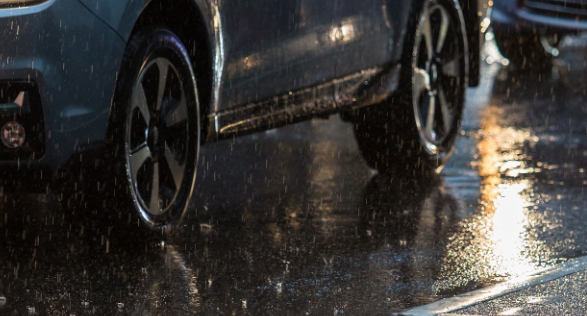
Every driver in Kampala knows the feeling. The sky turns dark, the first heavy drops hit your windscreen, and within minutes Entebbe Road transforms from a busy commuter route into a slick, treacherous stretch of tarmac. Water pools at the low-lying sections near Munyonyo and Buziga. Vehicles ahead slow sharply. And somewhere beneath your car, your tyres are the only thing standing between you and a very bad day.
Entebbe Road is one of Uganda’s most important and heavily trafficked highways — connecting the capital Kampala to Entebbe International Airport, State House, and dozens of residential and commercial areas along the way. During Uganda’s two rainy seasons (March to May and October to December), this road becomes genuinely hazardous for drivers running worn, incorrectly inflated, or wrong-spec tyres.
The good news is that tyre-related wet-weather accidents are almost entirely preventable. With the right knowledge and a little routine attention, you can drive Entebbe Road with confidence even in the worst downpour. This guide walks you through everything you need to know — from understanding tread depth to choosing the right tyre type for Uganda’s conditions.
For more driving safety tips and automotive news tailored to Uganda, automag.ug is a must-visit resource for every Ugandan driver.
1. Understand Why Wet Roads Are So Dangerous — and What Tyres Have to Do With It
Before diving into tips, it helps to understand the science at play. When it rains, a thin film of water builds up between your tyre and the road surface. Your tyre’s tread — those grooves and channels carved into the rubber — exists specifically to displace that water outward, maintaining contact between the tyre compound and the tarmac.
When tread depth is insufficient, or the tyre pressure is wrong, the tyre can no longer channel water away fast enough. The result is aquaplaning (also called hydroplaning) — a terrifying condition where your vehicle essentially floats on a film of water with zero grip. At 80 km/h on Entebbe Road, aquaplaning can happen in the blink of an eye, and recovering steering control requires skill and calm that most drivers don’t have time to apply.
Key factors that determine wet-weather tyre safety:
- Tread depth: The deeper the tread, the more water the tyre can displace per second.
- Tyre pressure: Incorrect pressure changes the shape of the tyre’s contact patch, reducing grip.
- Tyre compound age: Old rubber hardens and loses grip even if tread looks acceptable visually.
- Tyre type: Not all tyres are designed equally for wet performance.
2. Check Tread Depth — The Most Critical Wet-Weather Metric
Tread depth is the single most important factor for wet-road safety. In Uganda, the legal minimum tread depth is 1.6mm — but safety experts widely agree that replacing tyres at 3mm is a far safer threshold, especially in wet conditions.
Here is a practical way to think about it: at 1.6mm tread depth, a tyre’s wet braking distance can be up to 40% longer than a tyre with 3mm of tread. On Entebbe Road during rain, that extra stopping distance is the difference between a near-miss and a collision.
How to check tread depth without specialist tools:
- Most tyres have built-in tread wear indicators — small rubber bars visible inside the main tread grooves. When your tread wears level with these bars, the tyre is at the legal minimum and needs immediate replacement.
- The coin test: place a Ugandan 100-shilling coin into the tread groove. If the text is fully visible, your tread depth is dangerously low.
- For accuracy, buy an inexpensive tread depth gauge from any auto parts shop in Kampala (available at Kiseka Market and most filling station shops for as little as UGX 8,000–15,000).
- Check tread depth across the width of the tyre — not just in the centre. Uneven wear across the tyre width indicates a suspension or alignment problem that needs immediate attention.
Replace tyres when tread reaches 3mm for wet-season driving on Entebbe Road. Do not wait for the 1.6mm legal minimum.
3. Maintain the Correct Tyre Pressure — Especially During Rainy Seasons
Tyre pressure is something most Ugandan drivers check only when a tyre looks flat — which is far too late. Pressure affects how the tyre’s contact patch (the area of tyre touching the road) is shaped, and that directly impacts wet-weather grip.
Under-inflated tyres: The tyre bulges outward at the sides, concentrating contact on the edges rather than the centre. This reduces the tyre’s ability to channel water through its central grooves, increasing aquaplaning risk.
Over-inflated tyres: The contact patch shrinks to a narrow central strip, reducing overall grip and making the ride harsh and unpredictable on wet, uneven surfaces.
Tyre pressure best practices for Uganda:
- Check tyre pressure at least once a month and before any long journey on Entebbe Road (especially trips to Entebbe Airport, Munyonyo, or beyond).
- Always check pressure when the tyres are cold — heat from driving increases pressure readings artificially. Check before you set off, not after a journey.
- Follow the vehicle manufacturer’s recommended pressure found in your owner’s manual or the sticker inside the driver’s door jamb. Do not rely on the maximum pressure printed on the tyre sidewall.
- Note that Kampala’s climate means pressure can drop during cooler rainy season nights. A tyre that was correctly inflated last week may be slightly low after a run of cool, wet days.
4. Choose the Right Tyres for Uganda’s Wet Season Conditions
Not all tyres perform equally in the rain, and in Uganda, the right choice depends on how you use your vehicle. Entebbe Road is well-surfaced tarmac, but the surrounding areas — car parks, side roads, and detours — can be unpaved and muddy when it rains.
Tyre types and what they mean for you:
- All-Season Tyres: The best balance for most Kampala drivers. Designed to handle both dry and wet tarmac competently, with good water-channelling tread patterns. Ideal if Entebbe Road is your main route and you don’t go upcountry often.
- Summer/Performance Tyres: Great on dry roads but significantly reduced wet grip compared to all-season alternatives. Not recommended as a primary tyre for Uganda’s dual-season climate.
- All-Terrain (AT) Tyres: Excellent if you split time between Entebbe Road and upcountry routes (Mbarara Highway, Fort Portal Road, etc.). Handles both wet tarmac and wet murram roads. Slightly noisier on smooth tarmac, but a good all-round option for Uganda.
- Mud-Terrain (MT) Tyres: Built for serious off-road use. On wet tarmac, MT tyres actually perform worse than AT or all-season tyres because their aggressive tread pattern cannot channel water efficiently on smooth surfaces. Not recommended for Entebbe Road use.
Look for tyres with wide circumferential grooves (the main channels running around the tyre) and lateral sipes (small cuts in the tread blocks). Both features help water escape quickly and maintain grip on wet tarmac.
5. Rotate Your Tyres Regularly for Even Wear
Front tyres wear faster than rear tyres on most vehicles because they handle both steering and (on front-wheel-drive vehicles) power delivery. On a wet road, unevenly worn tyres are unpredictable — the front may grip well while a worn rear tyre breaks loose under braking or cornering.
Tyre rotation schedule:
- Rotate tyres every 10,000–12,000 km, or every 6 months, whichever comes first.
- For 4WD vehicles common on Entebbe Road (Toyota Land Cruiser Prado, Mitsubishi Pajero, Toyota RAV4, etc.), follow the manufacturer’s rotation pattern specific to your drivetrain type.
- At every rotation, inspect all four tyres for uneven wear patterns. Edge wear suggests incorrect pressure. Centre wear suggests chronic over-inflation. Patchy wear can indicate suspension issues.
- If one or two tyres are significantly more worn than others, do not simply rotate — replace the worn pair. Mismatched tyres create handling imbalance in the wet.
6. Don’t Overlook the Spare Tyre
Uganda’s roads have a way of reminding you that punctures happen at the worst times — and Entebbe Road during a rainstorm is definitely the worst time. Your spare tyre is only useful if it’s in good condition and properly inflated when you need it.
Spare tyre maintenance checklist:
- Check spare tyre pressure every month alongside your other four tyres. A deflated spare is useless in an emergency.
- Inspect the spare’s tread depth and rubber condition at every service. A spare that has been in the boot for five years may have hardened rubber even if the tread looks fine — old rubber loses grip significantly.
- If your vehicle carries a temporary space-saver spare (the narrow ‘skinny’ tyre), be aware that these are limited to around 80 km/h maximum speed and short distances. Do not drive at normal highway speeds on Entebbe Road with a space-saver fitted.
- Consider carrying a full-size spare if you frequently travel Entebbe Road — especially for airport runs where being delayed matters.
7. Adjust Your Driving Style in the Rain — Tyres Can Only Do So Much
Even the best tyres in perfect condition have limits. Safe wet-weather driving is a combination of good tyre maintenance and adapted driving behaviour. On Entebbe Road, where traffic is dense and speeds can be high, this matters enormously.
Wet weather driving adjustments:
- Reduce speed by at least 20–30% on wet roads. The faster you drive, the less time your tyres have to channel water away, and aquaplaning risk rises sharply above 60 km/h on a flooded surface.
- Increase following distance significantly. Braking distances on wet roads can be 50–70% longer than on dry surfaces, even with good tyres.
- Avoid sudden steering inputs, hard braking, or aggressive acceleration in the wet — these are the triggers for skidding and loss of control.
- If you feel aquaplaning starting (steering goes light, the engine note changes, you lose directional control), do not brake hard. Ease off the accelerator gradually and steer gently in the direction you want to go until grip returns.
- Watch for standing water on Entebbe Road — particularly at the Buziga dip, around the Munyonyo area, and near any construction zones where drainage is disrupted. Slow down before entering standing water, not while in it.
8. Have Your Wheel Alignment and Balancing Checked After the Rainy Season
Potholes and road damage are Uganda’s post-rain gift to drivers. After every major rainy season, Entebbe Road and its surrounding routes inevitably develop new surface damage — and every pothole impact can knock your wheel alignment off, even if you don’t notice it immediately.
Why alignment matters for wet-weather safety:
- Misaligned wheels cause uneven tyre wear, which as we’ve covered reduces wet grip performance.
- Poor alignment also causes vehicles to pull to one side — manageable on a dry, quiet road, but dangerous when braking hard in the rain with other vehicles close by.
- Wheel imbalance causes vibration and uneven tread wear patterns that shorten tyre life and degrade wet performance.
Get alignment and balancing checked:
- After any significant pothole impact that felt like a proper jolt through the steering wheel.
- Every 10,000 km as a routine service item.
- At every new tyre fitting.
- If you notice the car pulling to one side or feel vibration through the steering wheel at motorway speeds.
9. Buying a Vehicle for Entebbe Road’s Wet Seasons? Here’s What to Look For
If you’re in the market for a vehicle — particularly one you’ll drive regularly on Entebbe Road — tyre and suspension characteristics should factor into your decision. Not all vehicles handle wet roads the same way, and Uganda’s conditions favour specific features.
Vehicles well-suited to wet Entebbe Road conditions typically have:
- Good ground clearance for navigating the flooded low points during heavy rain.
- Wide availability of quality replacement tyres in Uganda (popular sizes are easier and cheaper to source locally).
- Reliable ABS (Anti-lock Braking System) — standard on most vehicles made after 2005, ABS prevents wheel lock-up during heavy braking on wet surfaces, allowing the driver to steer while braking.
- Electronic Stability Control (ESC) — reduces the risk of skidding by automatically applying brakes to individual wheels when the system detects loss of control.
To explore second-hand vehicles available in Uganda that tick these boxes — including popular wet-road-capable models like the Toyota RAV4, Subaru Forester, Mitsubishi Outlander, and Honda CR-V — visit auto24.ug. It is one of Uganda’s most straightforward platforms for browsing verified used cars by model, price, and condition, making it easy to compare options before heading to a dealership.
For detailed reviews and buyer guides on vehicles suited to Ugandan road conditions, carkibanda.com offers some of the most locally-relevant automotive content available — including tips on what to look for when buying used cars in Uganda’s market.
A Note on Electric Vehicles and Wet-Road Performance
As Uganda’s automotive landscape gradually evolves, a growing number of drivers are exploring electric vehicles as an alternative to petrol or diesel options. EVs actually have a wet-weather advantage many drivers don’t know about: their lower centre of gravity (due to battery placement) improves stability on slippery surfaces, and regenerative braking provides smoother, more controlled deceleration than traditional brakes in the rain.
For drivers curious about importing electric vehicles to Uganda, EV24.africa offers electric car import options, expanding the choices available to Ugandan drivers who want to explore cleaner, more sustainable mobility. As Kampala’s infrastructure continues to develop and fuel costs remain a concern for regular Entebbe Road commuters, EVs represent an interesting option worth researching.
10. Build a Rainy Season Tyre Maintenance Checklist
Rather than waiting until your tyres fail or the rains catch you off guard, build a simple pre-rainy-season routine into your calendar. Uganda’s rainy seasons are predictable enough that you can prepare in advance.
Two weeks before each rainy season begins:
- Check tread depth on all four tyres plus the spare. Replace any tyre at or below 3mm.
- Inflate all tyres to the manufacturer’s recommended pressure.
- Inspect tyres for cracking, bulging, or embedded objects.
- Book an alignment and balancing check if it has been more than 10,000 km since the last one.
- Confirm your spare tyre is properly inflated and in usable condition.
- Check that your vehicle’s ABS warning light is not illuminated (indicating a fault in the ABS system that needs attention before the rains arrive).
During rainy season:
- Check tyre pressure fortnightly — rain and temperature changes affect pressure more than stable dry weather.
- After any serious pothole impact, have alignment checked.
- After crossing flooded sections (unavoidable on some Entebbe Road diversions), inspect tyres and wheel rims for damage.
Final Thoughts
Entebbe Road demands respect in the wet season. The combination of high traffic volumes, mix of vehicle types, and sections prone to standing water creates real risk for unprepared drivers. Your tyres are your first and most important line of defence.
Good tyre maintenance is not complicated or expensive relative to the cost of an accident. Check tread depth. Maintain correct pressure. Choose the right tyre type. Rotate regularly. And adjust your driving when it rains.
These habits, done consistently, make Entebbe Road’s wet seasons manageable — even comfortable. The drivers who come unstuck are almost always the ones who delayed a tyre change they knew was overdue or drove at dry-road speeds on a soaking wet surface.
Stay informed, stay maintained, and drive safely. For the latest automotive tips, road safety updates, and vehicle news relevant to Uganda, follow automag.ug — your go-to source for everything on four wheels in Uganda.