If you have ever driven the long, dusty stretch from Kampala to Murchison Falls, you already know that a regular sedan is not going to cut it. The roads leading to Uganda’s most spectacular national park are a test of both driver and machine — potholes wide enough to swallow a tyre, river crossings, thick mud during rainy season, and stretches of unpaved murram that shake every bolt in your vehicle. Out there, the SUV you choose is not just a comfort decision; it is a safety and survival decision.
This article brings together real driver reviews from experienced safari guides, tour operators, and regular travellers who have navigated Murchison Falls in their own vehicles. Whether you are planning a self-drive safari or scouting for the most capable 4×4 to handle Uganda’s wild terrain, this guide is for you.
For the latest automotive news, in-depth car reviews, and travel guides tailored for Uganda’s roads, be sure to visit automag.ug — an excellent resource for both car buyers and enthusiasts across the country.
Why Your SUV Choice Matters at Murchison Falls
Murchison Falls National Park is Uganda’s largest protected area, sprawling over 3,840 square kilometres of savannah, riverine forest, and wetland. Getting there from Kampala typically involves a 4 to 5 hour drive, with the final stretch often traversing unpaved roads through Karuma or Kichumbanyobo gate.
During the dry season (June to August and December to February), the murram roads are dusty but passable. But in the rainy season, those same roads turn into slippery, muddy tracks that have defeated many underpowered vehicles. River banks, game drive tracks inside the park, and the northern sector roads leading to the top of the falls all demand genuine off-road ability.
Safari drivers and guides consistently point to these key requirements for any SUV headed to Murchison Falls:
• High ground clearance — at least 200mm to clear large rocks and deep ruts
• Four-wheel drive capability — especially part-time 4WD or a lockable differential
• Reliable engine — both petrol and diesel options work, but diesel is preferred for the torque and fuel economy on long distances
• Adequate boot space — for camping gear, water, food, and emergency tools
• Proven spare parts availability — because breakdowns deep in the bush are no joke
1. Toyota Land Cruiser (70, 80, and 200 Series)
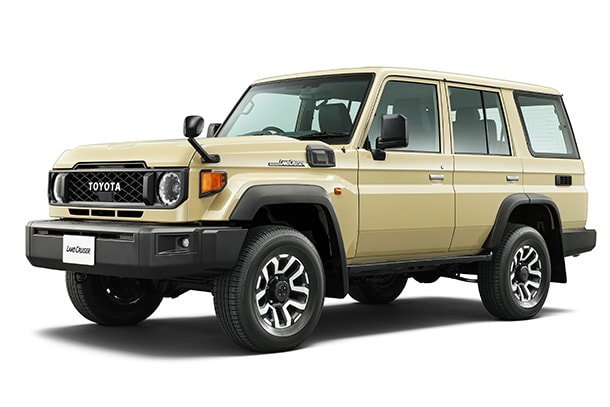
The King of African Safari Roads
Ask any safari driver in Uganda which vehicle they trust most at Murchison Falls, and nine out of ten will say the Toyota Land Cruiser. This is not a marketing opinion — it is a lived reality repeated across every lodge, tour company, and national park gate in the country.
The Land Cruiser 70 Series, in particular, is a workhorse. Its 4.2-litre diesel engine delivers impressive torque that pulls through mud without protest. The solid axles (front and rear) mean it is built for punishment in a way that modern unibody SUVs simply are not. Several Murchison tour guides specifically praise the 70 Series for its simplicity — when something goes wrong, the mechanical setup is easy to diagnose and repair even in remote locations.
The Land Cruiser 80 Series, popular among Ugandan overlanders, adds more comfort without sacrificing serious off-road credentials. It features a proper transfer case, locking centre differential, and a proven 1HZ diesel engine that has covered millions of kilometres across African terrain.
The 200 Series is the luxury option, offering air-conditioned comfort and advanced terrain management systems. However, experienced guides note that its electronic complexity can be a liability when far from a qualified mechanic.
Driver Review Snapshot
Samuel, safari guide (8 years at Murchison Falls): “I have driven a Land Cruiser 79 pick-up and a Land Cruiser 80 station wagon across every part of this park. In the northern sector after heavy rain, no other car gives me that same confidence. The 80 is comfortable, carries five passengers and all their gear, and never asks for help getting unstuck.”
Pros: Legendary reliability, genuine 4×4 capability, excellent spare parts availability, diesel fuel economy
Cons: High purchase price, 200 Series electronics can be expensive to repair
2. Toyota Land Cruiser Prado (120 and 150 Series)
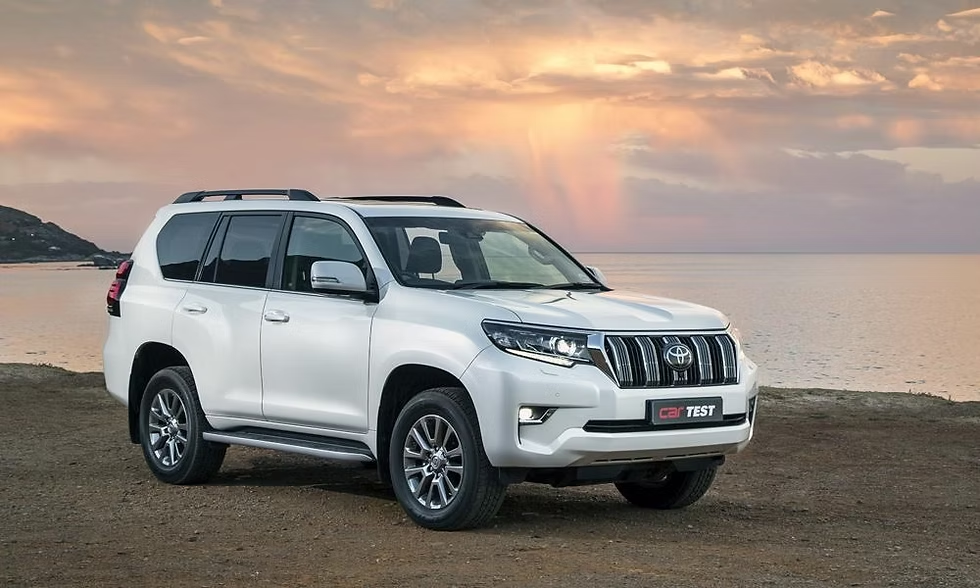
Comfort Meets Capability
The Land Cruiser Prado occupies a sweet spot between full-size Land Cruiser toughness and family-friendly comfort. It is a favourite among Ugandan families and mid-budget tour operators who need a vehicle that can handle weekend safaris without giving up everyday practicality.
The Prado 120 (2003–2009) and Prado 150 (2009–present) both come with a proper 4WD system, including a low-range transfer case and optional locking differentials depending on the variant. Ground clearance of around 215mm keeps it above most obstacles on Murchison’s game tracks.
A common observation from drivers is that the Prado handles mud very well on the standard A/T (all-terrain) tyres. However, on the more challenging northern sector tracks, drivers with heavily loaded vehicles sometimes wish for the extra engine grunt of the full-size Land Cruiser.
Driver Review Snapshot
Grace, lodge owner and self-drive enthusiast: “I drive my Prado 150 to Murchison at least three times a year. The air conditioning is a blessing on those hot afternoons near the Nile, and I have never been stuck. I once helped pull out a smaller SUV that had sunk into black cotton soil near the Buligi circuit — the Prado handled that without drama.”
Pros: Comfortable for long-distance travel, capable 4WD system, good spare parts network, practical boot space
Cons: Slightly less torque than the full Land Cruiser, higher fuel consumption on petrol variants
3. Nissan Patrol (Y60, Y61, and Y62)
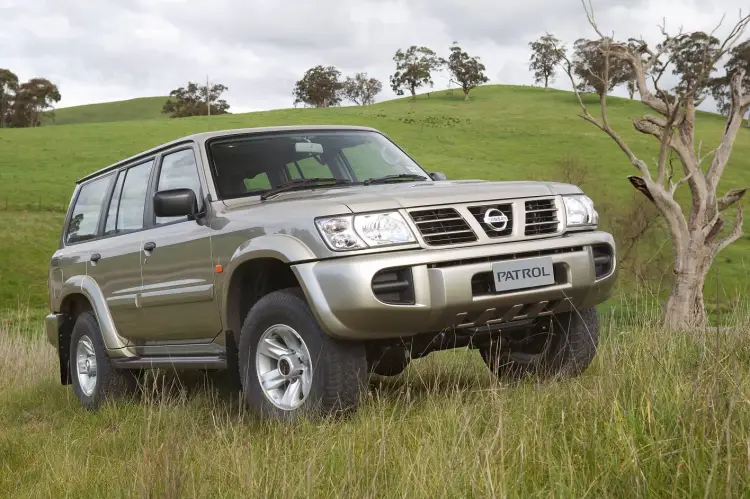
The Underrated Safari Beast
The Nissan Patrol has a loyal following among Uganda’s most experienced off-road drivers, and for good reason. The Y61 generation, powered by the TD42 or TB45 engine, is widely considered one of the most capable production 4x4s ever made. Its ladder-frame construction, solid front axle (on earlier models), and impressive ground clearance make it a formidable safari companion.
Several NGO workers and conservation teams operating in and around Murchison Falls rely on the Nissan Patrol for its ability to carry heavy loads across brutal terrain. The extended wheelbase version can seat seven passengers and still has room for gear in the back.
The newer Y62 model introduces a V8 petrol engine and more creature comforts, though it is heavier and less frugal. For pure bush work, the Y61 diesel remains the preferred choice.
Driver Review Snapshot
David, conservation NGO driver: “We run three Y61 Patrols in the Murchison area. They carry survey equipment, camping gear, and a team of six without complaint. The TD42 engine has been completely reliable — we do regular oil changes and it just keeps going. Parts are a bit harder to find than Toyota, but our mechanic in Masindi knows these engines well.”
Pros: Exceptional off-road ability, large load capacity, very tough chassis
Cons: Spare parts less readily available than Toyota, Y62 fuel consumption is high
4. Toyota Hilux Surf / 4Runner (3rd and 4th Generation)
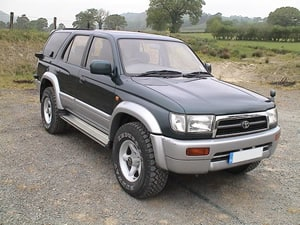
The Practical Mid-Size Option
The Toyota Hilux Surf, known internationally as the 4Runner, punches above its weight class on Uganda’s safari roads. Sharing much of its mechanical DNA with the Hilux pickup truck, it features a ladder frame, coil-spring suspension (on later models), and a 3.0-litre diesel engine that delivers smooth, predictable power.
Its slightly smaller size compared to the Land Cruiser actually works in its favour on narrower game drive tracks where manoeuvring around wildlife or tight bends requires precision. It is also lighter, which means less tendency to sink in soft soil.
The 3rd generation (1996–2002) and 4th generation (2002–2009) are the sweet spots for Ugandan buyers — old enough to be affordable, but mechanically sophisticated enough to handle serious off-road work.
Driver Review Snapshot
Joseph, freelance safari guide: “I bought my Surf three years ago and I take it to Murchison every school holiday for self-drive trips with my family. On the Paraa to Chobe track, it handles beautifully. I prefer it over a Prado for tighter tracks because of the turning radius. One tip — change the rear differential oil before every major trip.”
Pros: Affordable, excellent off-road ability, great spare parts, manageable size
Cons: Less interior space than larger SUVs, older models may need more maintenance attention
5. Mitsubishi Pajero (3rd and 4th Generation)
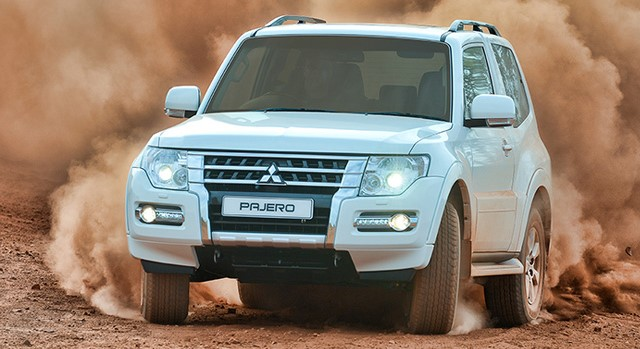
Japanese Engineering for East African Conditions
The Mitsubishi Pajero has been a fixture on East African safari circuits for decades. Its Super Select 4WD system — unique to Mitsubishi — allows it to switch between 2WD, 4WD high, and 4WD low with a locking centre differential, giving it remarkable versatility on mixed terrain.
Ugandan drivers who use the Pajero for safaris praise its on-road comfort (it rides almost like a saloon car in 2WD mode) and its confident off-road performance when you engage the 4WD system. The 3.2-litre DI-D diesel engine found in 4th generation models provides more than adequate power for laden safari driving.
One area where the Pajero sometimes falls short in Uganda is spare parts availability. While Toyota parts can be found in virtually any town near a national park, Mitsubishi parts may require a trip to Kampala or a longer wait for ordered components.
Driver Review Snapshot
Irene, tour company director: “We have two Pajero 4th generation vehicles in our fleet. The Super Select system is a genuine advantage — you can drive in 4WD high on murram without worrying about drivetrain wind-up. The main challenge is parts. We have to pre-order filters and some wear items from Kampala. But the vehicles themselves have been very reliable.”
Pros: Excellent Super Select 4WD system, comfortable on long drives, capable off-road
Cons: Spare parts availability outside Kampala can be limited
6. Ford Ranger Wildtrak and Ford Everest
Modern Capable Options Gaining Ground in Uganda
Ford’s recent offerings have been gaining popularity among a younger generation of Ugandan safari-goers who want modern features alongside genuine off-road capability. The Ford Ranger Wildtrak and its SUV sibling the Ford Everest both use a 2.0-litre bi-turbo diesel engine that produces strong torque figures and is notably fuel-efficient compared to older diesel workhorses.
The Ranger Wildtrak’s pickup format is increasingly popular with overlanders who need to carry camping equipment and can access harder terrain by reducing tyre pressure. The Everest offers the enclosed seven-seat practicality of a traditional SUV with comparable off-road ability.
Experienced Murchison drivers caution that both vehicles are relatively new in Uganda, which means the after-sales service network is still developing. For self-drive trips to remote areas, carrying a comprehensive emergency toolkit is strongly advised.
Driver Review Snapshot
Brian, overlander and travel blogger: “I drove my Ranger Wildtrak from Kampala to Murchison and up to the top of the falls. The 10-speed automatic gearbox made light work of the climbs. The elephant that decided to investigate my vehicle near Buligi Camp was not impressed, but the truck survived the encounter. Modern, comfortable, and capable — though I do wish there were more Ford service centres north of Kampala.”
Pros: Modern features and fuel efficiency, strong torque, good safety ratings
Cons: Service network still developing in upcountry Uganda
Where to Find Safari-Ready Used SUVs in Uganda
Buying the right vehicle for safari driving does not have to mean purchasing brand new. In fact, many of the most capable and respected safari SUVs on Ugandan roads are quality second-hand vehicles. The key is knowing where to look and what to inspect before committing to a purchase.
For buyers looking for thoroughly vetted second-hand SUVs in Uganda, auto24.ug is an excellent starting point. The platform lists a wide selection of used vehicles suited to Ugandan roads, including popular safari models like the Toyota Land Cruiser Prado, Nissan Patrol, and Mitsubishi Pajero. Each listing includes detailed specifications, pricing, and condition reports — making it easier to compare options from the comfort of your home before visiting a dealer.
When shopping on auto24.ug, specifically look for listings that mention service history, recent mechanical inspections, and original Ugandan registration — these indicators point to vehicles that have been properly maintained and not misrepresented.
For additional automotive resources, purchasing options, and detailed road condition guides for Uganda’s national parks, carkibanda.com offers a comprehensive platform combining car reviews with a buying marketplace tailored specifically for Ugandan drivers.
Pre-Safari Vehicle Checklist for Murchison Falls
No matter which SUV you drive to Murchison, a thorough pre-trip inspection can mean the difference between an adventure and a disaster. Experienced safari guides recommend the following checks before every major trip:
• Engine oil: Check level and condition. Change if due within 2,000km.
• Coolant level: Essential during hot season driving and river crossings.
• Tyre pressure and tread depth: Reduce pressure to 28-32 PSI for off-road sections. Minimum 4mm tread depth recommended.
• Spare tyre: Ensure it is properly inflated and mounted securely.
• Brakes: Test front and rear. Check pad thickness if possible.
• Battery terminals: Clean and tighten. A dead battery in the bush is a serious problem.
• Transfer case and differential oils: Check levels, especially on high-mileage vehicles.
• Recovery gear: Carry a hi-lift jack, tow strap, shovel, and traction boards.
• Communication: Ensure your phone is charged and download offline maps of the Murchison area.
• Water and fuel: Carry at least 20 litres of extra fuel and 10 litres of drinking water.
For a more detailed seasonal driving guide and road condition updates for Uganda’s national parks, read more at automag.ug where the team regularly publishes route-specific guides for Ugandan drivers.
Choosing the Right Tyres for Safari Driving
Your vehicle’s tyres are its only contact with the ground, and on Murchison’s mixed terrain, the wrong tyres can make even the best SUV struggle. Here is what experienced safari drivers recommend:
All-Terrain (A/T) Tyres: The most popular choice for Uganda safari driving. Brands like BF Goodrich All-Terrain T/A KO2, Bridgestone Dueler A/T, and Cooper Discoverer A/T3 provide excellent grip on both tarmac and rough murram without the noise penalty of full mud tyres. They are the right balance for drivers who split time between city roads and the bush.
Mud-Terrain (M/T) Tyres: Ideal for the black cotton soil found in some sections of Murchison during heavy rain. However, they are noisier on tarmac and wear faster in dry conditions. Best suited for dedicated safari vehicles that spend most of their time off-road.
Highway Terrain (H/T) Tyres: Not recommended for serious safari driving. They lack the grip and sidewall strength needed for rough terrain. If your current SUV is fitted with H/T tyres, consider upgrading before a Murchison trip.
A Note on Electric Vehicles and the Future of Safari Mobility
While petrol and diesel SUVs currently dominate Uganda’s safari landscape, the automotive world is evolving rapidly. Electric vehicles (EVs) are gradually making their way onto African roads, and forward-thinking drivers are already exploring the possibilities.
For drivers interested in sustainable mobility and curious about EV import options into Uganda, EV24.africa is a valuable resource. The platform specialises in electric vehicle imports across Africa and provides information on available models, charging infrastructure, and the practical realities of EV ownership in markets like Uganda. While EV technology is not yet optimised for deep bush safari work due to charging infrastructure limitations, it holds significant promise for the Kampala-to-lodge transfer segment, where shorter predictable distances make EV use increasingly viable.
As solar-powered charging points expand into Uganda’s tourism corridor, electric SUVs may well become a common sight at Murchison Falls lodge drop-offs within the next decade.
Quick Comparison: Best SUVs for Murchison Falls
Here is a quick summary of our reviewed SUVs to help you decide:
• Toyota Land Cruiser 70/80 Series: Best overall. Unmatched reliability and off-road ability. Top pick for professional safari operators.
• Toyota Land Cruiser Prado 150: Best for families. Comfortable, capable, and supported by an excellent parts network.
• Nissan Patrol Y61: Best for heavy loads. Exceptional toughness, ideal for large groups and NGO fieldwork.
• Toyota Hilux Surf / 4Runner: Best value. Affordable yet genuinely capable, with superb Toyota reliability.
• Mitsubishi Pajero 4th Gen: Best 4WD system. Super Select technology offers a unique blend of on-road comfort and off-road capability.
• Ford Ranger Wildtrak / Everest: Best modern option. Fuel-efficient, well-equipped, and growing in popularity among younger drivers.
Final Thoughts
Murchison Falls rewards the prepared driver. The park’s raw beauty — the thundering falls, the Nile hippos, the lions of the northern sector — is absolutely worth the journey, but only if you arrive in a vehicle that can handle what the road throws at it. Whether you choose a battle-tested Land Cruiser, a practical Prado, a tough Nissan Patrol, or a modern Ford Everest, the key is making an informed decision based on real-world performance, parts availability, and your specific travel needs.
Before purchasing any of the SUVs mentioned in this guide, explore current listings and verified second-hand options on auto24.ug. For the latest automotive news, road guides, and vehicle reviews tailored for Uganda, keep automag.ug and carkibanda.com bookmarked. And if you are thinking ahead to a more sustainable future on Uganda’s roads, EV24.africa is the place to start your EV research.
Drive safe, drive prepared, and enjoy everything Murchison Falls has to offer.
Frequently Asked Questions (AQs)
What is the best SUV for a self-drive safari at Murchison Falls?
The Toyota Land Cruiser (particularly the 80 Series) is widely considered the best all-round choice for a self-drive safari at Murchison Falls. It combines genuine 4WD capability, proven reliability, and outstanding spare parts availability. The Land Cruiser Prado is an excellent runner-up for drivers who prioritise comfort alongside off-road performance.
Can a standard 2WD SUV handle the roads at Murchison Falls?
For dry season visits, some sections of Murchison Falls are accessible in a well-maintained 2WD high-clearance vehicle. However, for the northern sector, the Buligi game circuit, and any travel during or immediately after the rainy season, a proper 4WD system with low-range capability is strongly recommended. Attempting these routes in a 2WD vehicle significantly increases the risk of getting stuck.
Is diesel or petrol better for safari driving in Uganda?
Diesel is generally preferred for safari driving in Uganda for three key reasons: better fuel efficiency over long distances, stronger low-end torque for off-road traction, and lower fuel costs compared to petrol. The diesel Land Cruiser, Patrol, and Pajero are all widely trusted in this context. Petrol options like the Land Cruiser 200 Series V8 are capable but significantly more expensive to run over a full safari itinerary.
Where can I buy a used safari-ready SUV in Uganda?
Several platforms list quality used SUVs in Uganda. auto24.ug is a well-regarded option that provides verified second-hand listings with detailed vehicle specifications, condition reports, and transparent pricing. It is a practical starting point for buyers looking for Prados, Patrols, Pajeros, and Land Cruisers suited to Ugandan road conditions.
What tyres should I fit for a Murchison Falls safari?
All-Terrain (A/T) tyres are the most practical and versatile choice for Murchison Falls. They perform reliably on tarmac for the Kampala–Masindi section and provide adequate grip on murram and soft soil inside the park. Reputable brands include BF Goodrich A/T KO2, Bridgestone Dueler A/T, and Yokohama Geolandar A/T. For wet-season trips involving black cotton soil, Mud-Terrain (M/T) tyres offer superior traction.
How long does the drive from Kampala to Murchison Falls take?
The drive from Kampala to Murchison Falls National Park typically takes between 4.5 and 6 hours depending on traffic and road conditions. The most common route goes via Gulu Road through Karuma, a distance of approximately 305 kilometres. The road from Kampala to Karuma is largely tarmac, but sections beyond the Karuma bridge and inside the park can be rough, particularly after rain.
Are there any electric vehicle options suitable for Uganda safari trips?
As of now, fully electric SUVs are not yet practical for deep bush safari driving in Uganda due to limited charging infrastructure in remote areas. However, hybrid SUVs such as the Toyota Land Cruiser 300 Series hybrid offer improved fuel efficiency while maintaining conventional drivetrain reliability. For those interested in exploring EV import options into Uganda for urban and lodge-circuit use, EV24.africa provides up-to-date information on available models and the expanding African EV market.