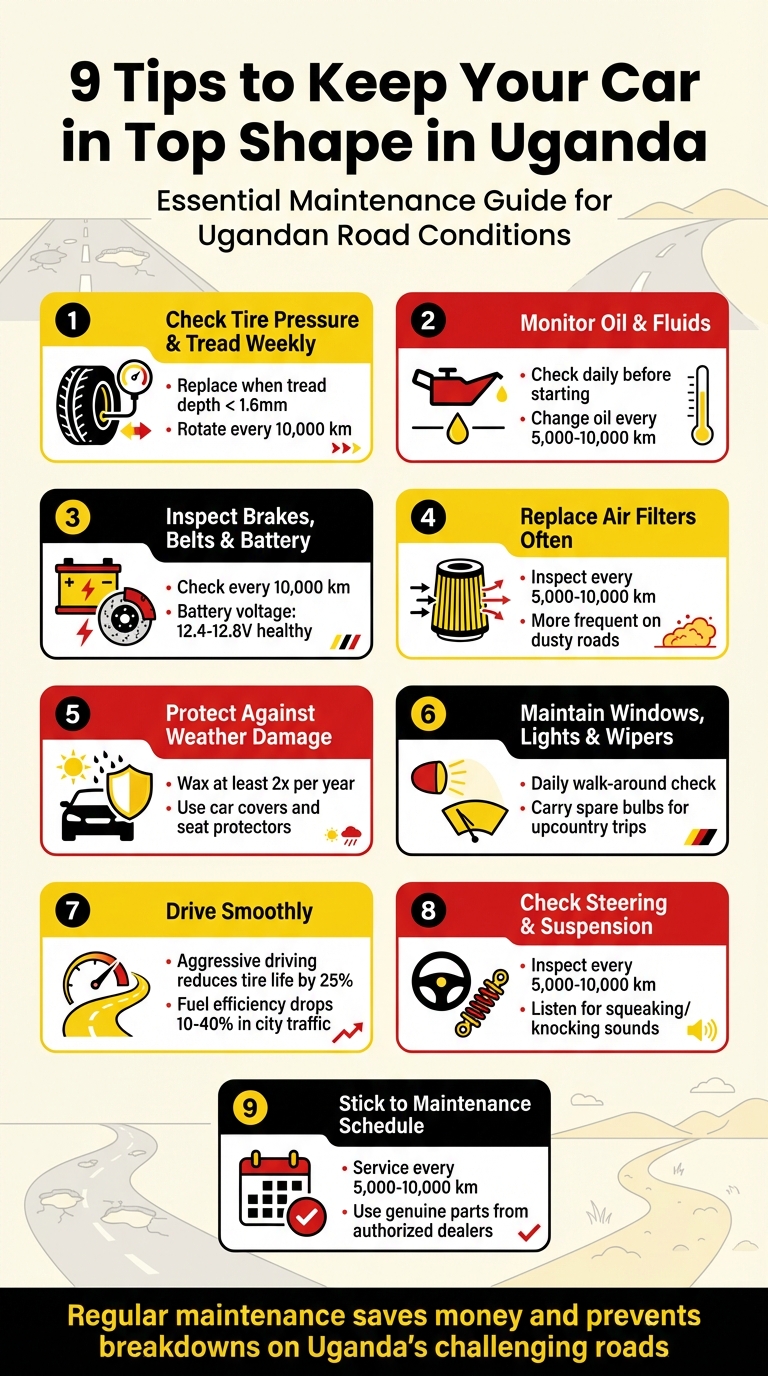
Driving in Uganda comes with challenges like rough roads, extreme weather, and unreliable fuel quality. These conditions can wear down your car faster if you’re not proactive. Here’s a quick guide to keeping your car in great condition:
- Check Tire Pressure and Tread Weekly: Avoid blowouts and uneven wear by maintaining proper pressure and replacing tires when tread depth falls below 1.6 mm.
- Monitor Oil and Fluids: Check engine oil, coolant, and brake fluid regularly to prevent overheating and ensure safe braking.
- Inspect Brakes, Belts, and Battery: Listen for unusual noises, check for corrosion, and replace worn-out parts to avoid sudden breakdowns.
- Replace Air Filters Often: Uganda’s dusty roads clog air filters quickly, reducing engine efficiency. Inspect every 5,000–10,000 km.
- Protect Against Weather Damage: Use car covers, wax, and seat protectors to shield your car from heat, rain, and rust.
- Maintain Windows, Lights, and Wipers: Keep them clean and functional for safe driving, especially during heavy rains.
- Drive Smoothly: Avoid hard braking, quick acceleration, and overloading to reduce wear on tires and suspension.
- Check Steering and Suspension: Look out for pulling or vibrations and get regular alignment checks.
- Stick to a Maintenance Schedule: Service your car every 5,000–10,000 km and use genuine parts to avoid costly repairs.
9 Essential Car Maintenance Tips for Uganda Drivers
1. Check Your Tire Pressure and Tread Depth
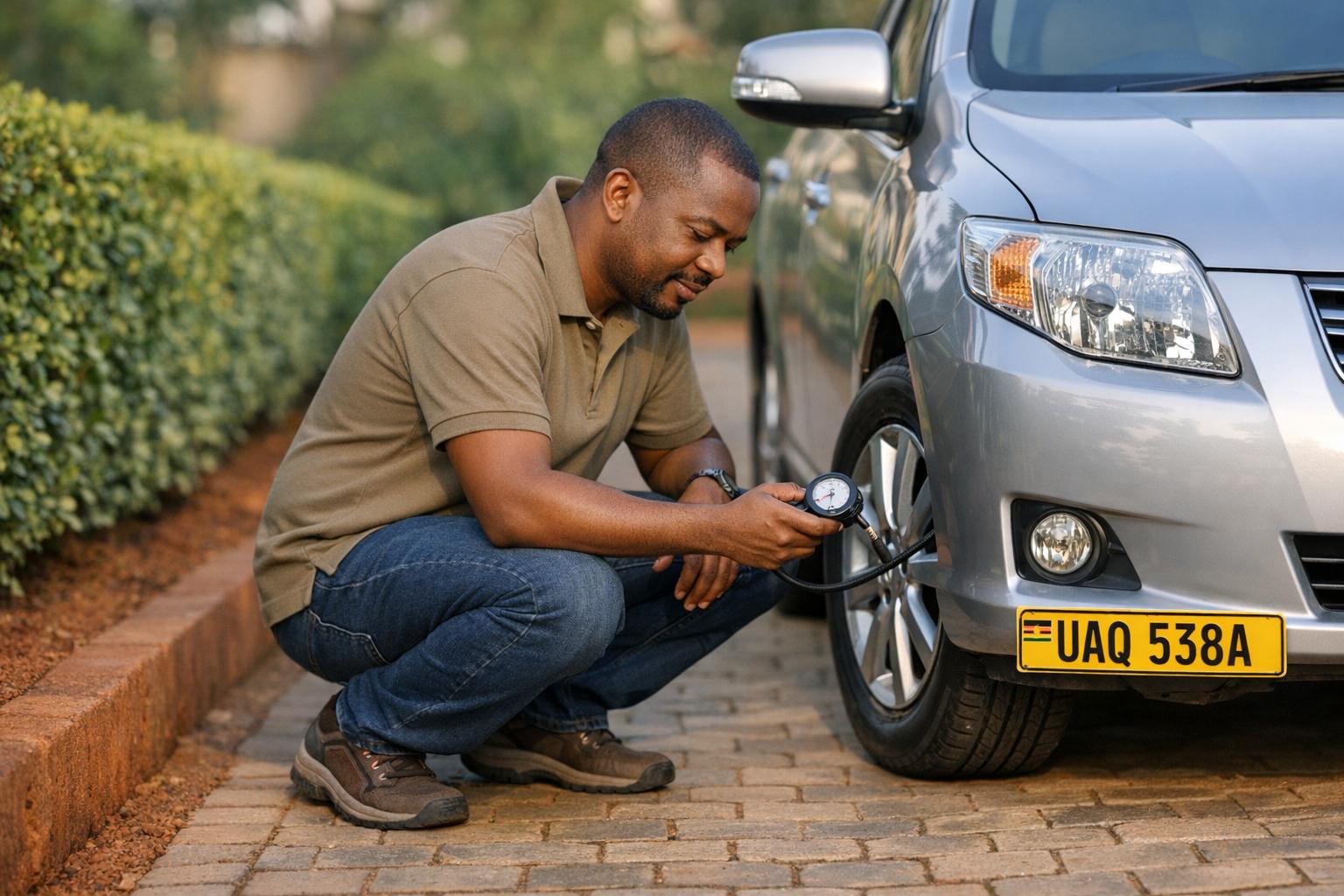
Uganda’s rugged roads can take a toll on your tires, making regular checks a must for safety and performance. Aim to inspect your tire pressure at least once a week – it’s a quick habit that can save you from bigger problems down the line. Incorrect pressure leads to uneven wear: underinflated tires hurt fuel efficiency and wear out faster, while overinflated ones increase the risk of a blowout, especially on pothole-filled roads. Mike Katamba, a garage owner in Uganda, explains:
"If a tyre is overinflated, it will wear in the middle of the tyre, and if it is underinflated, it will wear on the sides and edges." – Mike Katamba, Garage Owner
Always check tire pressure when the tires are cold, before hitting the road. You’ll usually find the recommended pressure on a sticker inside the driver’s door frame or in the owner’s manual. A handheld digital gauge can help you get an accurate reading – and don’t forget to include the spare tire in your checks. The last thing you want is to discover a flat spare when you’re already stranded.
When it comes to tread depth, replace your tires once they wear below 1.6 mm (about 2/32 inch). Worn treads reduce traction, a hazard that becomes even more dangerous during Uganda’s rainy seasons. Make it a point to inspect your tires often for visible damage, sidewall bubbles, or debris lodged in the tread. Rotating your tires every 10,000 km (6,200 miles) can also help ensure even wear and extend their lifespan.
Toyota Uganda emphasizes the importance of these quick checks:
"Your vehicle should be inspected before the start of any journey, but fortunately, it only takes a few minutes and it is good to make it a habit!" – Toyota Uganda
Taking the time to check your tires regularly lays the groundwork for keeping your vehicle in top condition.
2. Check Oil and Fluid Levels Regularly
Uganda’s challenging driving conditions make it crucial to keep an eye on your vehicle’s fluid levels. Engine oil is especially important as it lubricates moving parts and helps prevent wear, which is vital when tackling rough roads. Toyota Uganda advises checking your oil level daily before starting your car. This quick habit can save you from costly engine damage.
But it’s not just about engine oil – other fluids need regular attention too. Make it a point to check your coolant and brake fluid at least once a week. Uganda’s hot climate puts extra strain on your cooling system, and low coolant levels can lead to overheating, potentially causing severe engine damage. Garage owner Mike Katamba emphasizes the risks of neglecting fluid levels:
"If your coolant and oil levels are low, you might have a little leak somewhere. Make sure to also check the brake fluid, if this level is too low, your car is not safe to drive." – Mike Katamba, Garage Owner
Keep an eye on your parking area for any signs of leaks, such as fluid puddles or slick spots, as these could signal a problem. Additionally, if your brake pedal feels soft or your temperature gauge suddenly spikes, pull over immediately and turn off the engine to prevent further damage. As a general rule, plan to change your engine oil every 5,000 to 10,000 kilometers (about 3,100 to 6,200 miles), following your vehicle manufacturer’s recommendations.
Don’t forget about transmission fluid, which is essential for smooth gear shifts, especially in Kampala’s stop-and-go traffic. Check and replace it according to your car’s maintenance schedule. As David Okech points out, many drivers tend to overlook this critical step. Finally, always stick to manufacturer-recommended fluids and buy fuel from trusted providers like Shell, Total, or Vivo Energy to protect your engine and maintain fuel efficiency.
3. Inspect Your Brakes, Belts, and Battery
Uganda’s hilly roads and congested urban areas put a lot of stress on vehicle braking systems. David Okech from AutoMag Uganda highlights this with a strong warning:
"Uganda’s hilly terrain requires a reliable braking system. Worn-out brake pads and insufficient brake fluid can lead to dangerous driving conditions." – David Okech, Tips Author, AutoMag Uganda
Here’s what you need to know about keeping these critical components in top shape.
When it comes to brakes, always pay attention to the signals your car gives you. Screeching sounds usually mean your brake pads are wearing thin, while a harsh metal grinding noise signals that the pads are completely worn down, causing damaging metal-on-metal contact with the rotors. A firm brake pedal is essential – if it feels soft or "spongy", or if your car veers to one side while braking, it’s time for an immediate inspection. Visually check your brake pads; if they’re less than a quarter-inch thick, replace them promptly. On Uganda’s steep hills, rely on engine braking by downshifting instead of constantly applying the brakes. This helps prevent overheating and extends their lifespan.
Car batteries are a frequent cause of breakdowns in Uganda, especially during the rainy season. Warning signs include slow engine cranking, clicking noises when you try to start the car, or dimming headlights. Make it a habit to check your battery terminals monthly for white or greenish corrosion. Clean any buildup using a mix of baking soda and water with a wire brush to maintain proper electrical flow. A healthy battery should read between 12.4 and 12.8 volts when tested with a voltmeter.
As for belts, odd sounds like whining or squeaking often point to worn or loose belts. During routine maintenance, examine them for signs of wear such as fraying, cracks, or a shiny glazed appearance. Be cautious of counterfeit parts, which are common in Uganda and prone to sudden failure on rough roads. Make sure to have your brakes, battery, and alternator inspected every 10,000 kilometers (6,200 miles). Keep in mind that a failing alternator can sometimes mimic battery issues, so it’s smart to test both at the same time.
4. Replace Your Engine Air Filter
Uganda’s dry season kicks up a lot of dust, and that dust can clog your engine’s air filter much faster than in less dusty environments. A clogged filter makes it harder for your engine to "breathe", which can hurt both fuel efficiency and overall performance. David Okech from AutoMag Uganda puts it simply:
"Clean or replace air filters – Clogged filters reduce fuel efficiency and engine performance. Inspect them regularly, especially if you drive on dusty roads." – David Okech, AutoMag Uganda
Because of this rapid dust buildup, checking your air filter regularly is a must. Typically, air filters should be inspected or replaced every 5,000 km (3,100 miles) to 10,000 km (6,200 miles). However, if you’re frequently driving on unpaved roads – a common scenario in Uganda – it’s smart to check them more often, as Toyota Uganda advises.
Want a quick way to check if your filter needs replacing? Hold it up to a light source. If no light shines through the pleats, it’s too clogged and should be replaced immediately. While you might be able to clean off light surface dust, a heavily clogged filter needs to be swapped out to get your engine running properly again.
One last tip: always buy genuine air filters from authorized dealers. Counterfeit filters are a big problem in Uganda, and using them can cause serious engine damage. Steer clear of second-hand filters – they’re not worth the risk.
5. Protect Your Car from Uganda’s Weather
Uganda’s tropical climate is no friend to cars. The intense heat and heavy rains can wreak havoc, leading to cracked dashboards, split seats, faded paint, and even accelerated rusting. In Kampala, temperatures inside your car can soar past 145°F, while exterior surfaces can hit a blistering 195°F. To keep your car in good shape, you’ll need to take some smart precautions.
One of the easiest ways to shield your car is by being mindful of where you park. Opt for shaded or covered spots whenever possible. But be careful – parking under trees or power lines might expose your car to bird droppings or sap, which can damage the paint. If shade isn’t an option, a windshield sun visor or a full car cover can be a lifesaver.
Waxing is another must in Uganda’s climate. Applying carnauba wax at least twice a year helps protect your car’s finish. If your car is parked on the street more often, you may want to wax it more frequently. As Motoring Guru from The Independent explains:
"A layer of wax between your car’s finish and the sun’s ultraviolet rays is a great way to help protect it."
Regular cleaning also plays a big role in maintaining your car’s condition. Always use fresh water and avoid harsh detergents that can strip away wax and speed up oxidation. After washing, dry your car immediately with a chamois to prevent water spots and corrosion. For the interior, seat covers and regular applications of leather conditioner can go a long way in preventing cracks and wear.
Taking these steps can help you outsmart Uganda’s challenging weather and keep your car looking and performing its best.
sbb-itb-7bab64a
6. Keep Windows, Lights, and Wipers Working
Making sure your windows, lights, and wipers are in good condition is essential for safe driving in Uganda. The country’s intense sun, frequent rain, and dusty roads can take a toll on these components, just like they do on your tires and engine. A quick daily walk-around check of your vehicle can help you spot any issues early. Pay attention to your headlights, taillights, turn signals, and brake lights to ensure they’re all functioning properly. This simple habit keeps your car ready for the road.
To prepare for unexpected situations, especially on upcountry drives, always carry spare headlamp bulbs. Camp Masters Uganda emphasizes the importance of this:
"Always you should spare bulbs for your car’s headlamps especially when you’re going to drive upcountry. You never know when the darkness will strike!"
Having a screwdriver on hand can make replacing a bulb a quick and easy fix if needed.
Keep your windows and lights clean by using water and a chamois cloth, steering clear of harsh detergents that can damage rubber seals. Dust buildup during the dry season can reduce visibility, while mud during the wet season might interfere with your lights and electrical connections.
If your headlights seem dim, it could indicate a problem with your alternator or battery. Be sure to test your electrical system during regular service appointments and keep your windshield washer fluid topped off.
Check the rubber on your wipers for cracks and replace them before the rainy season begins. To protect your car’s interior from extreme heat, consider using a windshield sun protector as well.
7. Drive Carefully to Reduce Wear and Tear
The way you drive plays a big role in how long your car lasts, especially when navigating Uganda’s tough road conditions. Quick acceleration, sudden braking, and sharp turns can take a toll on your vehicle. For instance, these habits can shorten tire life by up to 25%, 20%, and 15%, respectively. Over time, this can boost tire replacement costs by roughly 30% and decrease fuel efficiency by 15–30% on highways and 10–40% in city traffic. Clearly, adopting a smoother driving style can make a difference.
To drive more smoothly, start by decelerating early to avoid creating flat spots on your tires. Slow down when approaching potholes or rough roads to protect your suspension and steering system. When accelerating, ease into it rather than slamming the gas pedal, which reduces the strain on both your engine and tires.
Uganda’s hilly terrain requires extra care. Use engine braking by downshifting to manage your speed and avoid overheating your brakes. In Kampala’s stop-and-go traffic, be mindful of the clutch – fully engage or disengage it to prevent unnecessary wear. These small changes in driving habits can help reduce stress on key components and extend their lifespan.
Another tip: avoid overloading your car. Carrying excess weight puts extra pressure on your suspension system. If you notice squeaking or knocking sounds when driving over bumps, it might be time to check your shock absorbers or bushings.
Maintain a safe following distance of 2–3 seconds to give yourself enough time to react. During the rainy season, take extra precautions by slowing down on sharp turns and unsurfaced roads, which can become slippery and muddy. These simple adjustments can keep your car in better shape for longer while saving you money on repairs in the long run.
8. Check Your Steering and Suspension
Taking care of your steering and suspension is just as important as maintaining your engine and brakes. In Uganda, where roads range from smooth highways to bumpy, unpaved paths, these parts of your vehicle can wear out faster. Catching problems early can save you from costly repairs down the line.
If you hear squeaking or knocking sounds when driving over bumps, it could mean your shock absorbers or bushings are worn out. A car that pulls to one side while driving might have a wheel alignment issue. You should also pay attention to vibrations in the steering wheel or uneven tire wear, as these can signal suspension problems.
"Uganda’s roads can be unforgiving, with potholes and uneven terrain causing rapid tyre wear and damage to the suspension system." – David Okech, AutoMag Uganda
To keep everything in good shape, have a qualified mechanic inspect your wheel alignment and suspension parts every 3,100 to 6,200 miles. During these visits, ask for a test drive to check for steering pull or vibrations. Rotating your tires every 6,200 miles not only helps them wear evenly but can also uncover hidden suspension issues early on.
Just like regular oil changes and brake checks protect your engine and stopping power, careful driving can extend the life of your steering and suspension. Slow down on rough roads and avoid overloading your vehicle to minimize damage.
9. Set Up a Maintenance Schedule with a Qualified Mechanic
Staying ahead with regular maintenance can save you from expensive headaches down the road. Many car owners wait until something breaks to visit a mechanic, but this reactive approach often leads to higher repair bills. Scheduling regular checkups with a qualified mechanic ensures your car stays dependable and helps catch small problems before they turn into major issues.
In Uganda, where rough roads, tropical heat, and hilly terrain can take a toll on vehicles, it’s recommended to service your car every 3,100–6,200 miles (5,000–10,000 km). For certain car brands, like Toyota, the guidelines are even more specific: service your car every six months or 3,100 miles (5,000 km), whichever comes first.
"Stick to your maintenance schedule and make sure your Toyota is serviced every 6 months or 5,000 km. Travel with peace of mind, knowing your Toyota is ready for adventure!" – Toyota Uganda
When selecting a mechanic, prioritize someone who specializes in your car’s make and uses genuine spare parts from authorized dealers. Counterfeit parts are a common issue in Uganda and can lead to repeated failures and costly repairs. A reliable mechanic should also have the tools and skills to perform computerized diagnostics and inspect critical systems like your suspension, electrical components, and cooling system.
To stay organized, keep a simple maintenance log. Record oil changes, tire rotations, and other routine services. This not only helps you stick to your schedule but also serves as a handy record if you ever decide to sell your car. Regular servicing is far less expensive than dealing with emergency breakdowns later on.
Conclusion
Maintaining your car in Uganda is about much more than just avoiding breakdowns – it’s about safeguarding your investment, ensuring your safety, and saving money in the long run. With Uganda’s tough road conditions and unpredictable weather – from dusty dry seasons to muddy rains – consistent vehicle care becomes essential.
The nine tips shared in this article are designed to tackle these challenges effectively. For instance, checking your fluids weekly can help prevent overheating, inspecting your tires regularly ensures they’re ready for rough terrain, and keeping up with brake maintenance guarantees dependable stopping power. These small but critical actions work together to shield your car from the wear and tear caused by Uganda’s demanding driving conditions.
"By taking proactive steps today, you ensure a smoother, safer, and more cost-effective driving experience for years to come!" – David Okech, AutoMag Uganda
Additionally, waiting for something to go wrong before visiting a mechanic often leads to higher repair costs. Sticking to scheduled servicing every 3,100–6,200 miles (5,000–10,000 km) not only saves money but also provides peace of mind – especially when navigating remote areas where assistance might be hard to find.
FAQs
How often should I check my car’s tire pressure in Uganda’s driving conditions?
Keeping your car in good shape on Uganda’s rugged roads starts with a simple habit: checking your tire pressure once a week. The area’s uneven terrain, potholes, and scattered debris can cause tires to lose air faster than you might expect.
By checking regularly, you can avoid flat tires, boost fuel efficiency, and minimize wear and tear on your tires. It’s especially wise to inspect them before long journeys or after navigating rough roads, as these situations can lead to leaks or damage. Making weekly tire pressure checks a routine is an easy and affordable way to keep your car dependable on Uganda’s tough roads.
How can I tell if my car’s air filter needs to be replaced?
If your car’s engine isn’t performing as it should, you’re experiencing a drop in fuel efficiency, or you hear unusual sounds coming from the engine, it might be time to check the air filter. A quick inspection can reveal if the filter is dirty or clogged with visible dirt and debris. Keeping an eye on your air filter and replacing it as needed ensures your engine runs smoothly and maintains optimal efficiency.
Why should I use genuine parts for car maintenance in Uganda?
Using genuine parts is key to keeping your car dependable, safe, and durable – especially when navigating Uganda’s tough road conditions. These parts are crafted to match your vehicle’s original specifications, ensuring top-notch performance while minimizing the likelihood of mechanical problems. Plus, they’re built to withstand the wear and tear that comes with rough roads and the tropical climate.
Choosing authentic parts also safeguards your car’s warranty, aligns with safety standards, and often includes their own warranties. Unlike counterfeit or low-grade alternatives, genuine parts won’t damage other components, helping you avoid expensive repairs down the line. To steer clear of potential issues, always purchase from trusted suppliers and rely on skilled mechanics for proper installation.
Related Blog Posts
- 8 Essential Car Maintenance Tips for Uganda’s Climate
- Common Car Problems in Uganda: Solutions Guide
- How to Save Money on Used Car Maintenance
- Car maintenance costs in Uganda