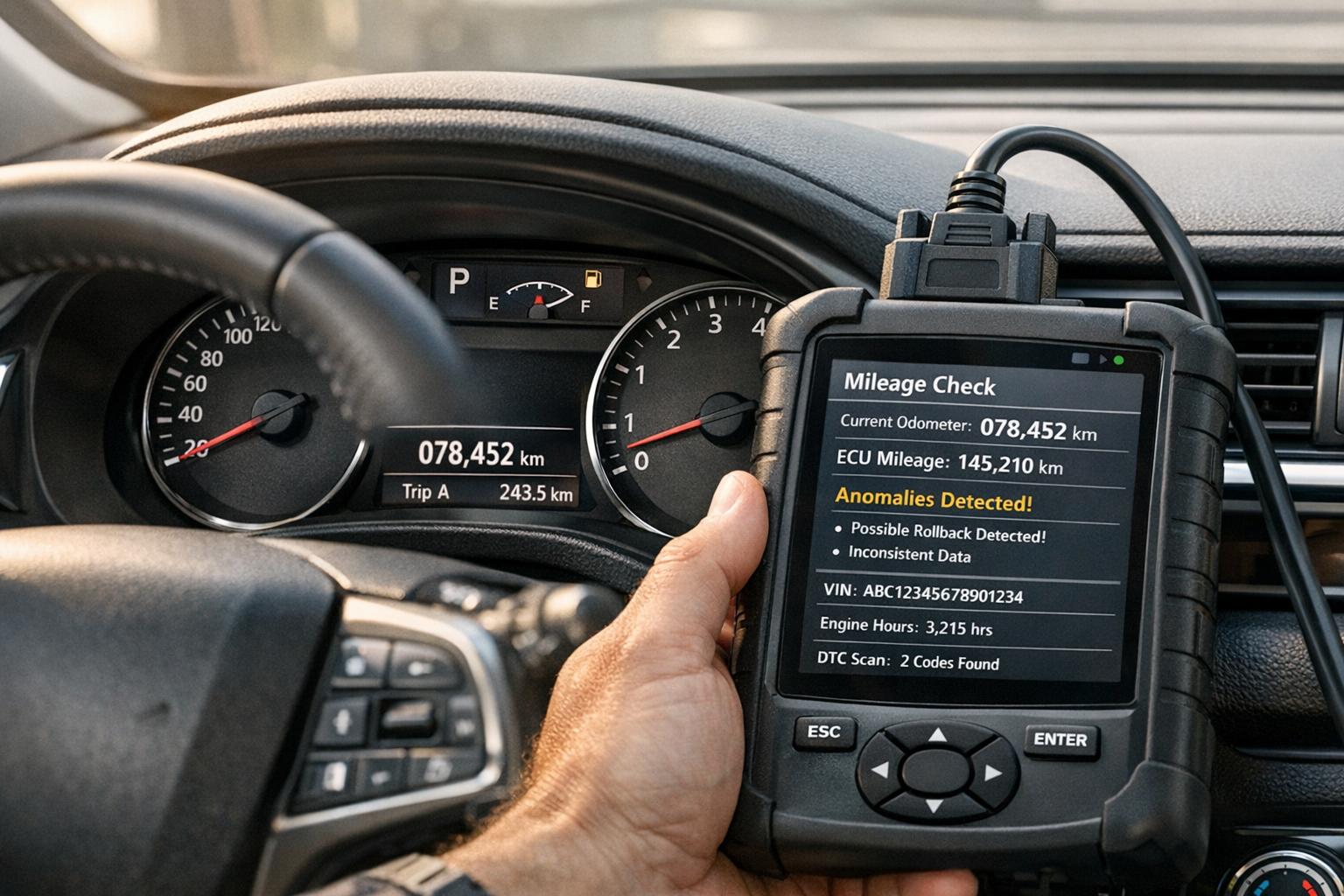
Mileage fraud, or odometer tampering, is a widespread issue in Uganda, especially with used car imports. Scammers alter odometer readings to inflate car prices, often leaving buyers with overused and unsafe vehicles. Here’s how you can protect yourself:
- Physical Signs: Check for wear on pedals, seats, and steering wheels. Misaligned odometer digits or scratches on the dashboard can indicate tampering.
- Digital Checks: Use an OBD-II scanner to compare odometer readings with internal vehicle data.
- Service Records: Verify mileage consistency in maintenance logs and contact service centers directly.
- Inspection Certificates: For imported cars, request JEVIC or EAA inspection reports to confirm mileage history.
- URA Tools: Use the Uganda Revenue Authority (URA) services to validate vehicle records for a small fee.
Tampered mileage can lead to overpaying and missed maintenance, risking your safety. Always perform thorough checks before buying a used car.
How to Inspect Odometers and Spot Tampering
Physical Signs of Odometer Tampering
Start by examining the pedals. If the brake, gas, or clutch pads show excessive wear, it could be a red flag, especially for a vehicle with fewer than 100,000 km (about 62,000 miles).
Take a close look at the interior. Signs like a worn steering wheel, driver’s seat, or gear shifter can be inconsistent with a low-mileage vehicle. Be cautious if you notice new car mats or a fresh steering wheel cover in a car advertised with low mileage. For instance, if a car is listed as having around 40,000 miles but the interior looks heavily used, it’s worth questioning the accuracy of the odometer reading.
Older vehicles require extra attention to the dashboard cluster. Misaligned digits, scratches, or evidence of tampering – such as mismatched screws – might indicate that the odometer has been altered.
Don’t ignore external clues either. A windshield riddled with tiny pits or worn-out suspension components could hint at underreported mileage. As Carfax points out:
If the car’s spark plugs and wires should last 100,000 miles but look like they are due for replacement when the odometer reads 40,000 miles, that’s a problem.
While these physical checks are essential, they should be paired with digital diagnostics to get a fuller picture. Digital odometers, in particular, require a different approach to detect tampering.
How Digital Odometers Can Be Manipulated
Digital odometers may seem more secure, but they come with their own vulnerabilities. Scammers can use software tools to alter the mileage displayed on the screen by accessing the vehicle’s OBD-II port. Some even use tools like "mileage blockers", initially designed for testing purposes, to prevent the car from recording miles altogether.
Be alert for signs of tampering around the dashboard, such as condensation, fingerprints, or hardware that doesn’t match the original factory setup.
Electronic diagnostics are crucial for uncovering tampering. According to OBDeleven:
Scammers often only change the number on the dashboard. If other control units still show higher mileage, those mismatches can be a strong hint that the odometer has been tampered with.
A mechanic equipped with an OBD-II scanner can compare the odometer reading with data stored in other systems, like the transmission or steering assistance module. Discrepancies between these readings are a clear warning sign. Alarmingly, an estimated 2.14 million vehicles in the U.S. may have had their odometers rolled back by 2024. This statistic highlights just how important it is to conduct a thorough inspection when assessing a used car.
How to Check Service Records and Maintenance History
How to Read Service Records
Service records are essential for spotting mileage fraud. These detailed receipts typically include the service date, mileage, work performed, and parts replaced. Always request original itemized receipts instead of relying solely on stamped service books.
Pay close attention to the mileage progression. It should consistently increase over time. If you notice a drop – say, from 75,000 miles in March 2024 to 68,000 miles in August 2024 – that’s a major warning sign. Similarly, if a vehicle claims to have 50,000 miles but lacks a record for a major service at 24,000 miles, it could indicate tampering with the odometer or service records.
For many modern vehicles, service records are stored digitally. Ask the dealership for a printed summary from their centralized system and compare it with any physical documents provided by the seller. In Uganda, you can take an additional step by using the Uganda Revenue Authority (URA) "Search and Certify" service. This tool ensures that the vehicle’s logbook details align with the official government database.
Finally, cross-check these records by reaching out to the service centers directly.
How to Contact Service Centers for Verification
Once you’ve reviewed the service records, it’s time to confirm their authenticity with the service centers. This step is crucial to ensure the information provided is accurate.
Contact the garages listed in the records, using the vehicle’s VIN and registration number. Ask them to confirm the mileage recorded during each service visit. Most reputable garages will gladly provide this information, either verbally or in writing, especially if you explain that you’re evaluating the vehicle for a potential purchase.
Before making these calls, confirm that the vehicle has gone through the validation process in Uganda. This involves updating old logbook details into the URA online motor vehicle register to generate a new E-log book. This step is mandatory for any legal transfer of ownership. The URA typically updates applicants on the search or certification status within two working days.
If a seller refuses to allow you to verify the service records or contact the garages listed, consider this a serious red flag. It’s always better to walk away from a deal than risk buying a vehicle with questionable history.
CHECKING/VERIFYING CAR MILEAGE: confirm if the mileage is genuine or reversed.
Using Inspection Reports and Diagnostic Tools
In addition to physical inspections and reviewing service records, leveraging inspection reports and digital tools can help confirm a vehicle’s mileage.
JEVIC Pre-Shipment Inspection Certificates

For vehicles imported from Japan, a JEVIC certificate is an essential document to verify mileage accuracy. JEVIC (Japan Export Vehicle Inspection Center) is a government-approved pre-shipment inspector for vehicles exported to Uganda and operates under ISO/IEC 17020 certification, ensuring impartiality and reliability.
JEVIC offers two types of inspections: a records-only inspection for approximately 3,500 JPY (about $24) and a more detailed comprehensive inspection for around 6,000 JPY (roughly $41). According to Integrity Exports:
JEVIC’s odometer inspection service not only looks at documentation that is available about the vehicle, but also involves a physical inspection of the vehicle itself for signs of tampering.
What sets JEVIC apart is its access to Japan’s "Shaken" system, a national database that logs mileage during mandatory vehicle inspections. As JDMBUYSELL explains:
The seller might fool you, but the seller cannot fool the system. They check the national database to compare the mileage logged there against what the car is showing.
To ensure accuracy, request a JEVIC certification immediately after purchasing the vehicle. This step is crucial because industry estimates suggest that up to 80% of used vehicles may have had their odometers tampered with before being exported.
EAA Inspection Reports in East Africa
Once a vehicle arrives in Uganda, it undergoes inspection by agents appointed by the Uganda National Bureau of Standards (UNBS). As of September 1, 2021, EAA Company Ltd and Quality Inspection Services Japan (QUISJ) are the primary authorized agents for Pre-Export Verification of Conformity (PVoC).
These agents issue Certificates of Road Worthiness (CRW), which remain valid for 12 months from the date of issue. David Livingstone Ebiru, Executive Director of UNBS, explained:
Effective 01st September, 2021, any Used motor vehicle accompanied by CRWs beyond twelve [undefined] months from the date of issue shall be subjected to Destination Inspection.
If you’re purchasing a vehicle that has been in Uganda for more than a year, confirm that it has undergone a recent local inspection. Without this, you’ll need to arrange and pay for a Destination Inspection before transferring ownership. Always verify the certificate’s issue date and authenticity by contacting EAA or QUISJ directly with the vehicle’s VIN and registration number.
Using OBD-II Scanners to Check Mileage
For more expensive vehicle purchases, using an OBD-II scanner can provide an extra layer of assurance. These diagnostic tools connect to the car’s Electronic Control Unit (ECU) and retrieve internal mileage data, which fraudsters often overlook when altering only the dashboard odometer.
To use an OBD-II scanner, plug it into the port under the dashboard, turn on the ignition, and navigate to the "Live Data" or "Mileage Check" screen. Compare mileage data from the ECU, transmission, and steering modules, as each stores separate mileage records. For instance, if the dashboard displays 31,000 miles but the ECU shows 75,000 miles, you’ve likely uncovered a rollback.
Professional-grade scanners can easily detect discrepancies. For a simpler, manual method, try the "radio hours trick." If the car still has its original radio, check the total working hours in the system settings. Multiply the hours by 0.75 and use the vehicle’s average speed to estimate the true mileage.
Another red flag is if a vehicle claims to have under 20,000 miles (about 32,000 km) but has replaced or heavily worn tires. This mismatch often indicates tampered mileage records.
Next, explore how to spot common mileage fraud tactics.
sbb-itb-7bab64a
Common Mileage Fraud Tactics to Watch For
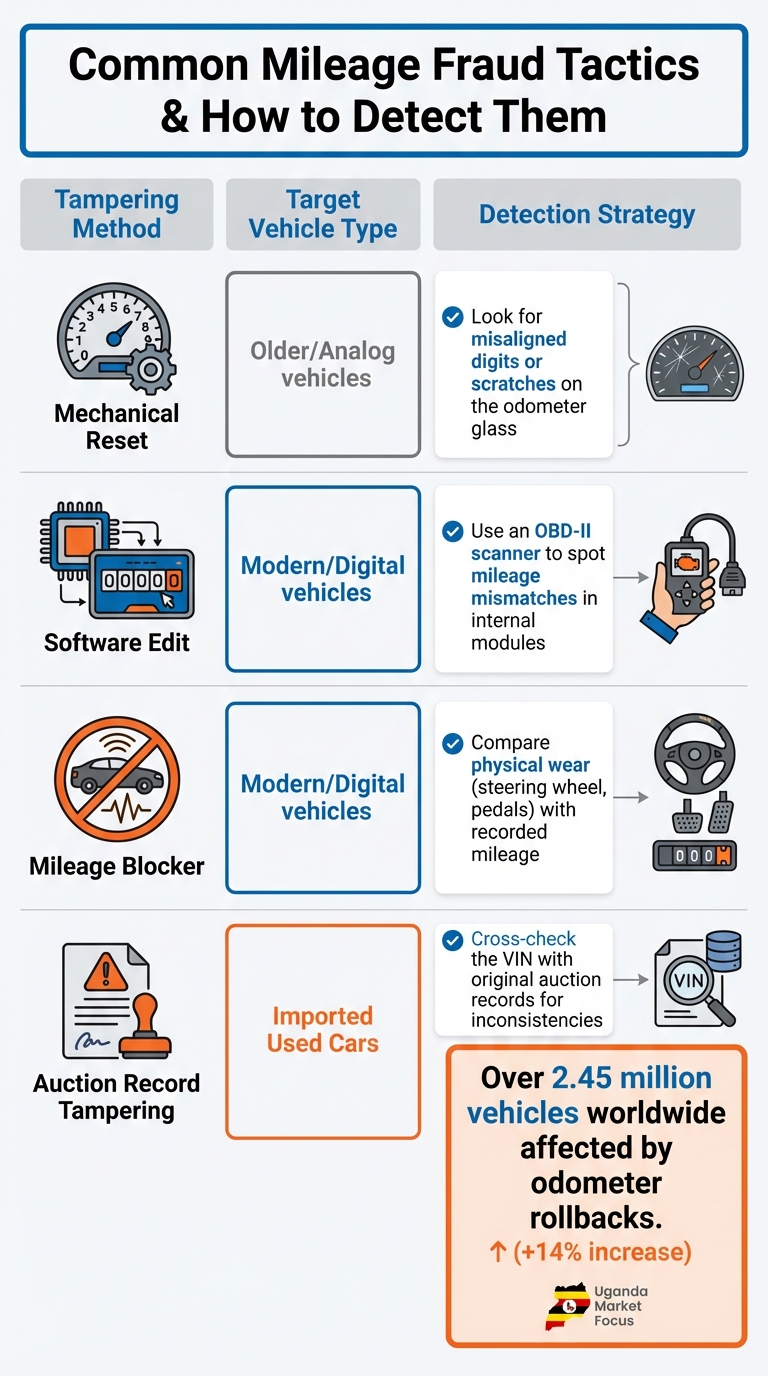
How to Detect Mileage Fraud: 4 Common Tampering Methods and Detection Strategies
Understanding how mileage fraud occurs can help you spot discrepancies when inspecting used vehicles in Uganda’s market. Let’s break down some of the most common tactics and how to detect them.
Odometer Rollbacks
Odometer rollback remains one of the most widespread forms of mileage fraud, impacting over 2.45 million vehicles worldwide – a 14% jump from the previous year.
For older vehicles with mechanical odometers, fraudsters may physically disassemble the instrument cluster or use tools to roll the odometer backward. Signs of tampering include misaligned digits on the odometer display, scratches on the odometer glass, or tool marks around the dashboard bezel.
In modern vehicles, the game has changed. Fraudsters now use mileage blockers, which prevent the odometer from recording miles while driving. These blockers might fool the dashboard reading, but they can’t hide the physical wear on high-touch areas like the steering wheel and pedals. For example, if a car claims to have under 37,000 miles (about 60,000 km) but shows significant wear in these areas, it’s a strong indicator of tampering.
Diagnostic tools are invaluable here. Using an OBD-II scanner, you can compare the dashboard mileage with data stored in the vehicle’s internal modules, such as the Engine Control Unit or ABS module. This method reliably uncovers mismatches and ensures accuracy.
Mileage Discrepancies in Auction Sheets
Another common tactic involves tampering with auction records, especially for imported vehicles from countries like Japan or the UK. Auction sheets document a vehicle’s mileage at the time of export, but fraudsters may forge or alter these records to misrepresent the car’s true mileage. A clear warning sign is when an earlier auction record shows higher mileage than the current odometer or auction sheet.
Pay attention to auction records for inconsistent mileage trends. Legitimate vehicles typically show a steady increase in recorded miles over time. Any “backward steps” or long periods with no mileage growth could signal tampering. Additionally, some sellers recycle old auction photos to make high-mileage vehicles appear newer, masking wear and tear.
To verify a vehicle’s history, cross-reference auction sheets with the Uganda Revenue Authority (URA) online portal. By entering the 17-character VIN, you can confirm details like mileage and export history. The URA charges UGX 20,000 for a basic search or UGX 40,000 for a certified document.
| Tampering Method | Target Vehicle Type | Detection Strategy |
|---|---|---|
| Mechanical Reset | Older/Analog | Look for misaligned digits or scratches on the odometer glass |
| Software Edit | Modern/Digital | Use an OBD-II scanner to spot mileage mismatches in internal modules |
| Mileage Blocker | Modern/Digital | Compare physical wear (e.g., steering wheel, pedals) with recorded mileage |
| Auction Record Tampering | Imported Used Cars | Cross-check the VIN with original auction records for inconsistencies |
Legal Implications and Consumer Protection in Uganda
Laws Against Mileage Fraud in Uganda
Uganda has implemented laws to tackle vehicle fraud, including mileage tampering. The Motor Vehicle Insurance (Third Party Risks) Act makes it a criminal offense to falsify a vehicle’s condition or history for insurance purposes. Penalties for such violations include fines of up to UGX 100,000, imprisonment for up to two years, and a possible suspension of your driving permit for 12 months.
The Traffic and Road Safety Act, 1998 (Amended 2020) also plays a role. Vehicle owners are required to report any changes to registration details within 14 days. Failure to comply can result in serious consequences, such as the seizure of the vehicle’s registration by police officers ranked Assistant Inspector or higher. First-time offenders could face up to five years in prison, while repeat offenders risk up to seven years behind bars.
Additionally, the Uganda Revenue Authority (URA) actively investigates fraudulent activities related to imported vehicles. To counter these schemes, the URA uses Non-Intrusive Inspection (NII) technology at key border points like Busia. Sellers sometimes manipulate mileage or age records to evade the 20% environmental levy imposed on vehicles older than eight years.
What to Do if You Suspect Fraud
If you suspect mileage fraud or any other vehicle-related deception, it’s crucial to act quickly. Start by verifying the vehicle’s history through the Chief Licensing Officer’s office. A basic search costs UGX 20,000, while a certified record – which can serve as legal evidence in court – is available for UGX 40,000.
To report fraud, contact the Uganda Police Force using emergency lines 999 or 112. If the fraud involves import documentation or tax evasion, reach out to the URA directly. You should also notify the Chief Licensing Officer to update or cancel inaccurate vehicle registration details.
If you’ve already purchased the vehicle, consult a lawyer to explore options like contract rescission or seeking compensation. Acting swiftly not only helps resolve the current issue but also protects your financial investment in the long run.
Conclusion and Next Steps for Car Buyers
Key Points from This Guide
When buying a used car, take the time to hire an independent mechanic to thoroughly inspect the engine, gearbox, and electronics. This step can save you from expensive surprises down the road. Additionally, confirm the vehicle’s ownership using the Uganda Revenue Authority (URA) online system at ura.go.ug. A basic vehicle search costs between UGX 20,000 and UGX 40,000 – a small price to pay for peace of mind when avoiding fraudulent purchases.
Be wary of physical irregularities like an overly clean interior or a fresh coat of paint. These could signal hidden problems or even a stolen, reconditioned vehicle. To check for any hidden liabilities, text "ESP [space] Plate Number" to 8888 or dial *165#. Avoid paying the full amount until the vehicle is legally transferred to your name, and always involve a witness during the inspection. Keep in mind the transfer fees: UGX 84,000 for cars or dual-purpose vehicles, UGX 74,000 for motorcycles, and UGX 104,000 for commercial vehicles. As Jeff from ttunda.com aptly puts it:
Used cars here don’t come with warranties. They come with stories; some true, many twisted.
How AutoMag.ug Supports Transparent Car Buying

AutoMag.ug is committed to helping Ugandan car buyers navigate the challenges of the used car market. By offering clear and reliable information, AutoMag.ug equips buyers with the tools they need to make confident decisions. From step-by-step verification guides to insights on pricing trends and scams like odometer rollbacks, the platform provides invaluable resources.
Understanding market dynamics, such as why Toyota vehicles tend to hold their value or how plate numbers influence pricing, is key to making informed choices. Before finalizing a purchase, always check the vehicle’s history for accidents, repairs, and odometer discrepancies. With practical tips on verifying ownership, reviewing traffic records, and spotting warning signs, AutoMag.ug ensures you’re dealing with legitimate sellers and avoiding costly mistakes.
FAQs
What are the legal penalties for tampering with a vehicle’s mileage in Uganda?
Tampering with a vehicle’s mileage, like rolling back the odometer, is a serious offense under Uganda’s Traffic and Road Safety Act, 1998. This law empowers authorities to take action against anyone who falsifies a vehicle’s condition or provides false mileage information.
Offenders caught engaging in such fraudulent practices can face:
- Revocation or suspension of the vehicle’s Certificate of Fitness, which means the vehicle cannot be legally driven until it passes a proper inspection.
- Fines or financial penalties, as specified under the law.
- Criminal charges for providing false information, which can result in additional fines or even imprisonment in more severe cases.
These strict measures aim to protect buyers, ensure road safety, and curb dishonest practices in Uganda’s used-car market.
How can I confirm if a used car’s service records are genuine?
To ensure the service records of a used car are genuine, start by locating the vehicle identification number (VIN). You can usually find it on the dashboard, the driver’s door frame, or in the car’s registration documents. Once you have the VIN, run a history check using reliable platforms or official government databases. This can reveal recorded service entries and flag any inconsistencies.
Ask the seller for the car’s original service logbook or any invoices that detail previous services. These should include important details like dates, mileage, and the service center’s name. Cross-check this information with the VIN report to verify accuracy. If the logbook mentions well-known garages, reach out to them directly to confirm the vehicle’s service history and mileage.
Be on the lookout for red flags like mismatched information, altered formatting, or suspicious stamps and signatures, as these could suggest tampering. Keep a record of everything you uncover – it could be useful for legal reasons or future reference.
What are the best ways to spot digital odometer fraud?
To spot signs of digital odometer tampering, begin by getting a vehicle history report using the VIN. These reports gather mileage data from multiple sources, making it easier to compare the recorded mileage with the current odometer reading. If there’s a big mismatch, it could be a warning sign.
Next, review the car’s service records for regular mileage updates during maintenance. Pay attention to any gaps or inconsistencies in the records, as these might suggest something’s off. Using these steps, along with a detailed inspection, can help you make a more informed and confident purchase.
Related Blog Posts
- Used Car Inspection: 10-Point Checklist Before Buying
- Where to buy used cars in Kampala
- Avoid fake car deals in Uganda
- Common Car Issues in Uganda’s Used Market