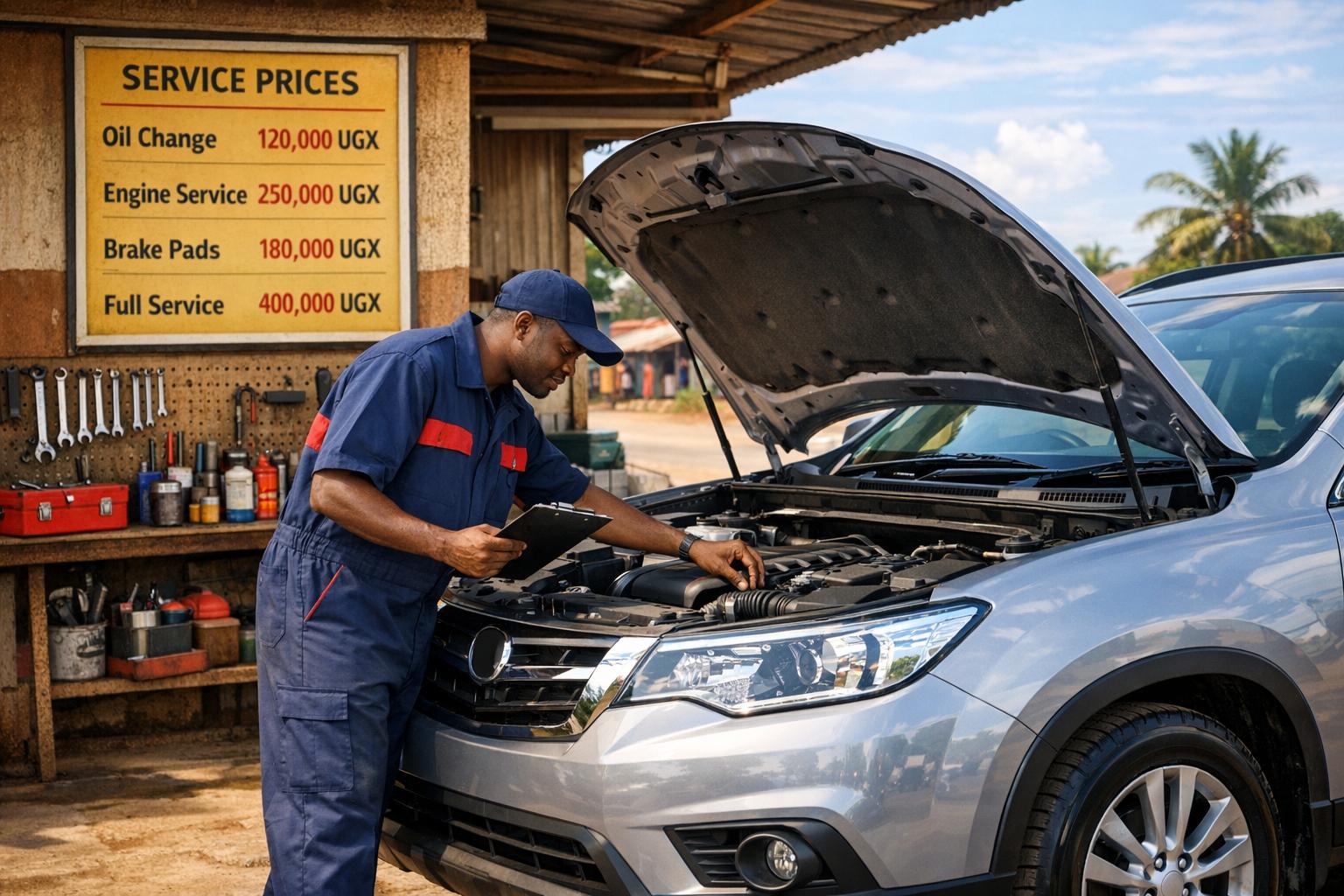
Owning a car in Uganda has become increasingly expensive, with maintenance costs rising by 43.6% between 2019 and 2025. This article breaks down the key expenses Ugandan drivers face in 2026, from routine servicing to spare parts and labor costs. Here’s what you need to know:
- Routine Service Costs: Basic services, like oil and filter changes, cost around UGX 140,000 and are recommended every 5,000–10,000 kilometers. Dusty roads and heavy traffic make regular upkeep essential.
- Spare Parts: Genuine parts are critical to safety and performance but can be pricey. For example, replacing shocks on a Honda CR-V costs about UGX 350,000.
- Labor Costs: Urban garages in Kampala charge higher rates due to overheads, while rural mechanics offer more affordable options.
- Common Repairs: Brake system overhauls range from UGX 380,000 to UGX 1,140,000, while suspension repairs can cost up to UGX 13,300,000.
- Fuel Costs: Gasoline averages UGX 5,127 per liter ($1.30), making fuel one of the largest recurring expenses.
To reduce costs, stick to regular maintenance, use trusted garages, and avoid counterfeit parts. Budgeting around $900 annually (UGX 3.4 million) for maintenance can help you avoid unexpected expenses and keep your car running smoothly.
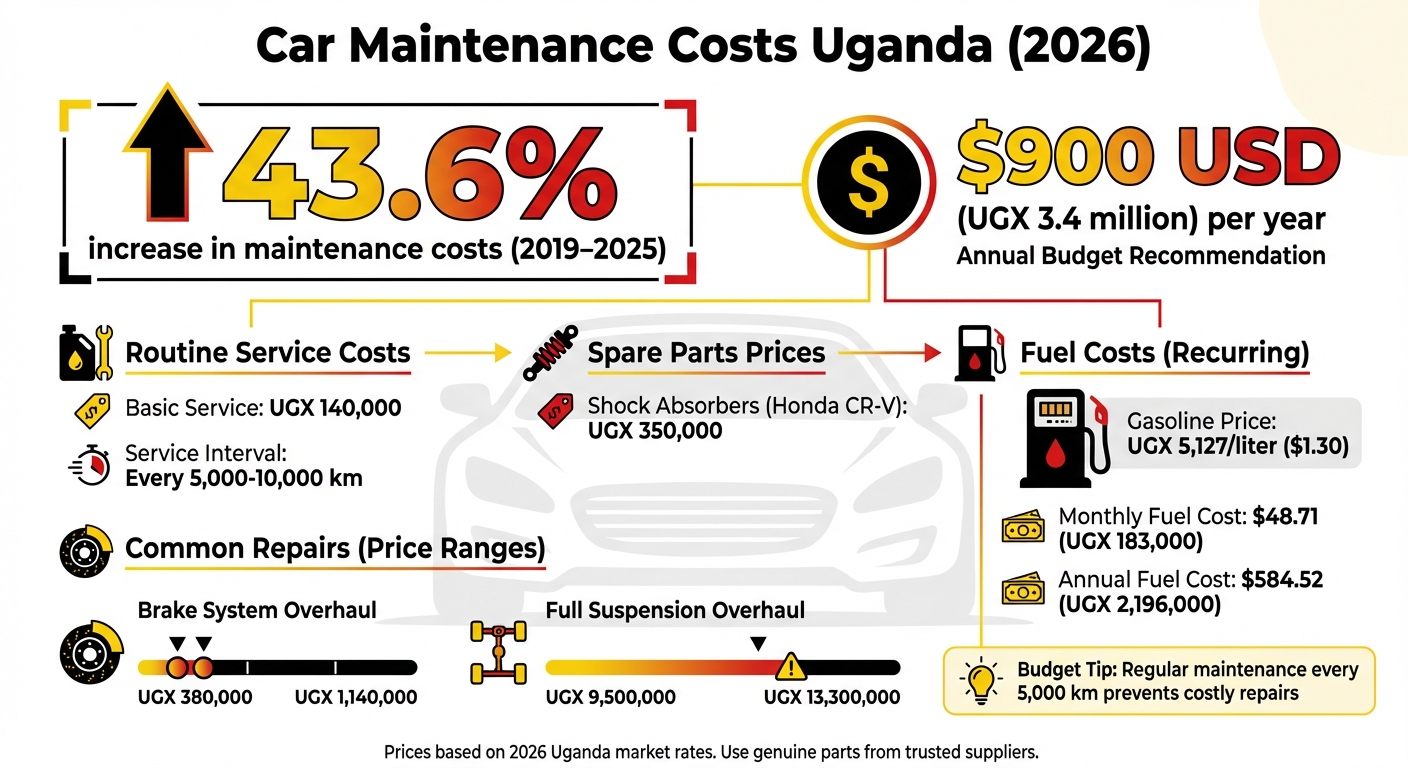
Car Maintenance Costs Breakdown Uganda 2026
Watch This Before Buying Your First Car in Uganda 🇺🇬
Regular Service Costs
Keeping up with routine vehicle maintenance is essential for smooth operation, but it can add up. For instance, a basic service that includes engine oil, air cleaner, and fuel filter replacements costs about UGX 140,000 at reputable Kampala stations such as Bukoto and Gayaza. Typically, this type of service is recommended every 5,000 to 10,000 kilometers. However, for older vehicles or those that see heavy use, some owners prefer a shorter interval of around 4,500 kilometers. These recurring expenses form the foundation of your overall vehicle maintenance budget in Uganda. Let’s break down the key components that contribute to these costs.
Oil Changes and Filter Replacements
Engine oil plays a crucial role in reducing friction and wear on your vehicle’s moving parts. David Okech from AutoMag Uganda explains:
"Engine oil lubricates moving parts and prevents excessive wear. Change it every 5,000 to 10,000 km, depending on your car model".
Uganda’s dusty roads and inconsistent fuel quality make it especially important to use high-quality lubricants and genuine filters. Counterfeit parts can lead to costly failures. To safeguard your vehicle, it’s wise to refuel and service at trusted stations like Shell, Total, or Vivo Energy.
Brake Pad and Fluid Services
Brake maintenance is another critical aspect of vehicle care, particularly given Uganda’s hilly terrain. Reliable brakes are essential for navigating steep slopes safely. As David Okech points out:
"Uganda’s hilly terrain requires a reliable braking system. Worn-out brake pads and insufficient brake fluid can lead to dangerous driving conditions".
The cost of brake pads varies depending on your vehicle model, but service centers like AutoXpress – located in the Industrial Area, Bombo Road, and Namanve – offer transparent pricing for brake-related work. Don’t overlook brake fluid either; it absorbs moisture over time, which can reduce braking effectiveness and lead to "brake fade." Experts recommend replacing brake fluid every two years. Additionally, using engine braking by shifting to a lower gear on steep descents can help prevent brake overheating and extend the life of your pads.
Air and Fuel Filter Maintenance
Uganda’s dry, unpaved roads can cause air filters to clog quickly, which reduces fuel efficiency and engine performance. Regular inspection and cleaning of air filters are essential. When it comes to fuel filters, Uganda’s conditions call for replacements every 20,000 kilometers – shorter than the standard 30,000 to 40,000 kilometers. Ignoring this can lead to dirt clogging the fuel system, overworking the fuel pump, and potentially causing costly damage. To combat dust buildup, regular car washes are helpful, and fuel additives can assist in keeping injectors clean.
Spare Parts Prices
Planning your maintenance budget starts with knowing the cost of genuine spare parts. Having accurate pricing information helps you avoid unexpected expenses and ensures your vehicle remains safe to drive. In Uganda, finding genuine parts at fair prices can be a real challenge. Car owner Arnold Mutebi puts it plainly:
"The Ugandan spare parts market is not one where you can easily and readily get what you want, at the right cost and in the best condition".
Steer clear of counterfeit parts – they can compromise safety and lead to premature failures. Fake components, especially for critical systems like brakes and suspension, not only wear out faster but also pose serious risks. To stay safe, always buy from trusted dealers like AutoXpress (Industrial Area, Bombo Road, and Namanve), Wamuco Motors, or Eagle Motors. Avoid second-hand versions of safety-critical parts such as brake pads or timing belts, as there’s no way to verify their reliability. Below, we break down the costs of some key components.
Engine Components (Oil Filters, Shocks, Suspension)
When it comes to engine components, quality matters. For instance, shock absorbers are among the most frequently replaced parts due to Uganda’s pothole-ridden roads. Replacing shocks for a Honda CR-V typically costs around UGX 350,000. To keep your suspension in good shape, inspect it every 10,000 kilometers. Pay attention to squeaking or knocking noises – they often signal worn bushings or shocks.
Brake and Electrical Parts
For electrical systems, car batteries generally last between 2 to 4 years, depending on Uganda’s climate. When replacing batteries or alternators, insist on a manufacturer’s warranty to ensure you’re getting authentic parts. Reliable suppliers like AutoXpress offer warranties and transparent pricing on major components. These warranties provide peace of mind and help you avoid counterfeit products.
Air Conditioning and Fuel System Parts
Uganda’s hot and dusty environment puts extra strain on air conditioning systems. Regular maintenance, such as refrigerant refills and filter cleanings, is crucial to keep your AC running efficiently. For fuel system components, always stick to genuine parts and verify their authenticity with detailed invoices. Additionally, refuel only at trusted stations to avoid damage caused by contaminated fuel. Request invoices that include part numbers to confirm the quality and cost of fuel system components.
Labor Costs at Ugandan Garages
Knowing how labor costs stack up is crucial for planning your vehicle maintenance budget. In Uganda, what you pay largely depends on where the garage is located and the type of facility you choose. Urban garages, especially in Kampala, tend to charge more than their rural counterparts. This price gap often reflects differences in equipment quality, technician expertise, and the transparency of pricing. Let’s dive into how these costs play out in suburban areas versus rural settings.
Rates in Kampala Suburbs (Gayaza, Bukoto)
Suburban areas like Gayaza and Bukoto are home to a mix of formal garages equipped with modern diagnostic tools and staffed by trained technicians. These facilities generally charge higher rates, partly because they are VAT-registered businesses. Uganda’s standard VAT of 18% applies to most garage services. For example, established garages like Wamuco Motors – operating since 1995 with over 50 skilled technicians – have significant expenses tied to equipment and expertise. Naturally, these costs are reflected in their labor charges.
When visiting these types of garages, it’s a good idea to request an itemized invoice. This breakdown should clearly show charges for labor, parts, and the specific work done.
While urban garages often come with higher costs, rural mechanics offer a more budget-friendly alternative.
Urban vs. Rural Labor Costs
The difference in labor costs between urban and rural garages comes down to operational expenses and business regulations. Urban garages, particularly those in Kampala’s Industrial Area, face hefty costs for rent, utilities, and administrative staff. They’re also required to register for VAT if their annual turnover exceeds UGX 150,000,000. On the other hand, rural mechanics typically operate with much lower fixed costs and are often not VAT-registered, enabling them to charge less.
Some garages, like Eagle Motors, have found a way to balance affordability and quality. By running lean operations, they’ve managed to cut overhead costs without compromising service. As they explain:
"Our Lean operations translate into lower operation costs and overheads. Our Customers’ benefit from low prices".
Additionally, a few Kampala-based garages offer mobile workshops, deploying service vans for repairs in rural areas. While convenient, the pricing for these mobile services can vary widely. Understanding these distinctions in labor costs can help you make smarter choices when budgeting for vehicle maintenance.
sbb-itb-7bab64a
Common Repair Costs
Driving in Uganda comes with its own set of challenges, thanks to rough roads filled with potholes, unpaved stretches, and uneven terrain. These conditions take a toll on essential vehicle systems like brakes, suspension, and air conditioning, often leading to repairs. Understanding the typical costs of these fixes can help you budget for both routine maintenance and unexpected breakdowns.
Brake System Overhauls
Brake repairs can range widely depending on what needs replacing. For instance, swapping out brake pads alone typically costs between UGX 380,000 and UGX 1,140,000 ($100 to $300), depending on your vehicle type. But if you’re looking at a full system overhaul – covering brake discs, calipers, and fluid replacement – the costs can rise significantly. Uganda’s hilly landscapes add extra wear and tear to brake systems, making regular checks and genuine parts a must.
Motorist Arnold Mutebi emphasizes the importance of quality parts:
"The Ugandan spare parts market is not one where you can easily and readily get what you want, at the right cost and in the best condition".
Cutting corners on brake components isn’t worth the risk, especially given the safety concerns.
Suspension and Shock Absorber Replacements
Suspension issues are a frequent headache for drivers in Uganda. If you notice squeaking or knocking noises when driving over bumps, it’s likely a sign that your shock absorbers or bushings are wearing out. Addressing these problems early can prevent more extensive damage. However, if a complete suspension overhaul becomes necessary, it can cost between UGX 9,500,000 and UGX 13,300,000 ($2,500 to $3,500).
To prolong the life of your suspension system, it’s wise to drive at moderate speeds, especially on the rough, unpaved roads common in rural areas.
Air Conditioner Refills and Major Repairs
Maintaining a vehicle’s air conditioning system is another recurring expense, particularly for older cars in Uganda’s hot climate. While a basic AC refill is relatively inexpensive, major repairs – such as replacing a failed compressor – can be pricey. Costs vary depending on your car’s make and model and whether you choose genuine parts. Using low-quality refrigerant or hiring an inexperienced technician can lead to repeated failures, so it’s essential to work with a trusted professional who uses proper equipment and authentic refrigerants.
Regular AC servicing every 5,000–10,000 km (3,100–6,200 miles) can help avoid costly breakdowns. As Arnold Mutebi puts it:
"Ignoring these warning signs can lead to more mechanical faults, resulting in costly repairs".
Fuel and Total Running Costs

When it comes to car ownership in Uganda, especially in Kampala’s notorious traffic, fuel costs are a major slice of the expense pie. Grasping how fuel consumption fits into your budget is key to understanding the full financial commitment of owning a car. Let’s break down how fuel usage impacts your overall car expenses.
Fuel Consumption by Vehicle Type
As of 2026, gasoline prices hover around UGX 5,127 ($1.30) per liter, with slight variations depending on the station. Diesel offers a slightly cheaper alternative, ranging from $1.00 to $1.20 per liter. For an average car covering about 12.4 miles (20 km) daily – a typical commute for city dwellers – the monthly fuel cost is estimated at $48.71 (about UGX 183,000). Annually, this totals approximately $584.52 (UGX 2,196,000).
Fuel efficiency can be boosted with good maintenance habits. Keeping tires properly inflated, replacing air filters, and driving smoothly can noticeably cut down on fuel usage. Compact cars like the Volkswagen Golf or mid-size sedans such as the Toyota Corolla are often used as benchmarks for fuel efficiency in Uganda. Additionally, refueling at trusted stations like Shell, Total, Stabex, or Rubis is crucial – poor-quality fuel can hurt efficiency and lead to costly engine damage.
Annual Budget Planning for Maintenance and Fuel
Fuel and regular upkeep are ongoing costs that play a big role in long-term car affordability. Adding these to one-time repair expenses gives you a clearer picture of your yearly budget. Routine services – like oil changes, tire rotations, brake checks, and filter replacements – should be factored into your financial planning.
Fuel will likely remain your largest recurring expense, so it’s wise to budget accordingly. Set aside funds for routine maintenance and an emergency reserve for unexpected repairs. Small adjustments can also help you save money. For example, avoid carrying unnecessary weight in your car, maintain proper tire pressure, and steer clear of fuel stations near wetlands, where diluted fuel could be an issue.
To calculate your fuel costs, use this simple formula: distance driven (km) ÷ mileage (km/l) × fuel price per liter = total cost. Tracking your fuel consumption over a few months can provide more accurate insights, helping you adjust for factors like traffic congestion or hilly terrain.
How to Reduce Maintenance Costs
Keeping your car maintenance costs in check starts with sticking to a consistent service schedule. Aim for a check-up every 5,000 kilometers or every six months to catch potential issues before they turn into costly repairs. As David Okech, a contributor at AutoMag Uganda, advises:
"Many car owners wait until a breakdown occurs before visiting a mechanic, but proactive maintenance is far more cost-effective".
Your driving habits and fuel choices also play a big role in cutting costs. Always refuel at trusted stations like Shell, Total, or Vivo Energy to avoid contaminated fuel, which can damage injectors and lead to engine problems . On the road, avoid abrupt acceleration and use engine braking when descending hills. These simple habits reduce wear on your engine and brakes, extending their lifespan while improving fuel efficiency.
Make it a habit to perform basic checks weekly. Look at your tire pressure, oil levels, coolant, and brake fluid . Clean your battery terminals regularly to prevent corrosion, and in dusty environments like Uganda, inspect air filters often to keep your engine running smoothly . Rotating your tires every 10,000 kilometers ensures even wear, which helps you get the most out of them .
When it comes to repairs, always choose genuine parts and trusted service providers. While quality components might seem more expensive upfront, they save you money in the long run by reducing the likelihood of frequent breakdowns . For instance, Eagle Motors markets itself as an affordable option by keeping its overhead low and passing the savings on to customers.
Another way to save is by selecting vehicles that are economical to maintain. Japanese brands like Toyota, Nissan, and Mitsubishi are popular because their parts are easy to find, and local mechanics are well-versed in repairing them . Older, simpler models are often even cheaper to maintain, as they’re easier for mechanics to diagnose and fix. Combining a cost-efficient vehicle with proactive maintenance can significantly lower your long-term expenses.
Conclusion
Understanding car maintenance costs in Uganda is crucial for protecting your investment. With a 43.6% increase in maintenance and repair costs between January 2019 and January 2025, being prepared for expenses – from routine oil changes to unexpected suspension repairs – helps you budget wisely and keep your vehicle running smoothly on Uganda’s demanding roads.
A closer look at these costs shows that preventive care is both safer and more cost-effective. Allocating an annual maintenance budget of around $900 (approximately 3.4 million UGX) for routine services can save you from costly emergency repairs, like fixing a seized engine or replacing a transmission. Sticking to manufacturer-recommended service intervals every 5,000 to 10,000 kilometers and addressing issues promptly can significantly extend your car’s lifespan and maintain its resale value.
Uganda’s driving conditions – characterized by potholes, unpaved roads, and heavy dust – require extra attention to components like suspension, tires, and air filters. Setting up a monthly maintenance fund and opting for vehicles with readily available parts, such as Toyota models, can ensure your car remains dependable. As Eric Hamilton, a Prepurchase Inspection Specialist, wisely advises:
"If you want to reduce expenses, get a copy of that regular maintenance schedule in your owner’s manual and take it to your local mechanic".
FAQs
How can I maintain my car in Uganda without overspending?
The smartest way to cut down on car maintenance costs in Uganda is by sticking to a preventive maintenance routine. Start with regular oil and filter changes – every 3,000 to 6,000 miles, or whatever your car manufacturer recommends. This simple step protects your engine and boosts fuel efficiency. Keep an eye on your brakes, too. Replacing worn brake pads early can save you from more expensive repairs down the line.
Uganda’s warm climate makes it especially important to maintain your cooling system. Clean it regularly and ensure coolant levels are topped up to prevent overheating. Batteries also deserve attention – inspect them regularly, particularly after long periods of inactivity, to avoid being caught off guard by a sudden failure.
Pay attention to warning signs like strange noises, dashboard alerts, or fluid leaks. Tackling these issues early can save you from costly mechanical problems. Opt for trusted local workshops with clear pricing to get quality service without breaking the bank.
Lastly, your driving habits matter. Drive gently – avoid aggressive acceleration, stick to smoother roads when you can, and consider fuel-efficient vehicles. These small adjustments can significantly lower both fuel and repair costs.
Are labor costs at garages different in urban and rural areas of Uganda?
Currently, there’s no detailed data comparing labor costs at garages in urban versus rural areas of Uganda. While general car maintenance costs are often mentioned in various sources, specific differences in labor charges based on location remain unaddressed.
To get a clearer picture, car owners might consider reaching out directly to local garages or speaking with mechanics in their area. This approach can provide more accurate, location-specific estimates for labor costs.
Why should I use genuine spare parts for car maintenance?
Using genuine spare parts is essential because they are specifically crafted to meet your car’s original design and specifications. This ensures they fit perfectly, perform as intended, and last longer. Plus, they help keep your vehicle safe, fuel-efficient, and dependable, minimizing the risk of expensive breakdowns or repairs that can arise from using inferior components.
In contrast, counterfeit or poorly made parts often skip critical quality checks. This can result in quicker wear, potential engine damage, or even serious safety issues like brake or steering failures. While genuine parts might seem pricier initially, they usually include warranties and can save you money over time by reducing the frequency of repairs and replacements.
Related Blog Posts
- Common Car Problems in Uganda: Solutions Guide
- How to Save Money on Used Car Maintenance
- Car maintenance costs in Uganda
- Top 5 Cars to Buy in Uganda for Less Than UGX 30,000,000