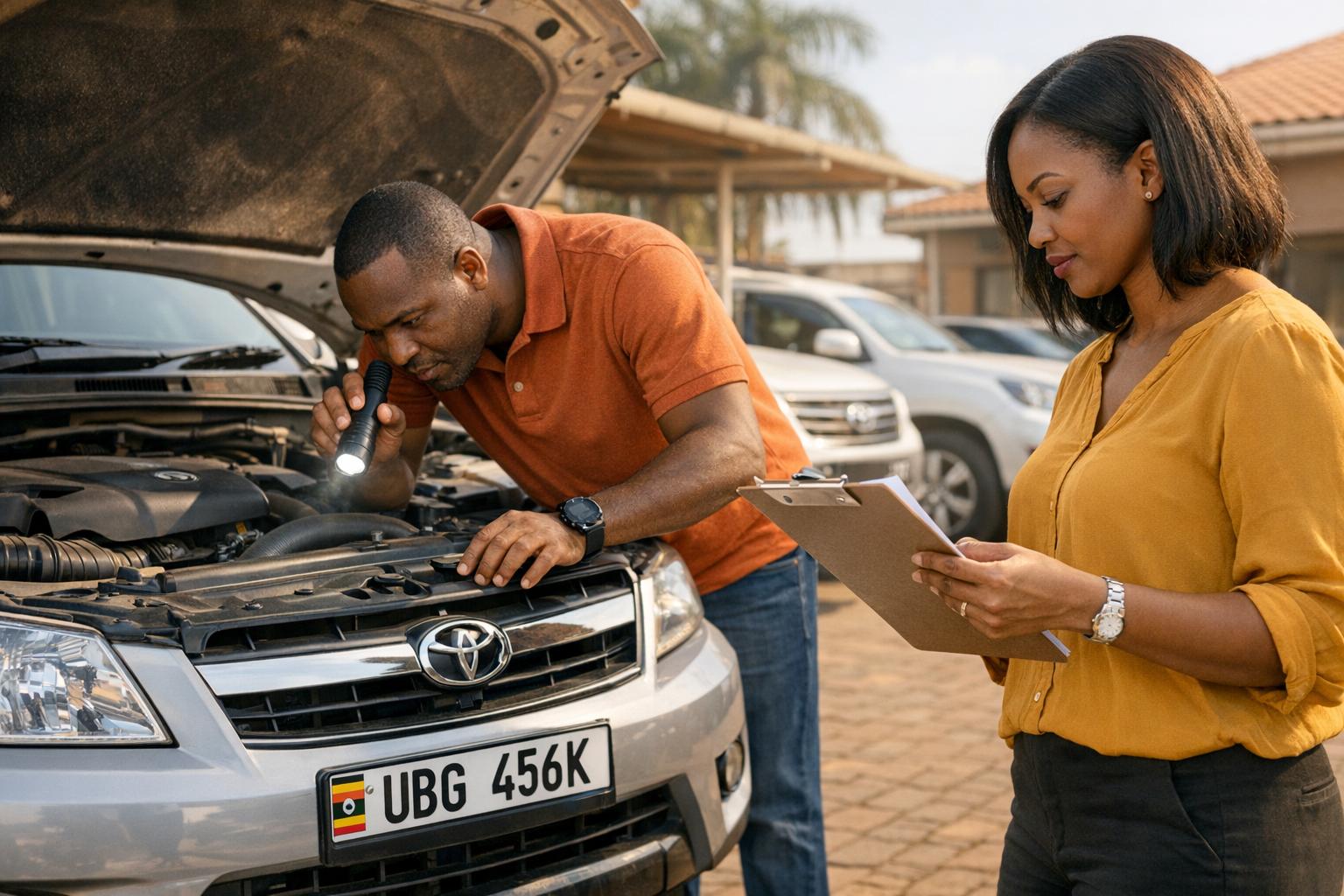
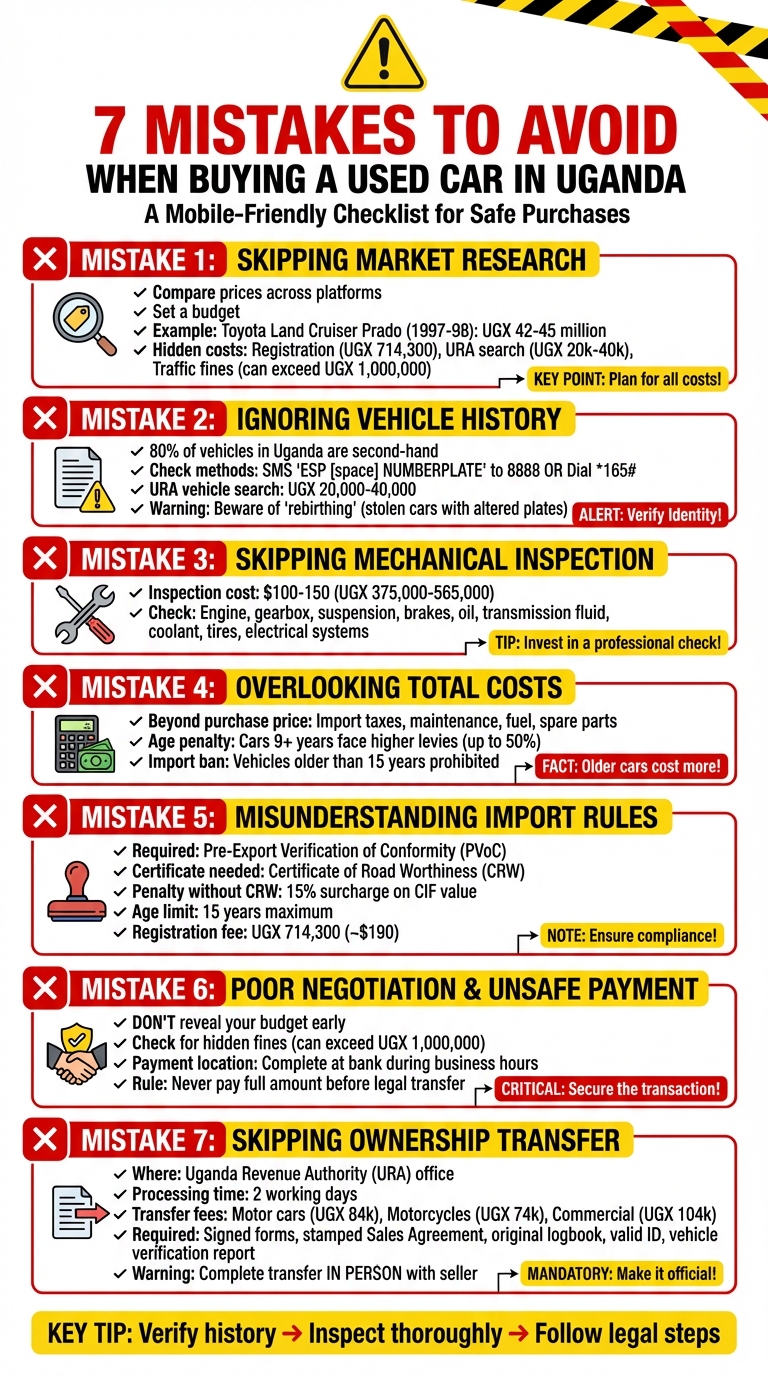
Buying a used car in Uganda can quickly turn into a costly mistake if you’re not careful. From hidden fines to mechanical issues, there are many pitfalls to watch out for. Here’s a quick summary of the seven most common mistakes buyers make and how to avoid them:
- Skipping Market Research: Failing to compare prices or set a budget can lead to overpaying. Always check platforms, visit car bonds, and account for extra costs like registration fees and fines.
- Ignoring Vehicle History: Cars can have unpaid fines or legal issues. Use tools like *165# or SMS services to check for fines and verify ownership with the Uganda Revenue Authority (URA).
- Skipping Mechanical Inspections: A car might look fine but hide serious issues. Hire an independent mechanic to inspect the engine, suspension, and other key parts.
- Overlooking Total Costs: Beyond the purchase price, factor in taxes, maintenance, and fuel. Older cars (9+ years) may also incur higher levies.
- Misunderstanding Import Rules: Uganda bans cars older than 15 years. Ensure compliance with Pre-Export Verification of Conformity (PVoC) standards to avoid extra fees.
- Poor Negotiation: Don’t reveal your budget early. Use inspection findings to negotiate and ensure a secure payment method, preferably at a bank.
- Skipping Ownership Transfer: Complete the transfer at the URA with the seller to avoid fraud or legal issues. Verify all documents and update the logbook.
Key Tip: Always verify a car’s history, inspect it thoroughly, and follow proper legal steps to protect your investment. Missing any of these steps could lead to unexpected costs or even losing the car.
For more details, read the full guide to avoid these mistakes and make a confident purchase.
7 Critical Mistakes to Avoid When Buying a Used Car in Uganda
Used Car Prices in Uganda 2025 with the Best Car Dealer
1. Not Researching the Market or Setting a Budget
Jumping into Uganda’s used car market without proper research or a clear budget can lead to spending more than you planned. Prices for used cars in Uganda are often negotiable, so preparation is key.
Start by comparing prices across different platforms. Check online classifieds, scroll through social media listings, and visit physical car bonds to get a sense of what’s reasonable. For instance, a 1997–1998 Toyota Land Cruiser Prado typically costs between UGX 42 million and UGX 45 million. Toyota is a top pick in Uganda because spare parts are easy to find, and its resale value holds up well over time.
Don’t forget to factor in additional costs. These can include registration fees (around UGX 714,300), a URA vehicle search (UGX 20,000 to UGX 40,000), and any outstanding traffic fines. Some cars come with fines exceeding UGX 1,000,000, so it’s important to check for unresolved penalties using the official codes before you negotiate.
Keep in mind that newer registration plates often come with a higher price tag, even if the car’s mechanical condition isn’t great. Instead of focusing on appearances, prioritize vehicles with a reputation for durability. Cars with strong suspension and good ground clearance are better suited for Uganda’s tough road conditions.
Resale value is another crucial factor. A car you buy today for UGX 20 million might only sell for UGX 15 million if you need to offload it quickly. Look into models that are known to retain their value. Additionally, be aware that cars older than nine years may come with higher levies, which can impact your budget.
Once you’ve done your research and set a budget, the next step is to verify the car’s history and documentation thoroughly.
2. Skipping Vehicle History and Import Document Checks
Purchasing a used car without digging into its history is a risky move, especially in Uganda, where 80% of vehicles on the road are second-hand. Many of these cars come with hidden problems that can quickly turn into costly surprises.
Start by checking traffic police records. Send an SMS with "ESP [space] NUMBERPLATE" to 8888 or dial *165# and follow the path: Payments → Fees & Taxes → Multiplex. This will reveal any unpaid fines, which can sometimes exceed UGX 1,000,000, particularly for commuter taxis.
Next, head to ura.go.ug and pay UGX 20,000 to UGX 40,000 for an official vehicle search. This step ensures the chassis and engine numbers match the logbook and verifies that the registered owner’s name aligns with the seller’s National ID. Be cautious of sellers who claim "the boss is abroad" – this is often a red flag.
Another major concern is "rebirthing", a scheme where stolen cars are given new identities with altered plates. Jeff from ttunda Classifieds offers this warning:
"A car that’s too clean on the outside with an old number plate might hide serious issues."
Also, confirm the vehicle has a valid Pre-Export Verification of Conformity (PVoC) certificate to ensure it meets the US845 standard. Finally, avoid paying the full price until the car is legally transferred to your name in the URA system. Work with the seller to complete the transfer together to steer clear of fraud.
3. Not Getting a Complete Mechanical Inspection
Checking documents is a smart move to avoid legal or financial troubles, but don’t stop there – getting a full mechanical inspection is just as important to protect yourself from unexpected repair costs. Skipping this step could mean paying for issues you didn’t see coming. As Jeff from ttunda Classifieds explains:
"A car might look clean and well-taken care of on the outside but under the hood, issues may be hidden."
That’s why hiring an independent mechanic for a thorough inspection is a must. A pre-purchase inspection will typically set you back between $100 and $150 (around UGX 375,000 to UGX 565,000). The mechanic should carefully examine key components like the engine, gearbox, suspension, and brakes.
Here are a few things you can check yourself while the mechanic does their job:
- Engine oil: Should be clean and amber-colored.
- Transmission fluid: Look for a pinkish hue.
- Coolant: It should be clear, which signals proper upkeep.
You can also test the suspension by pressing down on each corner of the car. If it bounces more than once, the shock absorbers might need attention. Check the tires too – wear should be even, and all tires should match in branding.
Don’t forget to test the electrical systems, including lights, windows, locks, and air conditioning. Make sure everything works as it should. Finally, ask the mechanic for a written report detailing any problems. This will help you make a well-informed decision before buying.
4. Forgetting About Total Ownership Costs in Uganda
Buying a car involves more than just the sticker price – it’s the ongoing costs that can sneak up on you and turn a seemingly great deal into a financial headache. Beyond the initial purchase, you need to account for import taxes, unexpected fees, maintenance, fuel costs, and the availability of spare parts. In short, it’s not just about what you pay upfront but also what you’ll spend to keep the car on the road.
In Uganda, import taxes are calculated based on the vehicle’s CIF value (Cost, Insurance, and Freight), age, engine capacity, and weight. To avoid any surprises, you can use the URA’s online car tax calculator to get an estimate. Keep in mind, however, that Uganda prohibits the import of vehicles older than 15 years.
Unexpected fees can also pile up quickly. For instance, some commuter taxis might carry over UGX 1,000,000 in unpaid traffic fines. To avoid inheriting someone else’s problems, check police and KCCA records for any outstanding fines. Additionally, conducting a formal URA vehicle search – costing between UGX 20,000 and UGX 40,000 – can confirm ownership and help you avoid legal complications.
Then there are the operational costs. Uganda’s roads, often dotted with potholes and prone to flooding, can lead to higher repair and maintenance expenses. Fuel efficiency is another key factor to consider. While a fuel-efficient car may cost more upfront, it can save you a significant amount over time. Popular brands like Toyota remain a favorite in Uganda, not just for their reliability but also for their strong resale value and the easy availability of spare parts.
sbb-itb-7bab64a
5. Not Understanding Uganda’s Import and Registration Requirements
After evaluating a vehicle’s history and mechanical condition, the next critical step is to familiarize yourself with Uganda’s import and registration process. Missing key details here can lead to hefty fines or even the loss of your vehicle.
Importing a car into Uganda involves detailed paperwork and mandatory inspections. The country has strict regulations, and failing to comply can result in serious consequences. Before making a purchase, ensure you fully understand what is required.
One key requirement is the Pre-Export Verification of Conformity (PVoC). This applies to all used vehicles entering Uganda. The Uganda National Bureau of Standards (UNBS) mandates that vehicles be inspected by approved agents in the country of origin before shipment. This inspection ensures the vehicle meets Uganda’s safety, health, and environmental standards, including Euro 4 emissions compliance. Once the vehicle passes inspection, you’ll receive a Certificate of Road Worthiness (CRW), which is essential for customs clearance. Without this certificate, you’ll face a 15% surcharge on the CIF (Cost, Insurance, and Freight) value, plus additional border inspection fees. These extra costs can easily add up to thousands of dollars.
For imported vehicles, registration must be completed before the car leaves the bonded warehouse. To register, you’ll need a valid Tax Identification Number (TIN) from the Uganda Revenue Authority (URA), the vehicle logbook, a Bill of Lading, the Vehicle Standards Certificate, and either your National ID or Passport. Registration fees are approximately UGX 714,300 (about $190), and vehicles older than 9 years may incur environmental levies of up to 50%. Additionally, Uganda enforces a strict 15-year age limit on vehicle imports, so always verify the manufacturing date before shipping.
For vehicles already in Uganda, the registration process is slightly different. Both the buyer and seller must visit the Uganda Revenue Authority in person to complete the transfer and update the logbook. Before making payment, confirm that the logbook matches the seller’s ID and conduct a URA vehicle search, which costs between UGX 20,000 and UGX 40,000. Be cautious of any inherited liabilities, such as unpaid traffic fines, which can amount to as much as UGX 1,000,000 and will transfer with the vehicle. To avoid surprises, double-check the digital records for any outstanding fines.
6. Poor Negotiation and Unsafe Payment Methods
Once you’ve confirmed the car’s history and condition, the next step is negotiating the price and choosing a secure payment method. Revealing your budget too soon can weaken your bargaining position and potentially cost you more. In Uganda, car pricing often feels like "storytelling", where sellers justify their prices based on factors like newer registration plates (e.g., UBD or UBE series tend to cost more), brand popularity (Toyota dominates with the highest resale value), and fuel efficiency. Keep your maximum budget private and let the seller make the first offer to maintain your upper hand in negotiations.
Instead of focusing on monthly payments, look at the total "Out-the-Door" cost, which includes all taxes and fees. Use any issues uncovered during the inspection – like worn tires, mechanical problems, or cosmetic damage – as leverage to negotiate a lower price. Before finalizing any deal, check for hidden liabilities. Use Uganda’s SMS and dialing protocols to uncover unpaid fines, as commuter taxis, for example, can rack up fines exceeding UGX 1,000,000 (around $265), which will transfer to the new owner. Always negotiate with the individual listed on the logbook. Be wary of sellers who claim, "My boss is abroad", as this is a common fraud warning sign. Once you’ve agreed on a price, focus on ensuring a secure payment process.
When it comes to payments, safety is critical. Never pay the full amount until the car is legally transferred to your name. The safest option is to complete the transaction at a bank during business hours. Banks provide a secure environment with cameras, professional staff, and witnesses who can verify funds. Avoid using personal checks, payment apps, or installment plans, as these methods can lead to disputes or delays in clearance. If you’re paying in cash, ask a bank teller to count and verify the money using counterfeit detection tools. For bank transfers, allow 1–3 business days for the funds to clear. Always meet at recognizable offices or dealerships – never at random roadside spots or petrol stations. Before exchanging any money, have both parties sign a sales agreement, witnessed by others, that specifies the price, payment method, and details of the logbook transfer.
"Don’t pay full money before the car is legally transferred to your name. If you can, do the transfer together with the seller." – ttunda.com
Whenever possible, complete the ownership transfer at the Uganda Revenue Authority alongside the seller immediately after payment. This step protects both parties, ensures the logbook is updated with your name, and reduces the risk of fraud. It’s also a good idea to bring along a trusted friend or mechanic during negotiations for an objective second opinion.
7. Missing Legal Ownership Transfer and Paperwork Steps
After securing payment for a vehicle, the next crucial step is completing the legal ownership transfer. Skipping this step can lead to serious financial and legal issues. In Uganda, vehicle ownership transfers are handled online through the Uganda Revenue Authority (URA) portal. To begin, validate the old logbook in the URA online registry to obtain a new E-logbook. This validation is essential – not only for the transfer process but also for paying mandatory third-party insurance and ensuring future legal ownership of the vehicle.
"The transfer of ownership from a private (personal) to another person, number plates should not change." – Uganda Revenue Authority
The Ministry of Works and Transport strictly prohibits using third parties or agents for submitting transfer applications. Either the buyer or the seller must visit the Motor Vehicle Registration (MVR) offices in person. To complete the transfer, you’ll need the following:
- Signed application forms
- A stamped Sales Agreement
- The original logbook
- A valid ID (National ID for Ugandans or passport and visa for non-citizens)
- A vehicle verification report
The URA typically processes transfers within two working days. The fees are UGX 84,000 for motor cars, UGX 74,000 for motorcycles, and UGX 104,000 for commercial vehicles.
If the vehicle was imported duty-free by a corporation or falls under a part-payment agreement with URA Customs, ensure any outstanding taxes are cleared before initiating the transfer. Vehicles with personalized plates require re-registration with standard plates, as personalized plates cannot be transferred.
An untraceable seller can complicate the process significantly, potentially requiring court orders and public notices to resolve ownership disputes. To avoid such risks, it’s vital to complete the ownership transfer in person at the URA office, alongside the seller. This step not only protects your investment but also minimizes the chances of fraud or future legal complications.
Conclusion
Buying a used car in Uganda doesn’t have to feel like rolling the dice – if you’re prepared and know what to avoid. The seven common mistakes highlighted here, like skipping market research or overlooking legal ownership transfers, can lead to unnecessary expenses and headaches. For instance, missing unpaid traffic fines could leave you with unexpected bills, while neglecting a mechanical inspection might result in a car that needs costly repairs shortly after purchase. Every step, from researching the market to completing the legal transfer, plays a crucial role in ensuring a smooth transaction.
The financial impact of these oversights can add up quickly. Taking the time to do your homework is essential to protect your hard-earned money.
But it’s not just about the money – it’s also about avoiding legal troubles. Verifying documents and completing the proper legal transfer can save you from ownership disputes or even having your car impounded. A little extra effort now can save you a lot of frustration down the road.
FAQs
How can I check the history and legal status of a used car in Uganda?
To make sure a used car in Uganda is legitimate and free of any legal troubles, start by running its details through the official e-Tax or vehicle verification services. You’ll need the car’s chassis number, engine number, and registration plate to check ownership records, past transfers, and whether there are any legal issues, like unpaid fines or active restrictions.
Next, carefully review the car’s key documents. These include the vehicle logbook, bill of lading, and UNBS standards certificate. Double-check that the logbook details – such as the make, model, year, chassis, and engine numbers – match the car itself. The bill of lading is essential to confirm the vehicle was legally imported. Any discrepancies in these documents could signal problems, like theft or improper importation.
Lastly, use the Uganda Revenue Authority or Ministry of Works and Transport systems to check for unpaid taxes, registration fees, or fines. These platforms can also confirm if the car meets the 15-year age limit and has passed required roadworthiness inspections. Following these steps will help you understand the car’s history and ensure it’s a legal and safe purchase.
How can I make a secure payment when buying a used car?
To make sure your payment process is secure, start by double-checking the seller’s identity and ensuring their information aligns with the car’s registration documents. Always arrange to meet the seller in person, ideally in a public, well-lit area. Take the time to carefully inspect both the car and its paperwork, including the title, service history, and any relevant import documents.
When it’s time to pay, opt for a traceable method such as a bank transfer, mobile payment, or an escrow service that holds the funds until the ownership transfer is finalized. Be sure to get a written receipt that includes key details like the vehicle’s VIN, the agreed price, the date, and signatures from both you and the seller. Avoid paying in cash or completing the transaction until all registration paperwork is properly handled – this will help protect you from potential scams or fraud.
Why is it important to get a used car inspected by a mechanic before buying?
A thorough mechanical inspection is a must when buying a used car. While a quick glance might not reveal hidden issues like engine problems or worn brakes, these can turn into costly repairs – or worse, safety hazards – later on.
Getting the car inspected also puts you in a stronger position to negotiate. If the mechanic finds any repairs or replacements are needed, you can adjust your offer accordingly, ensuring you don’t pay more than the car is worth. To make a smarter, safer purchase, always have a trusted mechanic check the vehicle before sealing the deal. It’s an investment in your peace of mind.
Related Blog Posts
- Used Car Inspection: 10-Point Checklist Before Buying
- Where to buy used cars in Kampala
- How to register a used car in Uganda
- Avoid fake car deals in Uganda