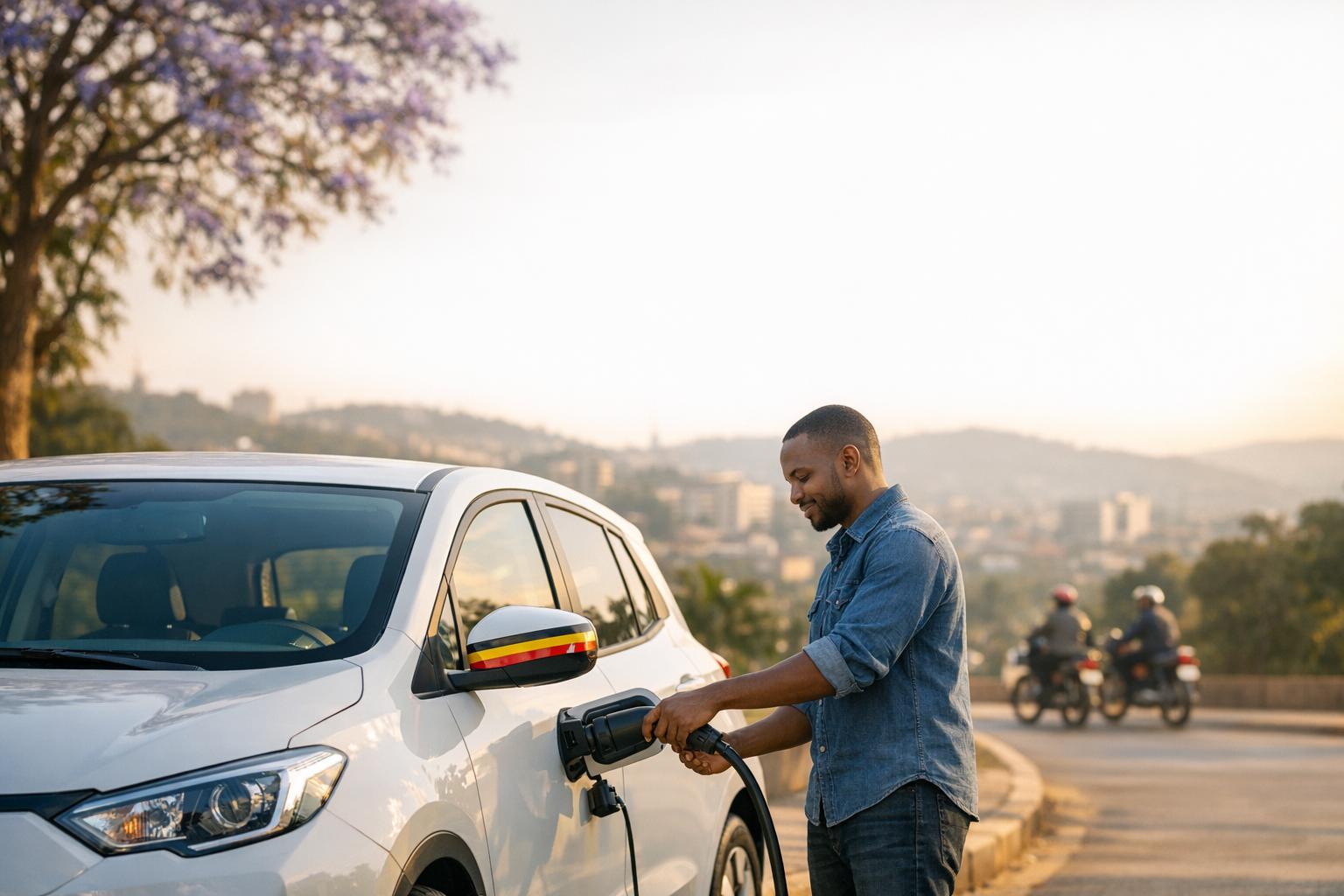
Eco-friendly cars in Uganda are gaining attention as both a practical and symbolic shift in transportation. Locally produced vehicles like the Kiira EV and Kayoola electric buses represent efforts to reduce reliance on imported fuel and second-hand cars. However, challenges like high upfront costs, limited charging infrastructure, and an unreliable electricity grid slow widespread adoption. Financial solutions, such as green vehicle loans, and government-backed initiatives are improving accessibility, while benefits like lower fuel costs, reduced air pollution, and national pride in local manufacturing are driving interest.
Key Points:
- Local Options: Kiira EV (from $10,000-$15,000) and Kayoola buses are tailored for Uganda’s needs.
- Cost Concerns: Imported EVs like Tesla Model 3 ($30,000+) remain out of reach for most.
- Economic & Health Benefits: Reduced fuel costs and cleaner air are appealing, especially in urban areas.
- Barriers: Charging infrastructure and electricity reliability are major hurdles.
- Government & Private Support: Policies, loans, and solar-powered charging stations are helping.
Uganda’s journey toward eco-friendly cars reflects a mix of optimism and practical challenges, with momentum building for a greener future.
E-Mobility Ambitions: Govt forecasts $1b flow into EV investments by 2030
sbb-itb-7bab64a
Which Eco-Friendly Cars Are Available in Uganda?
Uganda’s eco-friendly vehicle market is steadily growing, with a focus on locally produced models like the Kiira EV and the Kayoola electric bus. These vehicles are designed to suit Uganda’s roads and economic conditions. While imported electric vehicles (EVs) such as the Nissan Leaf and Tesla Model 3 are available, their high price tags – ranging from $30,000 to over $40,000 – make them less accessible to most Ugandans. Two standout models highlight the country’s strides in green transportation.
The Kiira EV: Uganda’s First Electric Car
The Kiira EV, launched in 2011, holds the distinction of being Africa’s first electric car. Initially introduced as a two-seater prototype, it has since evolved into the Kiira EVS, a four-seater hybrid vehicle aimed at the executive market. With an estimated price between $10,000 and $15,000, it’s more affordable than many imported alternatives.
Kiira Motors Corporation (KMC), the company behind this innovation, is majority-owned by the Government of Uganda (96%) and Makerere University (4%). KMC operates the Kiira Vehicle Plant in Jinja, which has an annual production capacity of 5,000 vehicles. By September 2025, the plant had manufactured 37 electric vehicles and 27 diesel buses. Impressively, KMC plans to source up to 90% of its components locally, tapping into Uganda’s natural resources like lithium, iron ore, and cobalt. Once fully operational, the facility is expected to generate over 2,000 direct jobs and 12,000 indirect jobs.
Kayoola Electric Bus: Urban Mobility with Reduced Emissions
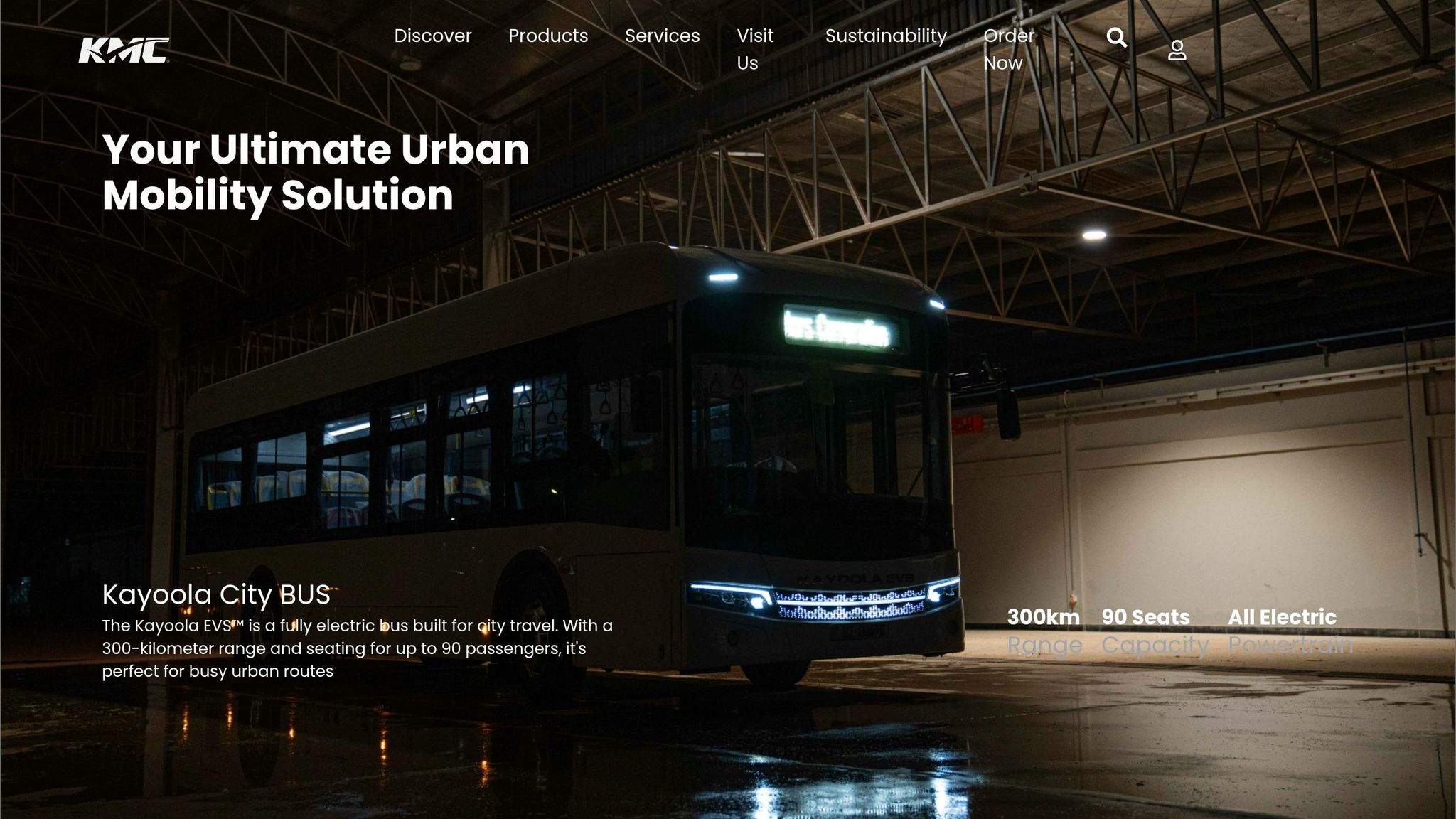
The Kayoola EVS is a fully electric city bus designed to tackle urban air pollution, especially in Kampala. With a range of up to 300 kilometers (about 186 miles) per charge, the bus is available in various sizes, from an 8-meter model that carries 56 passengers to an 18-meter version accommodating 120 passengers.
The Kayoola buses made a strong impression during the EU-Uganda Business Forum in March 2020, completing a 230-kilometer round trip from Kampala to the Kiira Vehicle Plant. Since September 2022, these buses have been used by Tondeka Metro Bus Service and the Uganda Civil Aviation Authority for urban transportation and staff shuttling.
How Do Ugandans Feel About Eco-Friendly Cars?
As the automotive market shifts, Ugandans are expressing a mix of pride and practicality when it comes to eco-friendly cars. What once seemed like an unattainable luxury now feels like a plausible choice for daily life – especially in urban hubs like Kampala and Entebbe. The conversation has moved from whether electric vehicles (EVs) could work in Uganda to when they might become a common sight among middle-income drivers.
Pride in Ugandan-Made Vehicles
There’s a strong sense of national pride surrounding locally produced vehicles like the Kiira EV and the Kayoola bus. Back in February 2019, the Kiira EVS executive vehicle embarked on a tour across Uganda, covering over 2,268 miles (3,650 kilometers). This journey inspired people from all walks of life, particularly students, who saw it as a symbol of what Ugandans could achieve. Blogger and communications specialist Ruth Aine captured this sentiment perfectly:
"The message given by the young people who worked on it [Kiira EV] was that they wanted to demonstrate that Uganda was as good as the USA and Germany".
The Kiira EV’s journey from a Makerere University student project to a state-backed enterprise resonates deeply with many Ugandans. It represents a broader push for sustainable, locally manufactured vehicles. This pride extends to professionals as well; for example, government communication officers and Civil Aviation Authority staff use the Kayoola EVS for shuttle services and airport transfers. Even during the EU-Uganda Business Forum in March 2020, these buses transported EU delegates between Entebbe International Airport and Munyonyo Commonwealth Resort, proving their reliability in professional settings.
Concerns About Cost and Accessibility
Despite the enthusiasm, high costs remain a significant obstacle for widespread adoption. With an estimated price tag of $30,000 for the Kiira EV, many Ugandans find it hard to justify the expense, especially when second-hand imports from Japan can cost as little as $1,000 before taxes. Beyond the cost, the lack of reliable charging infrastructure adds another layer of concern. Ruth Aine highlighted this issue:
"Electricity in Uganda is one of those unreliable services in the country. That Ugandans would be able to buy these cars when they are finally on the market is something that I wait to witness".
While concerns about EV durability and maintenance are fading, the reliability of Uganda’s electricity grid for consistent charging remains a sticking point. For now, these challenges temper the excitement around eco-friendly cars, leaving many to wonder how accessible they will truly become.
What Benefits Do Ugandans See in Eco-Friendly Cars?
Ugandans are increasingly recognizing the perks of eco-friendly vehicles, which go beyond personal savings to touch on public health and the nation’s economic growth. These advantages are shaping the rising interest in sustainable transport options across the country.
Lower Fuel Costs and Maintenance
Switching to electric vehicles, like the electric boda bodas, offers clear financial benefits. Drivers of these electric models earn 11% more in net profits compared to those using petrol-powered alternatives, thanks to lower fuel and maintenance costs. Although the initial purchase price is higher ($1,911 for electric vs. $1,200 for petrol), the long-term savings make a strong case for the investment. This also helps reduce Uganda’s reliance on imported fuel, which costs the country a staggering $2 billion annually.
Moreover, Uganda generates about 90% of its electricity from renewable sources. This means drivers can power their vehicles using clean, locally-produced energy, avoiding the expense and environmental impact of imported fuel. These savings help offset concerns about the upfront costs and limited infrastructure, making eco-friendly vehicles a practical option for many.
Cleaner Air and Better Health
Beyond financial gains, eco-friendly vehicles bring crucial health benefits. Air pollution is a major issue in Uganda, causing over 30,000 premature deaths annually. Transitioning to electric boda bodas in Kampala could cut particulate matter (PM2.5) levels by 15%, reducing pollution-related deaths by 18%.
As Gabriel Okello from the Cambridge Institute for Sustainability Leadership explains:
"Simply put, cleaner transport means cleaner air, better health for everyone and fewer people dying".
The health benefits are profound. Deaths from heart and blood vessel diseases could drop by 17%, while mortality rates for children under five from severe lung infections might decrease by 12%. Chronic lung disease deaths among adults over 25 could fall by 11%. For a country where healthcare resources are often stretched thin, reducing chronic illnesses through cleaner transport could provide much-needed relief.
National Pride in Local Manufacturing
Eco-friendly vehicles also symbolize Uganda’s aspirations for industrial growth. Locally manufactured vehicles, such as those from Kiira Motors Corporation, highlight this ambition. This state-backed company has achieved several milestones, including producing Africa’s first electric vehicle, hybrid, and solar-powered bus.
The Kiira Vehicle Plant is expected to generate over 2,000 direct jobs and 12,000 indirect jobs once fully operational. By sourcing up to 90% of vehicle components locally, the company is creating demand for Uganda’s natural resources like iron ore, lithium, cobalt, and even local cotton for vehicle interiors.
Kiira Motors’ achievements have not gone unnoticed. The company was named "African Company of the Year" at the 2021 African Business Leadership Awards. Orders for their buses have already come in from countries like Tanzania, South Africa, Eswatini, and Nigeria, marking Uganda’s emergence as a regional exporter of automotive technology, rather than just a consumer.
These developments not only bolster the economy but also instill a sense of national pride in Uganda’s ability to innovate and compete on a global stage.
What Barriers Prevent Wider Adoption of Eco-Friendly Cars in Uganda?
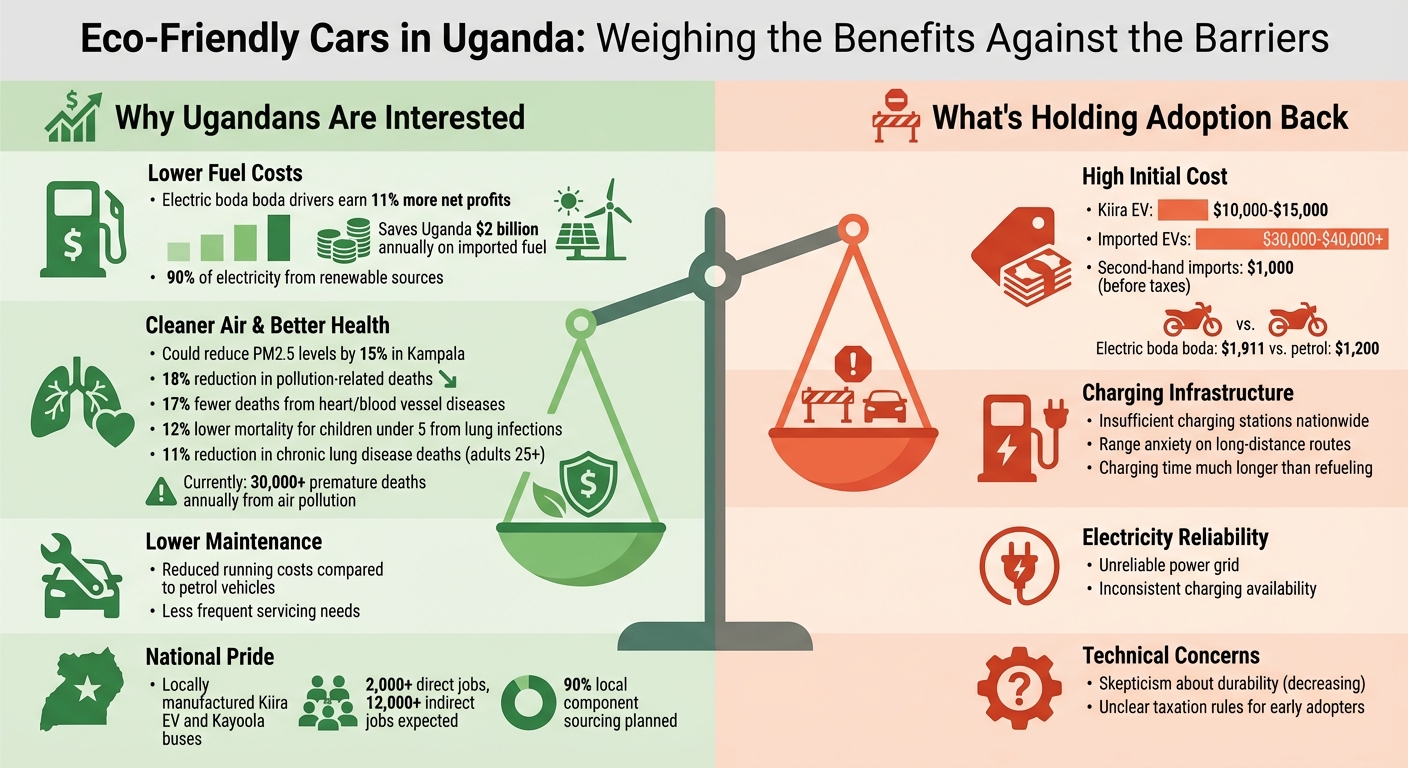
Eco-Friendly Cars in Uganda: Benefits vs Barriers Comparison
Shifting from public sentiment to tangible challenges, several key obstacles are slowing the adoption of eco-friendly vehicles in Uganda.
One major issue is the lack of charging infrastructure. A review of 537 studies on electric vehicle adoption highlights this as the most commonly cited barrier. This shortage fuels "range anxiety", the fear of running out of power before finding a charging station. Unlike traditional fuel stations, where refueling takes just minutes, charging an electric vehicle can take considerably longer, adding inconvenience for drivers.
Another significant hurdle is the high initial purchase price. While eco-friendly vehicles promise savings in the long run through reduced running and maintenance costs, the upfront cost remains prohibitive for many Ugandans. Financial institutions like NCBA Bank, led by Adad Araguha, are stepping in to address this issue by offering green vehicle loans with lower interest rates, targeting middle-income urban drivers. Additionally, events like the Kampala Auto Show at Kololo Ceremonial Grounds in July 2025 provided a platform for over 50 exhibitors to engage with the public, showcasing interactive demonstrations that tackled concerns about vehicle durability and maintenance – topics often overlooked in earlier campaigns.
Pros and Cons Comparison
| Advantages | Disadvantages |
|---|---|
| Lower running costs | High initial purchase price |
| Reduced pollution | Insufficient charging stations nationwide |
| Lower maintenance needs | Extended charging time versus refueling |
| National pride in local manufacturing | Range anxiety on long-distance routes |
| Technical skepticism about durability |
How Is Uganda Promoting Eco-Friendly Cars?
Uganda is making strides in encouraging the adoption of eco-friendly vehicles, combining government initiatives with international partnerships to pave the way for a greener future.
Government Support and Policies
The Ugandan government is actively working toward building a domestic electric vehicle (EV) industry aligned with its climate goals. This effort goes beyond policy declarations, as officials are developing regulatory frameworks to encourage EV adoption. Early adopters have experienced challenges, such as unclear taxation rules, which are helping shape more refined policies moving forward. To increase public awareness, the Ministry of Energy has showcased electric vehicles at events like the Energy Efficiency and Electric Mobility Conference, giving people a firsthand look at the technology.
These efforts are bolstered by international organizations, which are stepping in to highlight the practical advantages of eco-friendly vehicles.
Making Local Vehicles Available to the Public
International organizations have been instrumental in proving that EVs are a viable option in Uganda. For instance, in May 2023, GIZ Uganda introduced an electric car and a solar-powered charging station to its Kampala fleet. Under the guidance of Joseline Namara Kwesiga, this initiative has become a real-world example for the Ministry of Energy and other organizations. Impressively, the project has already prevented about 1.5 tons of CO₂ emissions. Inspired by this success, other entities like the Belgian development agency Enabel and TotalEnergies Uganda have started incorporating electric vehicles into their operations.
Joseline Namara Kwesiga elaborated on the initiative’s purpose:
"We want to use our electric car to show people that new options are available for climate action in Uganda – especially in a country where plenty of electricity is generated from renewable energy."
To address infrastructure challenges, partnerships between international agencies and private companies have led to the installation of solar-powered charging stations. These stations are integrated into Uganda’s largely renewable energy grid, which relies on 95% hydropower. Public interest has been encouraging, as highlighted by GIZ driver John Nizeye:
"When I pull up in front of Parliament, the MPs ask me where the car is from. If I stop in a part of town, people on the street bombard me with questions. They can barely believe that a car can go without petrol!"
Conclusion
Interest in eco-friendly cars is growing among Ugandans, fueled by a mix of national pride, economic incentives, and a rising awareness of environmental issues. Green vehicle loans with reduced interest rates are helping make electric vehicles a more realistic option for everyday use, broadening their appeal and accessibility.
However, significant hurdles remain. The Kiira EV’s estimated $30,000 price tag is a stark contrast to second-hand cars available for as little as $1,000. Add to that the challenges of unreliable electricity and the limited availability of charging stations, and it’s clear why adoption isn’t happening overnight. Financial barriers also continue to be a major obstacle.
Even so, momentum is unmistakable. Institutions like schools, hospitals, and logistics companies are turning to electric fleets to cut long-term costs, and consumers are becoming less skeptical about the durability of electric vehicles. In cities like Kampala and Entebbe, the shift from early adopters to regular drivers shows that eco-friendly vehicles are edging closer to mainstream acceptance.
For Uganda to fully embrace eco-friendly mobility, a balance must be struck between innovation and practical infrastructure, as well as affordability and environmental ambitions. Government support and creative financing solutions are laying the groundwork, but overcoming cost and accessibility issues will be key to making green vehicles a viable option for the majority of Ugandans. How these challenges are addressed will shape the country’s journey toward sustainable mobility.
FAQs
Where can I charge an EV in Uganda?
Uganda’s charging infrastructure for electric vehicles (EVs) is gradually expanding. Many fuel stations, especially in urban hubs like Kampala and along key highways, are now incorporating EV charging points. While this network is still in its early stages, it is expected to grow alongside the rising adoption of EVs in the country. For now, EV users should plan their routes carefully, focusing on urban areas where charging stations are more accessible, to make recharging their vehicles more convenient.
What’s the real cost of owning an EV in Uganda?
Owning an electric vehicle (EV) in Uganda typically starts at around UGX 50 million (about $13,500 USD) for entry-level models like the Nissan Leaf. However, the purchase price is just the beginning. You’ll also need to factor in costs like maintenance, setting up or accessing charging infrastructure, and potential import taxes. All of these can add up, so it’s important to consider them when calculating the total cost of ownership.
Can EVs handle Uganda’s power outages and long trips?
EV adoption in Uganda comes with its own set of hurdles, particularly due to frequent power outages. These outages stem from a mix of factors, including equipment failures, vandalism, and adverse weather conditions, all of which disrupt the reliability of charging stations. For drivers planning long trips, the situation becomes even trickier, as unstable grid power can make consistent charging a challenge. Tackling these infrastructure issues is essential to improve the practicality of EVs for Ugandan drivers.
Related Blog Posts
- Kiira Motors unveils Kayoola electric buses for public transport
- Uganda bans diesel bus imports to boost local manufacturing
- Kampala commuters test new Kayoola EVS e-bus
- Kiira Motors hosts East African transport summit in Uganda