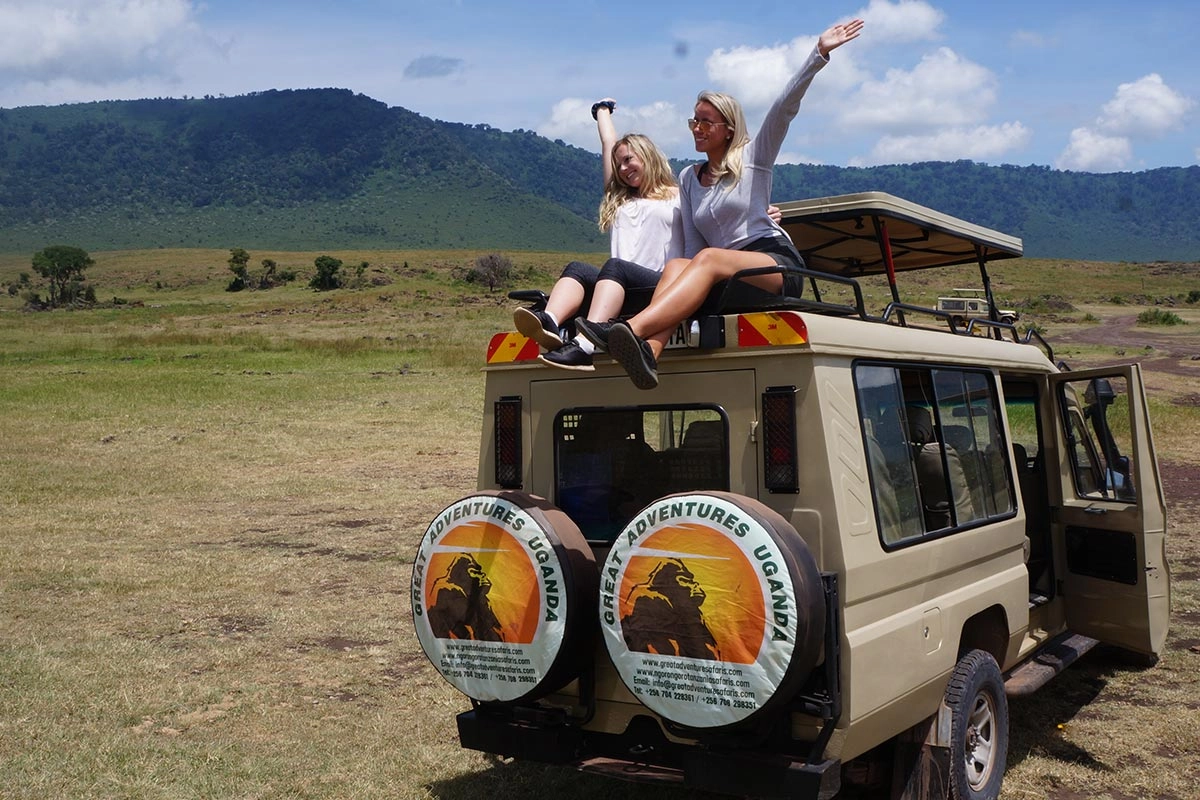
There is a range of mountains in western Uganda so ancient, so wild, and so perpetually wreathed in cloud that the ancient Greeks called them the Mountains of the Moon. The Rwenzori Mountains rise dramatically along the border of Uganda and the Democratic Republic of Congo, sheltering glaciers, giant groundsels, Afro-alpine meadows, and one of Africa’s most extraordinary hiking landscapes. Margherita Peak, at 5,109 metres, is the continent’s third highest summit — and unlike Kilimanjaro or Mount Kenya, the Rwenzoris remain one of Africa’s least-visited mountain destinations, drawing only a fraction of the trekkers who crowd those more famous peaks.
For the Ugandan adventure enthusiast, that exclusivity is the point. A Rwenzori excursion is not a tick-box tourist experience — it is a raw, multi-layered adventure that tests your vehicle, your planning, your gear, and your sense of direction across some of the country’s most spectacular and road-challenging terrain. Getting there, and exploring the region around the mountains, requires more than enthusiasm. It requires the right 4×4 vehicle, the right preparation, and the right knowledge.
This guide covers everything a Ugandan driver and adventure seeker needs to know: how to get to the Rwenzoris, what the roads are actually like, which 4×4 vehicles are best suited to the journey, and how to keep your vehicle in peak condition through every kilometre of the adventure.
For the latest Uganda travel and driving guides, vehicle reviews, and road trip inspiration tailored to Ugandan drivers, visit automag.ug — the country’s leading automotive and adventure resource.
Why the Rwenzori Mountains Are Worth the Drive
Before we talk vehicles, let us talk destination — because understanding what awaits you at the Rwenzoris is what will motivate you to prepare properly.
The Rwenzori Mountains National Park covers approximately 1,000 square kilometres in Kasese District, south-western Uganda. It is a UNESCO World Heritage Site and one of only a handful of places in equatorial Africa where permanent glaciers still exist. The park’s biodiversity is extraordinary: more than 70 mammal species, over 200 bird species, and a botanical landscape of otherworldly vegetation including giant heathers, lobelia towers, and the iconic Senecio groundsels that grow to tree height in the alpine zones.
The park’s centrepiece is Mount Stanley, the highest of the Rwenzori peaks, whose twin summits include the glacier-capped Margherita Peak. The classic Central Circuit Trek is a multi-day route that takes hikers through all the ecological zones of the park — from montane forest through bamboo and moorland to the Afro-alpine zone — and is considered one of East Africa’s finest wilderness trails.
But you do not have to be a high-altitude trekker to justify making the Rwenzori drive. The region around the mountains — Fort Portal, Kasese, the Crater Lakes, and the approaches to Semuliki National Park — offers a full menu of adventure and scenery that makes the entire western Uganda circuit one of the most rewarding road trips available to Ugandan drivers.
Getting to the Rwenzori Mountains: The Routes from Kampala
The Rwenzori Mountains National Park is based near Kasese town in western Uganda, approximately 380–420 kilometres from Kampala depending on which route you take. There are two primary driving routes, each with its own character and road conditions.
Route 1: Kampala – Fort Portal via Mubende (Approximately 300 km to Fort Portal)
This is the shorter and most commonly used route. Take the A109 Kampala–Mubende road, then continue west toward Fort Portal through Kyegegwa. The road is largely tarmacked from Kampala to Fort Portal and in reasonably good condition, though sections between Mubende and Kyegegwa can be rough with potholes, particularly after the rainy seasons.
From Fort Portal, the route continues south toward Kasese — a drive of approximately 60 kilometres through winding mountain roads with dramatic Rwenzori escarpment views. This section is the one that will test your vehicle most: steep gradients, sharp bends, and surfaces that range from patched tarmac to rough murram depending on the season and recent maintenance.
Total driving time (Kampala to Kasese): approximately 5–6 hours in good conditions.
Route 2: Kampala – Mbarara – Kasese via the Southern Highway (Approximately 420 km)
The longer route via Masaka and Mbarara is less dramatic in its driving challenge but offers a scenic payoff — including an equator crossing at Kayabwe, the rolling hills of Ankole cattle country, and the approach to Kasese through the Queen Elizabeth National Park border area. This route is predominantly tarmacked.
Best for: Drivers who prefer a smoother, less technically demanding drive, or those combining the Rwenzori excursion with a stop at Queen Elizabeth National Park or the Crater Lakes Circuit around Fort Portal.
Total driving time: approximately 6–7 hours.
Bonus Route: From the DRC Side
For the adventurous, the Rwenzoris can also be approached from the Democratic Republic of Congo via Kigali, Rwanda — but this route is strictly 4×4 territory with serious off-road conditions, border complexities, and significant logistical requirements. This guide focuses on Uganda access routes.
What Kind of Roads Will You Actually Face?
Understanding road conditions on a Rwenzori excursion is essential for choosing the right vehicle and planning realistic journey times.
Kampala to Mubende: Mostly tarmac, moderate potholes, standard driving conditions. A well-maintained saloon can handle this section.
Mubende to Fort Portal: Tarmac with deteriorating sections in places. Some patches of murram where road repairs are ongoing. Ground clearance becomes helpful.
Fort Portal to Kasese: This is where the adventure begins. The mountain road descends dramatically through the Rwenzori escarpment. Expect steep inclines and declines, sharp switchbacks, narrow sections where two vehicles must negotiate carefully to pass, and surface conditions that shift between patched tarmac, gravel, and slick red murram during wet weather. A 4×4 with low-range gearing is strongly recommended for this section.
Kasese to Rwenzori Mountains National Park Gate (Kilembe): The approach to the park gate from Kasese is approximately 12–15 kilometres on a road that mixes tarmac and murram. In the dry season, most well-maintained 4x4s handle it comfortably. In the wet season, the murram sections become sticky and slippery, and four-wheel drive becomes essential.
Inside the Park and Forest Tracks: Tracks within and around the park’s lower zones, including routes toward the Kilembe trailhead and accommodation areas, are unpaved and require genuine off-road capability. Deep ruts, embedded rocks, and stream crossings are common.
The Best 4×4 Vehicles for the Rwenzori Excursion
Not every 4×4 is equal in Uganda’s mountain terrain. Here is a practical guide to the vehicles best suited to the Rwenzori adventure, ranked by suitability.
1. Toyota Land Cruiser Prado — The Top All-Round Choice
The Toyota Land Cruiser Prado is widely regarded as Uganda’s ultimate safari and adventure vehicle — and for very good reasons. It combines genuine off-road capability with reliable mechanical performance, decent fuel economy, and comfortable interiors that make long journeys from Kampala bearable.
What makes it ideal for the Rwenzoris:
- Full-time 4WD with selectable high and low range — low range is essential for steep Rwenzori descent roads
- High ground clearance (approximately 215–220 mm) for navigating rutted murram tracks and rocky sections
- Strong, proven 1GD or 3.0-litre diesel engine with good torque at low RPM for steep hill climbing
- Durable suspension that handles loaded vehicles on rough surfaces without the bottoming-out that lighter SUVs suffer
- Spare parts available across western Uganda — Kasese and Fort Portal both have Toyota parts suppliers
The Prado TX and TZ variants (150 Series, 2010 onwards) are the sweet spots: modern enough for reliability features but simple enough for local mechanics to service without specialist equipment.
Car Care Tip: Before departing Kampala for the Rwenzoris in a Prado, check all four wheel bearings. Mountain roads with sharp descents and repeated steering inputs at low speeds accelerate wheel bearing wear faster than highway driving. A worn bearing that is not caught before a mountain descent can fail at a dangerous moment.
2. Toyota Land Cruiser 70 Series (Hardtop/Pickup) — The Indestructible Workhorse
If raw off-road durability is your priority and comfort is secondary, the Land Cruiser 70 Series is unmatched. The 79 Series Land Cruiser pickup and 76/78 Series hardtop are the vehicles that serious off-road adventurers, conservation organisations, and border patrols in the Rwenzori region use — and for good reason.
The 70 Series features solid front and rear axles (unlike the independent front suspension on the Prado), which means greater wheel articulation over extreme terrain and significantly less vulnerability to damage from rocks and deep ruts. Its 4.2-litre diesel (1HZ) or 4.5-litre V8 turbo diesel (1VD) engines deliver massive torque and near-indestructible longevity.
Trade-off: The 70 Series cabin is spartan and noisy at highway speeds. For the long Kampala-to-Kasese drive on tarmac, this becomes apparent. But for the mountain section and any serious off-road exploration around the park, it surpasses every other option.
3. Toyota Land Cruiser 200 Series (V8) — Luxury Meets Power
For travellers who want the full western Uganda adventure experience without sacrificing comfort, the Land Cruiser 200 Series V8 delivers. Its 4.5-litre twin-turbo V8 diesel produces enormous power and torque, and its electronically controlled multi-terrain select system manages traction on slippery surfaces better than many manually operated systems.
The 200 Series is the preferred vehicle for high-end safari operators running western Uganda itineraries. Its only real disadvantage is fuel consumption — on mountain roads with a full load, the V8 is thirsty. Budget approximately 14–17 litres per 100 km under demanding conditions.
4. Toyota RAV4 (4WD Variant) — The Budget-Friendly Option
For travellers who need a capable vehicle without the full Land Cruiser price tag, the Toyota RAV4 4WD is a reasonable option for the Rwenzori route — with important caveats.
The RAV4 handles the tarmac sections and the approach to Kasese comfortably in dry conditions. In the wet season, on the steep Fort Portal–Kasese mountain section or the murram approach to the park gate, its lighter weight and less aggressive off-road setup demand cautious, experienced driving. It is not recommended for deep ruts, stream crossings, or any serious forest track exploration.
Best for: Budget-conscious adventure travellers who will be driving the route primarily in the dry season (June–August or December–February) and have strong 4×4 driving experience.
5. Nissan Patrol (Y61 Generation) — The Rugged Alternative
The Nissan Patrol Y61 with its 4.2-litre TD42 diesel engine is a serious off-road performer that many Ugandan adventure drivers rate alongside the Land Cruiser 70 Series for sheer toughness. Solid axles, massive ground clearance, and a low-range transfer case make it genuinely capable in the Rwenzori’s most challenging terrain.
The Patrol’s main disadvantage is parts availability outside Kampala. While common in Kampala’s used car market, finding specific Patrol parts in Kasese or Fort Portal is less straightforward than sourcing Toyota equivalents.
Buying vs. Renting Your Rwenzori Adventure Vehicle
For Ugandan residents planning this excursion, the decision between buying a used 4×4 and renting one deserves consideration.
If You Already Own a 4×4
If you own a Land Cruiser Prado, 70 Series, or other capable 4×4, the Rwenzori excursion is an opportunity to use your vehicle as it was designed to be used. Before departure, ensure you have completed a full pre-trip service (see car care tips below).
If You Are Considering Buying
For drivers who do not yet own a suitable vehicle and are planning the Rwenzori excursion as part of a broader adventure lifestyle, purchasing a quality second-hand 4×4 makes excellent sense. auto24.ug is Uganda’s leading platform for quality used vehicles and regularly lists well-maintained 4x4s suitable for mountain adventures — from Toyota Land Cruiser Prados and 70 Series hardtops to Nissan Patrols and Toyota Hilux pickups. Browsing listings will give you a clear sense of current market prices for the vehicles best suited to western Uganda’s demanding terrain. A well-chosen second-hand Prado or 70 Series from a trusted source is a genuine long-term adventure asset.
For additional reviews, buying advice, and 4×4 guides tailored to Ugandan drivers, carkibanda.com is a valuable resource combining marketplace listings with expert automotive content.
If You Are Renting
A number of reputable car hire companies in Kampala and Entebbe offer well-equipped 4x4s for self-drive or driver-guided Rwenzori trips. Land Cruiser Prado TXs with pop-up roofs, camping gear, and comprehensive insurance are available from approximately USD 80–140 per day. Always confirm the vehicle comes with a full-size spare tyre, a working high-lift jack, and recovery boards as standard inclusions.
Essential Pre-Trip Vehicle Preparation
A Rwenzori excursion places demands on a vehicle that a typical Kampala commute never does. The following preparation checklist is non-negotiable before departure.
Engine and Drivetrain
- Full service: change engine oil and filter, air filter, and fuel filter. Dusty murram roads and mountain gradients accelerate engine wear — start with fresh fluids.
- Coolant check: top up or flush and replace if overdue. Mountain driving with sustained low-gear, high-load operation generates significant engine heat.
- Transmission fluid: check automatic and manual transmission fluid levels. Steep descents with engine braking are particularly demanding on transmission components.
- Transfer case oil: check and top up. The transfer case takes its hardest use when switching between 2H, 4H, and 4L on mountain terrain.
- Differential oils: front, rear, and centre (if applicable). Often overlooked and critical for sustained off-road use.
Car Care Tip: If your vehicle has not had its differentials serviced within the last 30,000 km, do it before the Rwenzori trip. Differential failure on a mountain descent is a serious mechanical and safety event.
Tyres and Wheels
- Tyre condition: inspect tread depth on all five tyres (including spare). Any tyre below 4mm tread should be replaced before a mountain adventure — wet murram demands maximum grip.
- Tyre pressure: reduce to 26–28 PSI (from standard highway pressure) for improved traction and cushioning on rough murram tracks. Carry a portable compressor to re-inflate for tarmac return.
- Wheel nuts: re-torque to manufacturer specification. Rough roads loosen wheel nuts faster than smooth ones.
- Spare tyre: ensure the spare is a full-size match, properly inflated and accessible.
Recovery and Emergency Equipment
The Rwenzori region’s more remote tracks can leave a stuck vehicle far from immediate help. Carry the following:
- High-lift jack (standard scissor jacks are useless in soft ground)
- Recovery boards (sand tracks / Maxtrax style) for traction recovery in mud
- Tow rope or snatch strap with shackles (minimum 8-tonne rating)
- Small folding shovel for clearing mud from underneath the vehicle
- Jumper cables or jump starter pack
- Basic tool kit: spanners, pliers, zip ties, duct tape, and spare fuses
Navigation and Communication
- Download offline maps of western Uganda (Maps.me or Google Maps offline) before departing Kampala — mobile data coverage is inconsistent in the mountains.
- Carry a physical road map of western Uganda as a backup.
- Inform someone of your planned route and expected return date.
- A charged portable battery bank for phones is highly recommended.
Fuel Planning for the Rwenzori Excursion
Fuel is available in Kampala, Mubende, Fort Portal, and Kasese — all the major stops on both routes. However, once you leave Kasese and head toward the park gate or explore tracks in the surrounding foothills, fuel stations become sparse.
Recommendation: Fill to maximum at Kasese before heading toward the mountains. If your vehicle has a dual-tank setup or a jerry can carrier, use it. For a Land Cruiser with a 90-litre tank, a full fill in Kasese typically provides sufficient range for the park approach, day explorations, and the return to Kasese — but this depends heavily on how much off-road driving you do.
Budget for higher than usual fuel consumption. Off-road driving in low range, sustained mountain gradients, and fully loaded vehicles all increase consumption significantly above your highway average.
Driving the Rwenzori Roads: Technique Tips
Even experienced urban drivers can find Uganda’s mountain terrain unfamiliar. These techniques will protect both your vehicle and your safety.
Steep Descents
Never ride the brakes continuously down a long steep descent — this overheats the brake discs and can cause brake fade at the worst possible moment. Instead, select low-range 4WD and use engine braking (second or third gear) to control your descent speed. Use the brakes only in short, firm applications to maintain control at corners or obstacles. This technique is exactly what low-range gearing is designed for.
Muddy Murram Tracks
In wet conditions, murram (laterite soil) becomes extremely slippery — more like clay than gravel. Maintain steady momentum rather than stopping and starting, which causes spinning and digging in. Steer smoothly without sudden inputs. If you feel the rear sliding, steer gently into the slide rather than against it.
River and Stream Crossings
The Rwenzori region has numerous small streams that cross tracks, especially after rain. Before crossing:
- Get out and walk the crossing to check depth, bottom surface, and exit condition
- Cross slowly and steadily in low range, aiming for the shallowest, firmest line
- Keep engine RPM constant — avoid changing gears mid-crossing
- After crossing, apply brakes lightly while moving to dry them
Car Care Tip: After any water crossing, check your wheel hubs and diff breathers for water ingress. If the breather tubes (which allow diffs to breathe as they expand and contract with heat) are blocked or submerged, water can be drawn into the differentials — causing expensive damage. Ensure diff breathers are functional and extension-routed above likely water levels before you depart.
Night Driving
Avoid driving mountain roads at night. Low visibility, unexpected obstacles on the road (stray livestock, pedestrians, fallen branches), and the fatigue that accompanies long days combine to make mountain night driving disproportionately risky. Plan to be at your destination before dark.
Where to Stay Near the Rwenzori Mountains
Several accommodation options near the national park range from budget campsites to comfortable lodges:
- Rwenzori Trekkers Hostel (Kasese): Budget accommodation popular with trekkers and adventurers heading for the Central Circuit.
- Sandton Hotel Fort Portal: A reliable mid-range base in Fort Portal for the night before the Kasese mountain descent.
- Rwenzori View Guesthouse: Simple accommodation closer to the park gate, popular with hikers.
- For those bringing tents or rooftop camping setups, designated campsites exist within and around the park’s lower areas.
Sustainable Adventure: A Look at the Future
The Rwenzori Mountains — and the tracks leading to them — are part of Uganda’s most ecologically sensitive landscapes. Adventure drivers have a responsibility to minimise their impact: stay on established tracks, do not create new tyre lines through vegetation, and avoid any fuel or oil spills near water sources.
Looking forward, the transition toward cleaner vehicles will eventually reshape how Ugandans explore these landscapes. EV24.africa is already facilitating the import of electric vehicles into Uganda, and as electric 4×4 technology matures globally, zero-emission adventure vehicles will become increasingly practical options for environmentally conscious Uganda explorers. For now, a well-maintained diesel Land Cruiser remains the most practical choice — but watching this space is worthwhile.
Quick Pre-Departure Checklist: Rwenzori 4×4 Excursion
Use this checklist before you leave Kampala:
- Full engine service completed (oil, air filter, fuel filter)
- Coolant, transmission, and differential fluids checked
- All five tyres inspected and inflated (full-size spare included)
- Wheel nuts re-torqued
- Low-range 4WD system tested and functioning
- Recovery kit packed (high-lift jack, recovery boards, snatch strap, shovel)
- Basic tool kit and spare fuses on board
- Full fuel tank topped up in Kasese before park approach
- Jerry can/extra fuel if available
- Offline maps downloaded for western Uganda
- Physical road map packed
- Emergency contact informed of route and return date
- Uganda Wildlife Authority park entry permit confirmed (if trekking)
- Accommodation booked in Fort Portal and/or Kasese
Frequently Asked Questions
Do I need a 4×4 to visit the Rwenzori Mountains? For the main Kampala–Fort Portal–Kasese highway route in the dry season, a high-clearance AWD or good saloon can manage. However, for the Fort Portal–Kasese mountain section, the approach to the national park gate, and any exploration of tracks around the park, a proper 4WD with low-range capability is strongly recommended. In the wet season (March–May, October–November), it is essential.
Which is the best vehicle for a self-drive Rwenzori excursion? The Toyota Land Cruiser Prado (150 Series, diesel) is the best all-round choice. For maximum off-road capability at the expense of comfort, the Land Cruiser 70 Series is unbeatable. For budget travellers, the Toyota RAV4 4WD works in dry season conditions on the main route.
Where can I find a good 4×4 for this kind of trip in Uganda? Browse quality used Land Cruiser Prados, Hilux pickups, and other adventure-ready 4x4s on auto24.ug, Uganda’s most trusted platform for second-hand vehicles. You can compare makes, models, prices, and conditions before making any decisions.
How do I get a Uganda Wildlife Authority permit for the Rwenzori Mountains? UWA permits for hiking and trekking in Rwenzori Mountains National Park can be arranged through the Uganda Wildlife Authority. It is recommended to book well in advance, particularly for multi-day Central Circuit treks.
What is the best time of year for the Rwenzori excursion? The dry seasons — June to August and December to February — offer the most manageable road conditions. That said, the Rwenzoris receive rainfall year-round due to their altitude and location; some rain should always be expected. The wet seasons (March–May and October–November) are more challenging on mountain roads but reward drivers with dramatic mist-laden scenery.
Final Thoughts: The Roads Make the Adventure
The Rwenzori Mountains are extraordinary by any measure. But for the Ugandan driver, the journey to the Mountains of the Moon is half the experience. The winding mountain road from Fort Portal, the first glimpse of snow-capped peaks through the clouds, the red murram tracks threading through montane forest — these are the memories that make a Rwenzori excursion unforgettable.
The right 4×4, properly prepared and confidently driven, is what transforms that journey from an anxiety-inducing ordeal into the adventure it is meant to be. Prepare your vehicle, plan your route, respect the mountain terrain — and go.
For more Ugandan road trip guides, vehicle reviews, and adventure driving tips, keep reading at automag.ug and carkibanda.com.
This article is brought to you in partnership with Auto24.ug, Uganda’s leading platform for quality second-hand vehicles.
Rwenzori Mountains Uganda, 4×4 Adventure Uganda, Off-Road Driving Uganda, Uganda Road Trip Guide, Land Cruiser Prado Uganda, Self-Drive Safari Western Uganda,