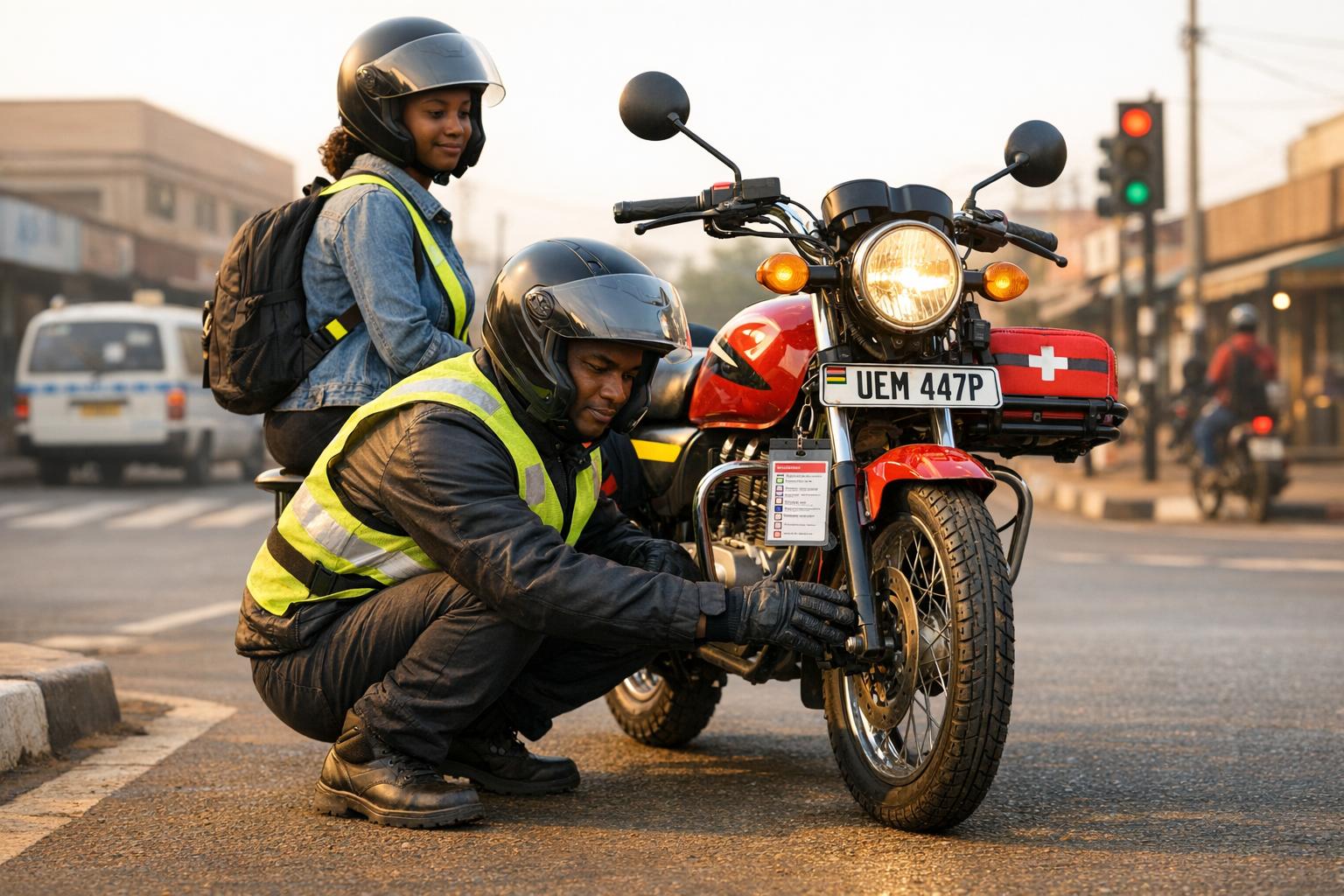
Boda bodas are an essential mode of transport in Uganda but are also a leading cause of road accidents, accounting for 75% of trauma cases at the national referral hospital. Staying safe while riding requires preparation, proper gear, and adherence to traffic rules. Here’s a quick summary of what you need to know:
- Pre-Ride Checks: Inspect brakes, tires, lights, mirrors, and your helmet. Ensure everything is in working condition before hitting the road.
- Protective Gear: Always wear a helmet, reflective jacket, gloves, closed-toe shoes, and long clothing to minimize injury risks.
- Passenger & Cargo Safety: Limit to one passenger, ensure proper seating, and avoid overloading the bike with heavy or bulky items.
- Traffic Rules: Follow speed limits, stay in your lane, signal early, and avoid weaving. Be extra cautious at night and in poor visibility.
- Emergency Preparedness: Carry a first aid kit, basic tools, reflective warning triangles, and a portable phone charger. Keep emergency contacts handy.
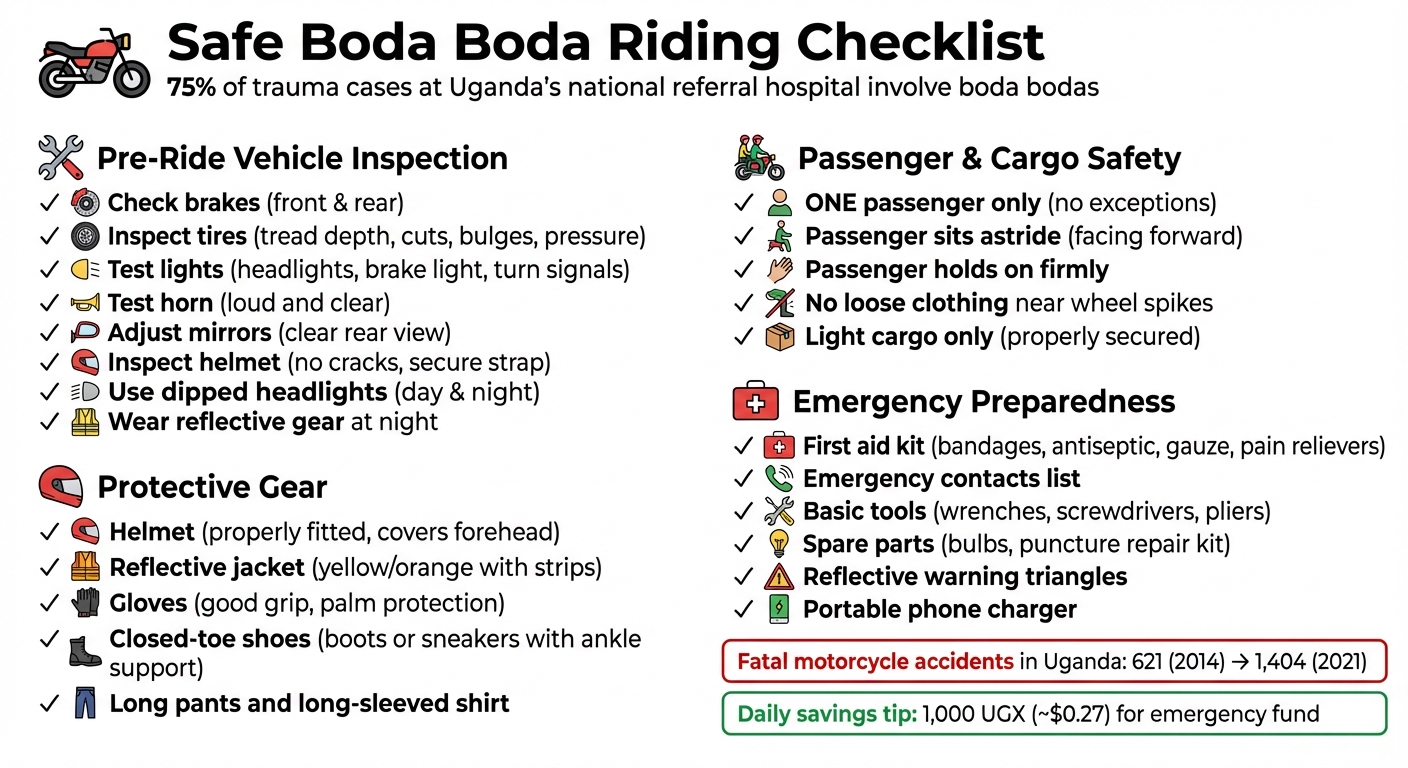
Essential Boda Boda Safety Checklist for Ugandan Riders
Traffic police encourage Boda Boda riders to promote road safety in Kampala
sbb-itb-7bab64a
Pre-Ride Vehicle Inspection Checklist
Uganda’s rugged roads, especially on busy routes like Entebbe Road, make a pre-ride vehicle inspection a must. Taking a few minutes to check your bike can help you avoid breakdowns and spot potential issues before they become serious. Here’s what to focus on:
Check Brakes and Tires
Start with the brakes. Squeeze both the front and rear brake levers – if they feel too soft or pull all the way to the handlebar, you’ll need to check the pads and cables. Roll the bike forward slowly and test the brakes to ensure they bring you to a smooth stop.
Next, take a look at your tires. Check the tread depth and scan for any cuts, bulges, or other damage. Make sure they’re inflated to the correct pressure to give you the grip you need on uneven terrain.
Test Lights and Horn
Flip on your headlights and check that both the high and low beams are working. Don’t forget to test the brake light – make sure it lights up when you apply the brakes. Go through each turn signal one by one to confirm they’re functioning properly.
Now, test the horn. It should sound loud and clear. A weak or silent horn could leave you unable to warn others in critical moments.
Adjust Mirrors and Inspect Helmet
Set your mirrors so you have a clear view of the road behind you. Properly adjusted mirrors can make a big difference in your overall awareness.
Finally, inspect your helmet – it’s your primary safety gear. Look for any cracks or dents, and check that the chin strap and buckle are secure. If your helmet has taken a hard hit, it’s time to replace it, even if it looks fine. Better safe than sorry!
Personal Protective Gear Checklist
Before hitting the road, ensure your safety by gearing up with the right personal protective equipment. It’s not just about following rules – it’s about protecting yourself from potential harm. On Uganda’s roads, where conditions can be unpredictable, having the right gear is essential for every rider, whether you’re a daily commuter or an occasional rider.
Helmet Requirements
Helmets are non-negotiable for both riders and passengers. A properly fitted helmet can make all the difference in an accident. Make sure it sits level on your head, covers your forehead, and is secured with a snug chin strap (allowing enough room for just one or two fingers). If you’re carrying a passenger, double-check that they have a helmet that fits correctly before you start your journey. Once helmets are sorted, focus on making yourself more visible on the road.
Reflective Jackets and Visibility Gear
Being seen by other road users is critical, especially during low-light conditions like early mornings, evenings, or during rainy weather. A reflective jacket is a simple yet effective way to boost your visibility. Bright colors like yellow or orange with reflective strips ensure that drivers can spot you from a distance, giving them more time to react. Make it a habit to wear a reflective vest over your clothing every time you ride.
Gloves, Closed-Toe Shoes, and Protective Clothing
Your hands and feet are often the first to make contact with the ground in a fall. Protect them with sturdy gloves that offer a good grip on the handlebars while shielding your palms from scrapes. For footwear, opt for closed-toe shoes with solid ankle support – like boots or sneakers – rather than sandals or flip-flops, which leave your feet vulnerable.
Long pants and a long-sleeved shirt or jacket are also crucial. While thick denim or specialized riding gear might feel warm under the Ugandan sun, they provide a strong barrier against abrasions in case of an accident. Prioritizing proper clothing ensures you’re better prepared for the challenges of Uganda’s roads. With the right gear, you’re not just riding – you’re riding smart and safe.
Passenger Safety and Loading Checklist
Once you’ve secured your own protective gear, it’s time to think about your passenger’s safety and how to load cargo properly.
Passenger safety on a boda boda is about more than just making space on the seat. The way your passenger sits, holds on, and balances their weight has a direct impact on how well you can control the motorcycle. In Uganda, where nearly 75% of trauma cases at the national referral hospital are linked to boda boda accidents, these details are critical – not optional.
Carry Only One Passenger
Always stick to one passenger – no exceptions. Carrying multiple passengers isn’t just illegal in Uganda; it also puts everyone on the bike in danger. Overloading reduces your braking ability, makes steering harder, and increases the risk of losing control – especially on rough roads or in emergencies. Motorcycles are designed with a specific load capacity, and exceeding that limit compromises safety.
Ensure Proper Seating and Grip
Your passenger should sit astride the motorcycle, facing forward with one leg on each side. Sitting sideways or "crossward" isn’t safe. Make sure they stay seated and hold on firmly, as sudden movements can destabilize the bike. Tell your passenger to hold securely and brace themselves during sudden braking or bumpy sections of the road. They should only get on or off the bike when it’s completely stopped, and you’ve indicated it’s safe to do so. Also, remind them to keep their feet and any loose clothing away from the wheel spikes to avoid serious accidents.
Avoid Excessive Cargo
Heavy or bulky cargo can throw off your balance, reduce your ability to steer, and make braking harder. If you need to carry items, keep the load light, secure it properly, and make sure it doesn’t block your view or restrict your movements. When in doubt, it’s better to make two trips than risk an accident by overloading the bike.
Traffic Compliance and Riding Rules Checklist
Staying safe on Ugandan roads means following traffic rules carefully. These riding rules, alongside pre-ride and gear checks, are essential for your safety.
Between 2014 and 2021, fatal motorcycle accidents in Uganda rose dramatically from 621 to 1,404. Over speeding and risky maneuvers are leading causes of these accidents. Following traffic rules isn’t just about avoiding penalties – it’s about protecting your life. Here are some key guidelines to keep your ride safe and compliant.
Follow Speed Limits and Stay in Your Lane
Keep your speed moderate to give yourself enough time to react to hazards. Over speeding ranks among the top five causes of motorcycle accidents in Uganda. High speeds reduce your ability to brake or steer effectively around obstacles. Stick to your lane and maintain a steady, predictable path – erratic movements make motorcycles harder to spot. Use the Observation – Signal – Manoeuvre (OSM) routine when changing lanes or turning. This means observing your surroundings, signaling your intentions, and then executing your move. Consistent signaling and yielding can significantly enhance your safety.
Signal Early and Yield to Pedestrians
Always signal your turns in advance to keep other road users informed. Keep your dipped headlights on, even during the day, to improve your visibility. Slow down and yield to pedestrians at zebra crossings or in busy residential areas. Respecting pedestrian right-of-way is a simple yet vital step toward safer roads for everyone.
Avoid Weaving and Be Cautious at Night
Refrain from weaving between vehicles or making sudden lane changes. Weaving reduces your margin of safety and makes it harder for other drivers to predict your movements. Stick to a steady lane position to avoid the overconfidence that often leads to reckless riding. Night riding comes with additional risks – visibility is lower, and hazards are harder to detect. Stay alert by avoiding distractions like mobile phone use while riding. Use proper lighting, wear reflective gear, and ride defensively to minimize risks. Keeping your focus on the road can make all the difference.
Hazard Awareness and Safe Riding Checklist
After you’ve done your pre-ride inspections and checked your gear, staying alert to road hazards is the next crucial step. On Ugandan roads, this is especially important. With boda bodas accounting for 75% of trauma cases, spotting potential dangers early can make all the difference in preventing accidents.
Watch for Road Hazards
Be on the lookout for potholes, pedestrians, animals, and debris that may fall from vehicles in front of you. Motorcycles are often harder for other road users to notice, so staying visible and aware is key. Environmental challenges like dust, rain, or even insects can also interfere with your focus. Wearing a helmet with a clean visor can help you maintain clear visibility in these conditions.
"A young lady was victim to an accident because she was wearing a long skirt which she didn’t pay attention to when getting onto the boda; the bike spikes in the process of rotating caught her skirt and pulled it resulting into the accident." – Daily Monitor via SafeBoda
Choose snug-fitting clothing to avoid loose garments getting caught in the bike’s moving parts. If you’re carrying a passenger, ensure they sit astride (facing forward) rather than sideways, and remind them to stay still. Sudden movements or shifts in weight can destabilize the bike and lead to accidents. These precautions, along with adjusting your distance from vehicles ahead, are essential for safe riding.
Keep Safe Following Distance
Maintaining a proper following distance is critical. Carrying passengers, especially more than one, adds weight to your bike, increasing your stopping distance and making braking harder. Encourage your passenger to stay alert and help you watch for hazards, but discourage distracting conversations. In emergencies, having the right space between you and the vehicle ahead can give you the time you need to react safely.
Practice Emergency Braking
Emergency braking is a skill every rider should master. Seek training from qualified instructors, study the Highway Code for stopping distances, and watch safety videos to sharpen your techniques.
"Learning is a process of practice and experience; get involved in participatory learning to reinforce your riding skills." – Road Safety Initiative – Uganda
Always use dipped headlights and wear reflective clothing to ensure you’re visible to other drivers, especially when you need to brake suddenly. Regular practice helps develop the muscle memory you’ll rely on in critical, split-second situations. It’s this preparation that can make all the difference when it matters most.
Emergency Preparedness Checklist
With boda bodas responsible for 75% of all trauma cases at Uganda’s national referral hospital, being prepared for emergencies isn’t just a good idea – it’s essential. Riders not only face the risk of accidents but also deal with highway robberies and mechanical failures. Having the right supplies on hand can turn a potentially dangerous situation into a manageable one. Here’s a breakdown of key items every boda boda rider should carry.
Carry a First Aid Kit and Emergency Contacts
Start with a basic first aid kit – it’s a must-have. Given that boda bodas are the leading group involved in road crashes in Uganda, being ready to provide immediate care could save a life. Your kit should include essentials like bandages, antiseptic wipes, gauze pads, and pain relievers. Additionally, keep a list of emergency contacts handy. Include numbers for the police, ambulance services, and trusted family members who can assist quickly in urgent situations.
Pack Essential Tools and Spare Parts
Mechanical breakdowns are common, especially when regular servicing isn’t always affordable. To handle minor issues on the road, carry basic tools such as wrenches, screwdrivers, and pliers. Add spare items like bulbs and a puncture repair kit to your gear. If finances are tight, consider joining a savings group where members contribute about 1,000 UGX (around $0.27) daily to a shared emergency fund. This can provide quick access to money for parts, fuel, or repairs when needed.
Bring Reflective Warning Triangles and a Phone Charger
Motorcycles are harder to spot than larger vehicles, making reflective warning triangles a crucial safety item. Use them during breakdowns to alert other drivers and reduce the risk of secondary accidents. A portable phone charger is another lifesaver, ensuring you can make calls or access emergency funds if your phone battery dies. Combined with regular bike maintenance and proper safety gear, these items round out your emergency preparedness plan.
Conclusion
Safe boda boda riding in Uganda saves lives and fosters a professional culture that can boost earnings. With boda bodas responsible for 75% of all trauma cases at the national referral hospital, the importance of safety cannot be overstated. Sticking to a daily safety checklist transforms risky habits into disciplined practices.
"Good discipline creates new friends and improves your chances of making more money." – Road Safety Initiative – Uganda
This quote highlights how disciplined riding not only protects lives but also grows trust and income. Regularly checking your brakes, fastening your helmet securely, wearing reflective gear, and obeying traffic rules sends a clear message to passengers: you’re reliable. People notice these efforts, recommend you to others, and keep coming back. Safety checklists aren’t just formalities – they’re tools that safeguard both your livelihood and your well-being.
These simple but effective measures prevent accidents and elevate your standing among passengers and fellow riders. Commitment is key. Join local rider groups where members share advice and resources. Even saving 1,000 UGX (about $0.27) daily in a shared fund can help cover essentials like permits, insurance, or repairs. Using verified boda-hailing apps also builds passenger confidence. And don’t forget the basics: always be courteous, considerate, and vigilant on every ride.
Every item on the safety checklist addresses real risks – poor visibility, mechanical issues, unsafe passenger seating, or reckless driving. By making these checks a habit, you’re taking active steps to prevent accidents and create a safer riding environment. Safe riding begins with you, one checklist at a time.
FAQs
What should I do if my brakes feel soft during the pre-ride check?
If your brakes feel soft during a pre-ride check, it’s crucial to fix the issue before hitting the road to stay safe. Begin by examining the brake fluid level – add more if it’s low. Next, inspect the brake pads and discs for signs of wear, and test the lever or pedal to ensure they engage correctly. Don’t forget to look for any leaks in the system. If the brakes still don’t feel right, it’s time to consult a qualified mechanic for a thorough inspection and repair.
How can I stay safer when riding a boda boda at night or in rain?
To stay safer during nighttime or rainy rides, make sure your motorcycle complies with all road regulations and always use dipped headlights to enhance visibility. Equip yourself with a helmet, bright or reflective clothing, and sturdy footwear to make yourself more noticeable to others. Adhering to traffic laws and ensuring you have a clear view of the road are essential steps to minimize risks in low-light or adverse weather conditions.
What should I keep in an emergency kit for boda boda riding?
An emergency kit for boda boda riding should cover both medical essentials and safety gear. Make sure to include a first-aid kit stocked with bandages, antiseptic wipes, and basic medications. Always wear a helmet to protect your head, and opt for bright or reflective clothing to stay visible on the road. Don’t forget sturdy, closed-toe footwear to shield your feet. These simple precautions can make a big difference in staying safe and prepared while riding.
Related Blog Posts
- 10 Safety Tips for Long Drives in Uganda
- How to Check Motorcycle Brakes for Safety
- Ride-sharing Regulations in Kampala: What You Need to Know
- How to Become a Bolt Driver in Kampala: Tips and Tricks