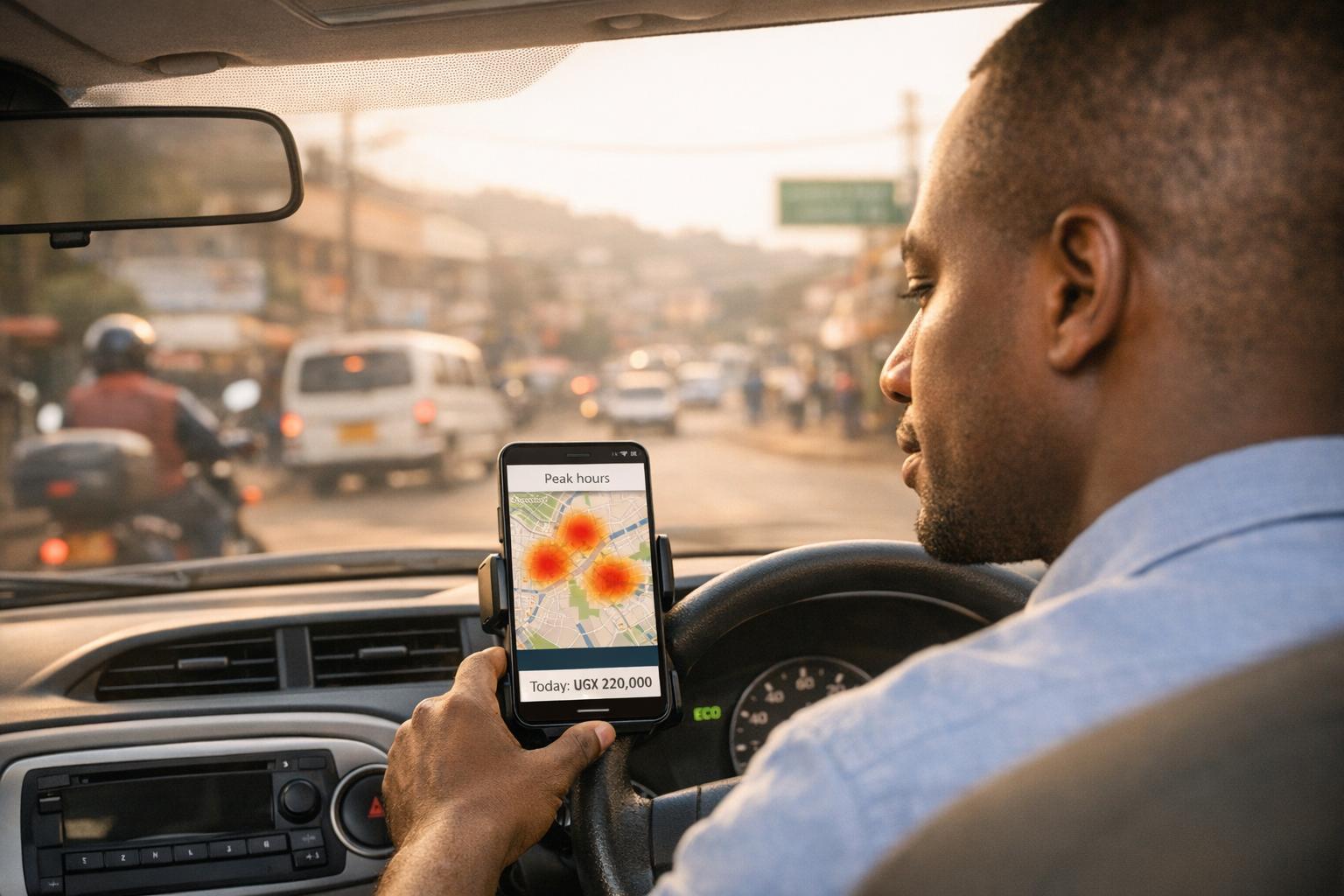
Want to make serious money as a ride-sharing driver in Kampala? Here’s how:
Kampala’s ride-sharing market is booming, thanks to high demand for transportation and the rise of app-based platforms. With the right strategies, you can earn more, reduce expenses, and turn this into a profitable career.
Here’s a quick breakdown:
- Timing is key: Peak hours (morning rush, evenings, weekends) and surge pricing during rain or events can double or triple your income.
- Know your costs: Fuel, platform fees (15%-25%), and maintenance are your biggest expenses. Use fuel-efficient cars and track every shilling spent.
- Maximize trips: Use in-app heat maps to find high-demand spots and avoid downtime.
- Customer service matters: Clean cars, friendly service, and small extras (like phone chargers) can lead to better tips and repeat customers.
- Stay informed: Learn market trends, app features, and local regulations to stay ahead of the competition.
Rideshare Reality: Pros, Cons, and Profits for Ugandan Youth who want to do Uber, Bolt, & SafeCar
sbb-itb-7bab64a
Choosing the Right Tools and Resources
Your vehicle and the apps you use can make a big difference in how much you earn. A fuel-efficient car and reliable navigation tools help reduce fuel costs, maintenance expenses, and wasted time. Picking the right tools is essential for taking advantage of Kampala’s busy ride-sharing market.
Selecting a Fuel-efficient and Reliable Vehicle
To succeed on Kampala’s roads, you need a car that combines good fuel economy with durability. Models like the Toyota Premio, Noah, Wish, and Nissan X-Trail stand out because they’re fuel-efficient, have easily available spare parts, and are well-supported by local mechanics. Used cars in this range typically cost between UGX 20,000,000 and UGX 60,000,000, depending on factors like age and mileage. It’s smart to budget an additional 10% to 15% of the purchase price for initial servicing and unexpected repairs. This cushion ensures you can handle maintenance without dipping into your earnings.
For those planning ahead, electric vehicles like the Nissan Leaf and Hyundai Kona are gaining attention. They offer lower running costs, thanks to reduced fuel and maintenance needs. Once your vehicle is ready, the next step is mastering navigation to keep your trips efficient.
Using Navigation Apps to Save Time and Fuel
Apps like Google Maps and Waze are game-changers for navigating Kampala. Google Maps is excellent for its real-time traffic updates and precise directions, while Waze shines with its community-driven alerts about accidents, road hazards, and even speed traps. During rush hours, Waze’s alternative routes can help you avoid traffic jams, saving you time and fuel.
For fuel savings, download the "Petrol Stations Uganda" app to compare prices at different stations and locate fuel during shortages. Additionally, apps like Fuelio can help track your mileage and fuel consumption, making it easier to plan your fuel budget. Many ride-sharing apps also provide heat maps showing high-demand areas – use these to avoid empty trips and increase your rides per shift. Efficient navigation doesn’t just save fuel; it also minimizes wear and tear on your car, making regular maintenance even more critical.
Maintaining Your Vehicle for Long-term Profitability
Keeping up with regular maintenance is key to avoiding costly breakdowns and maximizing your earnings. Basic upkeep, like changing engine oil and filters every 5,000–10,000 km and rotating tires every 10,000 km, can significantly extend your car’s lifespan. During Kampala’s dry, dusty months, it’s especially important to clean or replace air filters to maintain performance.
When refueling, stick to trusted stations like Shell, Total, or Vivo Energy to avoid low-quality fuel that can damage your engine. On steep hills, use engine braking by downshifting instead of over-relying on your brakes, which can lead to overheating and wear. Check your battery every 2 to 4 years, and keep the terminals clean to prevent corrosion. Avoid using second-hand parts like brake pads or belts, as they can compromise safety and reliability.
"Proactive maintenance is far more cost-effective [than waiting for a breakdown]." – David Okech, Author, AutoMag.ug
Maximizing Earnings: Strategies for Success
Once your vehicle is ready to go, it’s time to focus on strategies that can help you boost your daily earnings. By combining smart driving practices with excellent service, you can make the most out of every trip.
Finding Profitable Routes and High-demand Areas
In Kampala, downtown areas are goldmines for drivers thanks to heavy traffic and a steady stream of passengers looking for rides. Instead of waiting at traditional pickup spots, use your app’s heat map. These maps highlight high-demand areas – marked in red, orange, and yellow – so you can position yourself where ride requests are most frequent. This simple step minimizes downtime between trips.
Here’s how fares typically break down in Kampala: a 1,000 UGX base fare, 600 UGX per kilometer, and 100 UGX per minute, with a minimum fare of 5,000 UGX. This ensures you don’t lose out on short trips. While platform fees cut into your earnings, tips can make up the difference. Rainy weather is another opportunity – dynamic pricing kicks in as passenger demand surges and fewer drivers are on the road. These conditions can lead to significantly higher earnings per trip.
Understanding Peak Hours and Seasonal Demand
Timing is everything. Weekday mornings (6–9 AM) are ideal for commuters heading to work or the airport, while evening rush hours (5–8 PM) cater to workers returning home. On weekends, late-night hours (8 PM–2 AM) are busy with passengers heading out or coming back from social outings. Peak times often mean surge pricing, and drivers can earn 2x to 3x more compared to slower periods. For instance, some drivers report making $30–40 per hour on a Saturday night versus $12–15 during a quiet Tuesday afternoon.
Instead of chasing demand, anticipate it. Position yourself in high-demand zones 15–30 minutes before peak times. After major events, hang around popular late-night spots like eateries or clubs to catch passengers heading home. Even Sunday brunch has become a reliable earning window, with steady demand from 10 AM to 2 PM. By planning your schedule around these patterns, you can maximize your fares and create more opportunities for positive passenger interactions.
Providing Excellent Customer Service to Earn Tips
Great service isn’t just about making passengers happy – it’s also a direct path to better tips and ratings. Start by greeting passengers warmly and confirming their destination. A clean, clutter-free vehicle with a pleasant scent goes a long way in leaving a good impression. Small extras like phone chargers, bottled water, or air fresheners can elevate the experience and encourage tipping.
Driving smoothly and following traffic laws ensures passengers feel safe and comfortable. Helping with luggage or ensuring passengers enter and exit safely also adds a personal touch. Pay attention to each passenger’s vibe – some may want to chat, while others prefer a quiet ride.
Many platforms require drivers to complete road safety training and follow strict codes of conduct. Sticking to these standards not only keeps you in good standing with the platform but also helps build a strong reputation among passengers. A solid reputation can lead to more ride requests and higher earnings over time.
Managing Expenses and Budgeting for Profit
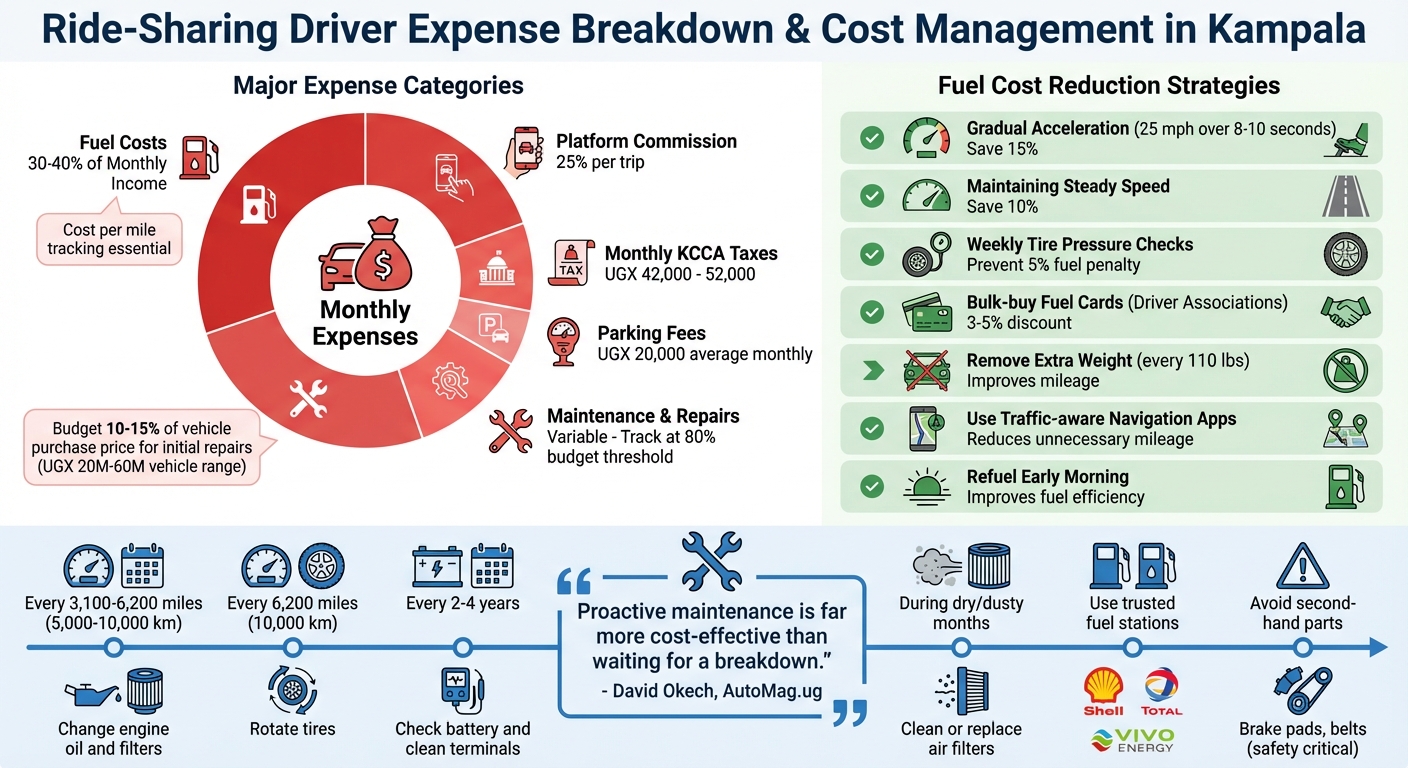
Ride-sharing Driver Expenses Breakdown and Cost Management in Kampala
Boosting profits starts with keeping a close eye on expenses. Fuel alone can account for 30% to 40% of your monthly income. On top of that, platform commissions, maintenance costs, and local taxes all chip away at your earnings. The trick is to track every dollar and make smarter choices to protect your bottom line. Here’s how you can cut fuel costs, budget for repairs, and manage platform fees to keep more money in your pocket.
Tracking and Reducing Fuel Costs
Think of fuel costs in terms of cost per mile – it’s a simple way to identify wasteful habits. Small changes can lead to big savings. For example, gradual acceleration (around 25 mph over 8–10 seconds) can cut fuel use by about 15%, and maintaining a steady speed can save an additional 10%. Weekly tire pressure checks can prevent up to a 5% fuel penalty.
"When you view petrol as your most considerable controllable expense, trimming waste becomes as essential as chasing five-star ratings." – Ian, Fido
Using traffic-aware navigation apps is another smart move. They’ll help you avoid traffic jams and reduce unnecessary mileage. Refueling early in the morning can improve fuel efficiency, and joining a driver association with bulk-buy cards can get you fuel discounts of 3% to 5%. Tools like Expensify can also help you monitor your cost per mile and set budget alerts. These small adjustments add up over time, directly boosting your earnings.
Cutting fuel costs is just the start – budgeting for maintenance is equally important.
Budgeting for Maintenance and Repairs
Before spending your earnings, set aside funds for vehicle maintenance. Regular upkeep is key: change engine oil and filters every 3,100–6,200 miles and rotate your tires every 6,200 miles to avoid costly wear. If maintenance expenses hit 80% of your budget, it might be time to rethink your routes or driving hours to protect your profits.
Investing in high-quality parts for vital components like brakes and timing belts can save you from expensive repeat repairs. Even small changes, like clearing out unnecessary items from your trunk, can make a difference – every extra 110 pounds reduces your mileage. By sticking to a proactive maintenance schedule, you’ll avoid breakdowns and keep your vehicle running smoothly for years.
Understanding Ride-sharing Platform Fees
Ride-sharing platforms typically take a 25% commission from each trip, and you’ll also need to account for local taxes and parking fees. For example, monthly taxes from the Kampala Capital City Authority range from UGX 42,000 to UGX 52,000, and parking fees average UGX 20,000.
Maximizing trip volume is key to offsetting these fees. Use in-app surge pricing maps to position yourself in high-demand areas during peak hours. And don’t forget – you keep 100% of rider tips, so excellent service can boost your income. Tracking your profits after deducting these fees and expenses will help ensure that ride-sharing remains a reliable source of income.
Using Local Market Knowledge to Your Advantage
Kampala’s ride-sharing market rewards those who truly understand the city’s daily ebb and flow. Knowing where and when demand spikes can give you a real edge over competitors. By combining local insights with your existing tools and cost-saving strategies, you can maximize your earnings and stay ahead in this dynamic market.
Building Relationships with Regular Customers
Repeat customers can become a steady source of income. The formula is straightforward: deliver excellent service, and passengers will want to ride with you again. Sharing your contact information through the app makes it easy for them to book you directly.
Consider focusing on specific rider groups that value reliability. For instance, female drivers can use features like "Women Preferences" to attract regular riders who prioritize safety and comfort. You can also team up with local hotels, travel agencies, or event organizers to secure high-value clients, such as tourists or business travelers who need dependable transportation. Even learning a few basic Luganda phrases can go a long way in building trust with local passengers.
Small professional touches make a big difference. Keep your car clean, show up on time, and always be courteous. In a city where safety is a concern – Uganda Police reported over 7,300 mobile phone thefts in 2024, many involving riders – being known as a trustworthy and professional driver can set you apart. This approach works hand-in-hand with your efficient driving and budgeting practices to boost your reputation and earnings.
Staying Informed on Market Trends and Updates
To keep growing your income, it’s not just about knowing the best routes – staying up-to-date with market trends is equally important. Kampala’s ride-sharing industry is constantly evolving, and being informed helps you stay competitive. For example, during a 2022 government registration drive, only 30,000 of an estimated 150,000 riders complied with the new requirements. To encourage formal registration, the cost of obtaining a rider’s license was reduced from UGX 400,000 to UGX 150,000.
Keep an eye on both regulatory changes and updates from your ride-sharing platform. Features like mobile money integrations with MTN Mobile Money and Airtel Money can streamline payments. Watch out for in-app promotions like "Quest", which reward drivers for completing a set number of trips within a specific timeframe. Additionally, as Uganda approaches the 2026 general elections, expect shifts in the transport sector as political activities ramp up. These changes could bring both new opportunities and challenges for drivers.
Conclusion: Turning Ride-sharing into a Profitable Career
By applying proven methods and tailoring them to your local market, you can turn ride-sharing into a thriving business. Success in Kampala’s ride-sharing scene boils down to smart planning and disciplined execution. Top-earning drivers consistently pair good timing with careful cost management, using heat maps to stay in high-demand areas while keeping expenses under control.
Your vehicle is your most important asset, and keeping it in excellent condition is non-negotiable. Regular maintenance prevents breakdowns that could take you off the road for days. As mentioned earlier, tracking your expenses and calculating your cost per kilometer – using tools like Google Sheets – can give you the financial clarity needed to stay profitable. This kind of tracking lets you identify issues early, whether it’s rising maintenance costs or unprofitable routes that waste fuel.
Customer service is your secret weapon. Ride-sharing platforms allow you to retain 100% of your tips, offering an opportunity to earn more while building a loyal customer base. In a market where traditional taxis often lack consistency, your professionalism can make all the difference. Clean cars, punctual arrivals, and courteous service can help you stand out and attract repeat riders.
Staying up to date on platform changes and local regulations is another key to success. Keep an eye on app features like Quest promotions, which reward you for completing trip milestones, and Boost offers that highlight busy zones. As Nate Andersen, General Manager at Uber, explained:
"From making between 2 or 3 trips a day, they can do 10 to 15 trips which is more money in their pocket".
The difference between those trip numbers lies in consistently applying the strategies outlined here. Build these habits gradually: check your tire pressure weekly, monitor fuel costs, and place yourself in high-demand areas during peak hours. By focusing on these steps, you can steadily grow your ride-sharing business into a profitable venture.
FAQs
How much can I realistically net per day after expenses in Kampala?
As a ride-sharing driver in Kampala, you can expect to earn $15 to $20 or more per day after accounting for expenses. Your actual earnings will vary based on factors like demand, the number of hours you work, and your operating costs. To boost your income, focus on picking high-demand routes, working during peak hours, and keeping your expenses in check.
Which car gives the best profit for ride-sharing in Kampala?
The Toyota Passo stands out as a popular pick for ride-sharing in Kampala. Its affordable price, impressive fuel efficiency (ranging between 17–28 km/L), and low maintenance expenses make it a practical and reliable vehicle. These qualities help drivers keep costs down while boosting their earnings.
What simple system should I use to track fuel, fees, and maintenance?
To stay on top of fuel costs, fees, and maintenance, it’s essential to keep clear and organized records for each category. Whether you prefer a simple spreadsheet or an old-fashioned notebook, make sure to log key details like the date, description, amount spent, and remaining balance.
For instance, track fuel purchases, platform fees, and maintenance tasks such as oil changes. Updating these records regularly not only helps you keep an eye on your expenses but also makes it easier to manage your earnings and ensure your vehicle stays in good shape.
Related Blog Posts
- Top 5 Cars Ideal for Ride-Hailing (Uber/Bolt) in Uganda
- How to Become a Uber Driver in Kampala: Tips and Tricks
- How to Become a Bolt Driver in Kampala: Tips and Tricks