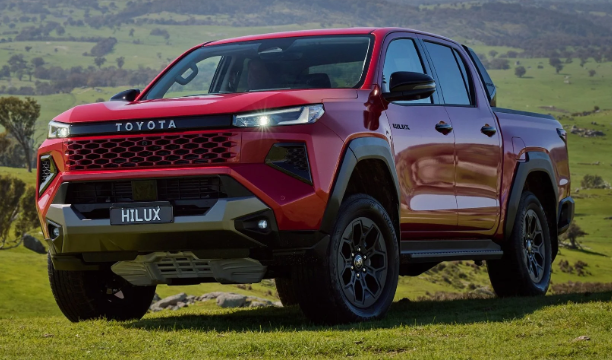
If you have spent any time on Uganda’s roads, you have seen it. On Kampala’s busy streets, on the red-dirt tracks of Karamoja, hauling goods up the slopes of Mount Elgon, or parked outside government offices across the country — the Toyota Hilux is everywhere. It has earned its place not just through clever marketing, but through decades of performance under genuinely tough conditions.
But Uganda’s pickup market is no longer a one-horse race. Rivals like the Isuzu D-Max, Ford Ranger, Mitsubishi L200, and Nissan Navara are fighting hard for a share of the market, offering more technology, more comfort, and in some cases, lower prices. So the question is worth asking: Is the Toyota Hilux still Uganda’s top pickup in 2025, or has the competition finally caught up?
This review takes a deep, honest look at the Hilux from a Ugandan perspective — covering performance, off-road ability, running costs, comfort, and value for money. For more in-depth car reviews and Uganda driving guides, visit AutoMag.ug.
1. A Brief History: How the Hilux Earned Its Reputation
The Toyota Hilux has been in production since 1968, making it one of the longest-running nameplate in the automotive world. Over 57 years and ten generations, it has built a reputation that few vehicles can match. Stories of Hiluxes surviving wars, floods, and extreme overloading have circulated for decades — and while some are embellished, the core truth holds: this truck is almost impossibly hard to kill.
In Uganda, the Hilux has been a cornerstone of both commercial and personal transport since the 1980s. NGOs, government agencies, construction firms, and farmers have all relied on it as their vehicle of choice. That legacy of trust is not something you can buy with a marketing budget — it has been earned, kilometre by difficult kilometre.
The current generation — the eighth — was introduced globally around 2015 and has received several updates since. It brought meaningful improvements in safety, engine refinement, and interior quality while keeping the rugged DNA that made it famous. An all-new tenth generation was unveiled in 2025, though availability in the Ugandan market is expected to follow global rollouts gradually.
2. Toyota Hilux Key Specifications at a Glance
Here is a quick reference to the Hilux’s core technical specifications for the current eighth-generation double cab models most commonly found in Uganda:
| Specification | Details |
| Engine Options | 2.4-litre turbo-diesel (GD-6) / 2.8-litre turbo-diesel (1GD-FTV) |
| Power Output | 2.4L: 110kW / 400Nm | 2.8L: up to 150kW / 500Nm |
| Transmission | 6-speed manual or 6-speed automatic |
| Drivetrain | 4×2 or 4×4 with Hi/Low range transfer case |
| Payload Capacity | Up to 1,000 kg (varies by trim) |
| Towing Capacity | Up to 3,500 kg (braked) |
| Ground Clearance | 279 mm |
| Fuel Tank | 80 litres |
| Fuel Consumption | From 7.9L/100km (combined, claimed) |
| Wheelbase | 3,085 mm |
| Body Styles | Single Cab, Extra Cab, Double Cab |
| Uganda Price Range | New: UGX 120M – 185M | Used (2015–2020): UGX 50M – 110M |
Note: Prices for new Hilux units in Uganda vary depending on the dealer, trim level, and prevailing import duties. Always confirm current pricing directly with authorised Toyota Uganda dealers.
3. Exterior Design: Bold, Purposeful, and Built for Uganda’s Roads
The Hilux’s exterior has always prioritised function over fashion. The eighth-generation model brought a more aggressive front-end design — wider grille, sharper headlights, and a stronger stance — without losing the utility that defines the pickup segment. The recently unveiled tenth-generation (2025) takes this further with a bolder, upright face featuring Toyota lettering across the grille and a redesigned tailgate with built-in steps for easier bed access.
For Ugandan buyers, what matters most about the Hilux’s exterior is what you cannot immediately see: the ground clearance of 279mm, the raised suspension geometry on the 4×4 variants, the reinforced underbody protection, and the robust approach and departure angles. These design choices are directly relevant to anyone navigating the roads between Kampala and Gulu, or traversing the challenging terrain around Kisoro.
The double cab configuration remains the most popular in Uganda, offering a practical five-seat cabin combined with a loadbed that handles tools, equipment, and cargo with ease. The loadbed dimensions allow standard pallet-sized loads to be carried, which is why the Hilux is the workhorse of choice for small business owners and contractors across the country.
4. Engine and Performance: Built for Torque, Not Speed
The 2.4-Litre GD-6 Turbo-Diesel
The entry-level 2.4-litre four-cylinder turbo-diesel produces 110kW and 400Nm of torque. For everyday Ugandan driving — commuting in Kampala, regional travel, farm work — this engine is more than adequate. It delivers its torque in a broad, usable band, meaning you rarely need to rev hard to get a loaded truck moving. Fuel consumption in real-world conditions on Uganda’s roads runs somewhere between 9 and 13 litres per 100km depending on load and terrain — higher than the official claims, but consistent with what owners across East Africa report.
The 2.8-Litre 1GD-FTV Turbo-Diesel
The more powerful 2.8-litre engine is the one to choose if you regularly tow heavy loads or drive demanding off-road routes. It delivers up to 150kW and 500Nm, which makes towing a loaded trailer on the highway to Mbarara feel effortless. Paired with the six-speed automatic transmission, this engine offers smooth, refined performance that competes well with more expensive rivals. Higher-spec models in the 2024 facelift received the 48-volt mild-hybrid system, improving fuel efficiency and start-stop smoothness.
Transmission and 4×4 System
The Hilux’s 4×4 system remains one of its strongest selling points in Uganda. The part-time four-wheel drive with a proper Hi and Low range transfer case is exactly what you need when conditions deteriorate. Unlike some rivals that offer only full-time AWD or electronic 4WD, the Hilux gives the driver direct mechanical control — something Ugandan drivers venturing into wet, muddy, or rocky terrain greatly appreciate. The automatic locking rear differential on higher trims adds another layer of traction confidence.
5. Off-Road Performance: Where the Hilux Earns Its Stripes
This is where the Hilux’s reputation is most loudly justified. With a ground clearance of 279mm, an approach angle of around 29 degrees, and a departure angle of approximately 26 degrees, the truck handles the kinds of obstacles that Uganda’s rural roads routinely present — deep ruts, rocky creek crossings, loose murram, and steep inclines.
The leaf-spring rear suspension, while not the most comfortable setup on sealed roads, provides the load-carrying robustness that is essential for a working pickup. It also makes the vehicle predictable under load in off-road situations, which matters when you are carrying 800kg of cargo on a slippery hillside track in western Uganda.
Experienced off-road drivers in Uganda consistently rate the Hilux as one of the most confidence-inspiring pickups in genuine bush conditions. It is not the most capable off-roader in the world on technical rock trails — the Land Cruiser holds that crown — but for East African conditions, it handles the vast majority of challenging terrain that Ugandan drivers encounter.
| Practical tip: If you regularly drive off-road in Uganda, invest in all-terrain tyres for your Hilux. The standard road-biased tyres fitted from the factory handle light off-road use, but a quality AT tyre like the BF Goodrich All-Terrain T/A or the Toyo Open Country AT transforms the truck’s capability on loose gravel and muddy tracks. |
6. Interior and Comfort: Practical, Improving, but Not Luxurious
The Hilux has historically been criticised for an interior that prioritised utility over refinement. Recent generations have made real strides here. The current double cab offers a comfortable front bench or bucket seats depending on the trim, a reasonably sized infotainment touchscreen, Bluetooth connectivity, and on higher trims, Apple CarPlay and Android Auto.
The dashboard layout is logical and clear. Physical buttons for the 4WD system, air conditioning, and audio controls make operation intuitive even with dirty or gloved hands — a detail that matters enormously for drivers who use the truck as a work vehicle. The centre console storage is generous, and the door pockets accommodate large bottles comfortably.
Rear seat space in the double cab is functional rather than generous. Two adults fit comfortably; three is a stretch. For a vehicle primarily used as a workhorse, this is acceptable. The boot of the cabin has a useful storage area that is lockable on higher trims, keeping valuables secure while using the loadbed.
Noise, vibration, and harshness (NVH) levels have improved but remain a weak point compared to the Ford Ranger’s more car-like cabin experience. On rough roads, the Hilux’s body-on-frame construction transmits more road noise and vibration than its more car-like competitors. That said, this is part of the engineering trade-off that gives it the structural strength Ugandan conditions demand.
7. Safety Features
Safety equipment has improved significantly across recent Hilux generations. Depending on the trim level and market specification, current models include:
- Anti-lock braking system (ABS) with electronic brake distribution
- Stability control (VSC) and traction control (TRC)
- Hill-start assist and downhill assist control
- Reversing camera (standard on higher trims)
- Multiple airbags — driver, passenger, and side curtain on upper trims
- Toyota Safety Sense on newer variants: pre-collision system, lane departure alert, automatic high beam
For Uganda-spec models, buyers should verify which safety features are included as standard, since specifications often differ between markets. Always ask your dealer for the full safety equipment list before purchasing.
8. How Does the Hilux Stack Up Against Its Rivals?
The Hilux no longer operates in a vacuum. Here is how it compares against its most significant rivals in Uganda’s pickup market:
| Toyota Hilux | Isuzu D-Max | Ford Ranger | Mitsubishi L200 | |
| Reliability | ★★★★★ | ★★★★☆ | ★★★★☆ | ★★★★☆ |
| Off-Road | ★★★★☆ | ★★★★☆ | ★★★★☆ | ★★★★☆ |
| Comfort | ★★★☆☆ | ★★★☆☆ | ★★★★☆ | ★★★☆☆ |
| Parts Avail. | ★★★★★ | ★★★★☆ | ★★★☆☆ | ★★★☆☆ |
| Fuel Economy | ★★★☆☆ | ★★★★☆ | ★★★☆☆ | ★★★☆☆ |
| Value (Used) | ★★★★☆ | ★★★★☆ | ★★★☆☆ | ★★★☆☆ |
| Resale Value | ★★★★★ | ★★★★☆ | ★★★☆☆ | ★★★☆☆ |
Isuzu D-Max — The Closest Challenger
The Isuzu D-Max is arguably the Hilux’s most credible rival in Uganda. It is well regarded for fuel efficiency, a comfortable ride quality, and a strong payload rating of up to 1,235kg. Isuzu’s dealer and service network in Uganda has grown considerably, making maintenance less of an issue than it once was. The D-Max is frequently available on platforms like auto24.ug alongside the Hilux, and a quick comparison shows that used D-Max pricing is often slightly lower for equivalent year and mileage — making it an attractive alternative for budget-conscious buyers.
Ford Ranger — Most Comfortable, Fewer Service Points
The Ford Ranger offers the most refined cabin experience of any pickup in this class and is significantly more car-like to drive on tarmac. However, in Uganda, Ford’s service network remains limited compared to Toyota’s. For drivers primarily in Kampala or major towns, this is manageable. For those in remote areas, the risk of finding a qualified Ford technician or genuine spare parts is a real concern.
Mitsubishi L200 — Capable but Niche
The Mitsubishi L200 (also known as the Triton) is a capable pickup that handles off-road conditions well and is priced competitively on the used market. However, its spare parts availability in Uganda is more limited than Toyota or Isuzu, and resale values trail the Hilux noticeably. It suits buyers who do not stray far from Kampala or other service centres.
9. Toyota Hilux: Honest Pros and Cons for Ugandan Buyers
| Pros | Cons |
| Unmatched reliability and durability | Stiffer ride quality on paved roads |
| Best resale value in Uganda’s pickup market | Interior refinement lags behind the Ford Ranger |
| Widest spare parts network nationwide | More expensive new than most rivals |
| Excellent 4×4 off-road capability | Rear legroom tight in double cab |
| Strong towing and payload capacity | Fuel consumption higher than claimed in real use |
| Toyota’s trusted dealer and service network | Older used models may need suspension refresh |
| Proven in Uganda’s specific conditions | Tech features trail newest rivals on older variants |
10. Running Costs: What Does Owning a Hilux Actually Cost in Uganda?
Fuel
A typical Hilux owner in Uganda doing mixed city and highway driving can expect to consume between 10 and 13 litres of diesel per 100km with a loaded truck. At current Ugandan diesel prices of approximately UGX 5,000–5,500 per litre, a full tank (80 litres) costs around UGX 400,000–440,000. Regular intercity trips will average roughly UGX 40,000–60,000 in fuel per 100km under realistic conditions.
Servicing
Routine service intervals for the Hilux are typically every 10,000km or 6 months, whichever comes first. A standard oil-and-filter service at a reputable Kampala workshop runs between UGX 150,000 and UGX 350,000 depending on the specific service type and oil grade used. Genuine Toyota parts are available at authorised dealers across Uganda, and a robust aftermarket supply ensures competitive pricing for common wear items.
Tyres
A set of four quality all-terrain tyres for the Hilux (265/70 R16 or 265/65 R17 depending on the variant) costs between UGX 600,000 and UGX 1,400,000 per tyre for reputable brands. Cheaper options are available but should be approached with caution, especially for off-road use. Budget UGX 2.5M–5M for a quality tyre change.
Major Repairs
The Hilux’s mechanical simplicity is a major advantage in Uganda. Timing belt replacement (required on the 2.4L engine), clutch replacement, and suspension refresh are all services that skilled Ugandan mechanics can handle without specialist equipment. The wide availability of genuine and quality aftermarket parts keeps costs reasonable relative to less common brands.
11. Practical Car Care Tips for Hilux Owners in Uganda
| Whether you drive a brand-new Hilux or a well-used 2012 model, these maintenance habits will significantly extend its life and reliability on Uganda’s roads. |
1. Change Your Oil on Schedule — Without Exception
Uganda’s stop-start city traffic and high-load off-road use place considerable stress on engine oil. Do not stretch oil change intervals beyond 10,000km, and use the correct viscosity grade for Uganda’s climate (typically 5W-30 or 10W-40 for the GD-series diesels). Dirty oil accelerates wear in the turbocharger — one of the most expensive components to replace.
2. Inspect and Service the Air Filter Regularly
Uganda’s murram roads kick up enormous quantities of dust. A clogged air filter reduces engine performance and fuel economy, and in extreme cases can allow abrasive particles to reach the engine internals. Check your air filter every 5,000km on dusty routes and replace it every 20,000km or sooner if heavily soiled.
3. Check the Diff and Gearbox Oils Annually
The front and rear differentials, as well as the transfer case, require their own oil changes, typically every 40,000–60,000km or annually. This is frequently overlooked but is critical for 4×4 systems that see regular use. Neglected diff oils thicken and lose their protective properties, leading to expensive differential damage.
4. Inspect the Leaf Springs and Shocks Regularly
If your Hilux regularly carries heavy loads or traverses rough terrain, the rear leaf springs and shock absorbers take a serious beating. Worn shocks not only make the ride uncomfortable, they reduce vehicle stability and tyre contact with the road. Have them checked every 40,000km or at the first sign of excessive body roll or bouncing.
5. Flush the Cooling System Every Two Years
Uganda’s equatorial climate keeps temperatures high, and the Hilux’s diesel engine generates significant heat under load. A coolant flush every two years prevents corrosion buildup inside the cooling system and keeps the thermostat and water pump functioning correctly. This is a low-cost service that prevents catastrophic overheating.
6. Keep the Loadbed Protected
If you regularly carry cargo, invest in a loadbed liner — either a rubber mat or a spray-on liner. The steel loadbed rusts faster than most owners expect in Uganda’s humid conditions, especially if wet soil or agricultural materials are regularly carried. A liner extends the structural life of the loadbed significantly and is far cheaper than a loadbed replacement.
12. Where to Find a Toyota Hilux in Uganda
Whether you are in the market for a brand-new Hilux or a solid used example, Uganda has good options. For certified second-hand pickups including Toyota Hilux, Isuzu D-Max, Ford Ranger, and other popular models, auto24.ug is one of the most reliable platforms to start your search. The site features quality-checked used vehicles with transparent pricing, making it easier to compare options without visiting multiple dealers. Current listings on auto24.ug regularly include Hilux variants from 2014 onwards, alongside alternatives like the Isuzu D-Max, Nissan Navara, and Mitsubishi L200.
For a broader marketplace covering everything from light pickups to heavy commercial vehicles, carkibanda.com connects buyers and sellers across Uganda with a wide selection and useful editorial content to help inform your decision. The platform also features automotive news and tips relevant to Ugandan drivers.
For the latest news, in-depth reviews, and buying guides on pickups and other vehicles suited to Uganda’s roads, AutoMag.ug is your go-to resource. From detailed head-to-head comparisons to practical ownership guides, it is tailored specifically for Ugandan drivers and enthusiasts.
13. A Word on the Future: Pickups and Electric Vehicles in Uganda
The global pickup truck market is beginning its shift towards electrification. The newly unveiled 2025 Toyota Hilux generation includes a battery-electric variant planned for fleet users, and a hydrogen fuel-cell version is scheduled for 2028. For Uganda, these options remain some years away from mainstream availability, but the direction of travel is clear.
For forward-thinking Ugandan drivers and fleet operators who want to begin exploring electric mobility today, EV24.africa offers import options for electric cars and light commercial vehicles, expanding the choices available to environmentally conscious buyers in Uganda. As charging infrastructure develops and battery technology costs continue to fall, the case for electric light commercial vehicles in urban Uganda will only grow stronger.
For now, diesel remains the practical choice for Ugandan pickup buyers — but keeping an eye on the EV transition is wise for anyone planning long-term fleet investments.
14. The Verdict: Is the Toyota Hilux Still Uganda’s Top Pickup?
After examining everything — performance, off-road ability, comfort, running costs, spare parts availability, and resale value — the honest answer is yes. The Toyota Hilux remains Uganda’s top pickup in 2025, but with important caveats.
It holds its crown primarily because of its unrivalled reliability track record, the widest spare parts network in the country, and a resale value that no competitor can match. In a country where being stranded on a rural road is a genuine risk, the peace of mind that comes with owning Uganda’s most commonly serviced pickup truck is worth real money.
However, if you prioritise cabin comfort and on-road refinement over everything else, the Ford Ranger offers a more pleasant daily driving experience. If you want the best fuel efficiency and a lower purchase price, the Isuzu D-Max is a compelling alternative that deserves serious consideration.
But if you want the truck that will serve you reliably in Kampala on Monday, on a muddy track in Mbarara on Wednesday, and on a remote NGO road in Moroto on Friday — all without drama — the Hilux remains the safest, most proven choice in Uganda today.
| Our Rating: Toyota Hilux — 4.4 / 5 stars. Still Uganda’s benchmark pickup, with reliability and resale value that justify its price premium. |
Frequently Asked Questions (FAQs)
Q1: What is the price of a Toyota Hilux in Uganda?
A brand-new Toyota Hilux in Uganda is priced between approximately UGX 120 million and UGX 185 million depending on the trim level and specifications. Used models from 2015 to 2020 typically range from UGX 50 million to UGX 110 million depending on condition, mileage, and variant. You can compare current used Hilux listings on auto24.ug for an accurate market snapshot.
Q2: Is the Toyota Hilux good for Uganda’s roads?
Yes, the Hilux is exceptionally well-suited to Uganda’s road conditions. Its 279mm ground clearance, part-time 4×4 system with Hi/Lo range, reinforced chassis, and proven mechanical reliability make it one of the most capable and trusted vehicles on both paved and unpaved Ugandan roads.
Q3: Which is better in Uganda — the Toyota Hilux or the Isuzu D-Max?
Both are excellent pickups. The Hilux wins on reliability track record, resale value, and spare parts availability across the country. The Isuzu D-Max offers slightly better fuel efficiency, a higher payload rating, and is often priced lower on the used market. For buyers in remote areas, the Hilux’s wider service network gives it a practical edge. For urban or peri-urban buyers, the D-Max is a worthy and more affordable alternative.
Q4: How often should I service my Toyota Hilux in Uganda?
Toyota recommends servicing the Hilux every 10,000km or every 6 months, whichever comes first. Given Uganda’s dusty roads and high-load driving conditions, many experienced mechanics recommend erring on the side of more frequent oil changes — every 7,500–8,000km — to keep the turbocharger and engine internals in the best possible condition.
Q5: Does the Toyota Hilux hold its resale value in Uganda?
Yes, the Hilux consistently holds resale value better than any other pickup in Uganda’s market. A well-maintained 2016 Hilux double cab 4×4 can still command between UGX 65 million and UGX 90 million depending on mileage and condition — strong figures that reflect sustained local demand. This makes the Hilux one of the best long-term investments in Uganda’s vehicle market.
Q6: What are the most common problems with used Toyota Hilux trucks in Uganda?
On high-mileage used examples, the most common issues include worn rear leaf spring bushings (causing a clunking ride), deteriorated shock absorbers, timing belt service delays on the 2.4L engine, and occasionally cracked dashboards on early-generation models. These are all manageable and relatively affordable to fix. Always have a used Hilux thoroughly inspected by a qualified mechanic before purchase, paying particular attention to the suspension, clutch wear, and turbocharger condition.
Q7: Where can I buy a used Toyota Hilux in Uganda?
The best starting points for buying a used Hilux in Uganda are certified online platforms like auto24.ug and carkibanda.com. Both platforms list verified used vehicles with pricing details. You can also visit established car yards along Kampala’s Entebbe Road and Ntinda car markets, though always ensure documentation and vehicle history checks are completed before any purchase.
Q8: Is the Toyota Hilux a good car for long-distance travel in Uganda?
Absolutely. The Hilux’s 80-litre fuel tank provides a theoretical range of over 800km on a single fill — critical for long drives between Kampala and distant regions like Arua, Moroto, or Kisoro where fuel stations may be sparse. Its reliability and the widespread availability of mechanics who can work on Hilux trucks make it the safest long-distance choice among Ugandan pickups.
Final Thoughts
The Toyota Hilux’s dominance in Uganda’s pickup market is not accidental, nor is it purely sentimental. It is the product of decades of proven performance in conditions that regularly destroy lesser vehicles. For buyers who need a truck that will work hard, hold its value, and keep them moving through Uganda’s diverse and challenging landscape, the Hilux remains the standard against which all others are measured.
That said, Uganda’s pickup market has never been more competitive, and informed buyers owe it to themselves to compare properly. Browse active listings for Hilux and its rivals on auto24.ug, read more vehicle comparisons and ownership guides at AutoMag.ug, and explore the full range of automotive advice for Ugandan drivers at carkibanda.com.
The right pickup is the one that fits your work, your routes, and your budget. Do your research, inspect carefully, and drive confidently.