Becoming a Bolt driver in Kampala is straightforward if you meet the requirements and follow the steps outlined. Here’s what you need to know:
- Driver Requirements: Be at least 18 years old, have a valid Ugandan Driving Permit, and a Certificate of Good Conduct. A smartphone with Android 9.0/iOS 14 or higher is also necessary.
- Vehicle Requirements: Own a vehicle that meets Bolt’s standards (e.g., cars from 2004+, motorcycles from 2010+). Ensure the vehicle is insured and in good mechanical condition.
- Registration Process: Apply online via the Bolt Driver app or website. Submit required documents (ID, Driving Permit, insurance, etc.), and attend mandatory in-person training at Bolt’s Kampala office.
- Onboarding: After approval, complete training to learn the app and policies. Boda-boda drivers also receive first aid training and safety gear.
- Earnings: Weekly payouts are standard. Maximize earnings by driving during peak hours, positioning yourself in high-demand zones, and maintaining a high passenger rating.
- Safety: Use Bolt’s safety features like trip-sharing and emergency buttons. Drive cautiously, especially in traffic-heavy areas.
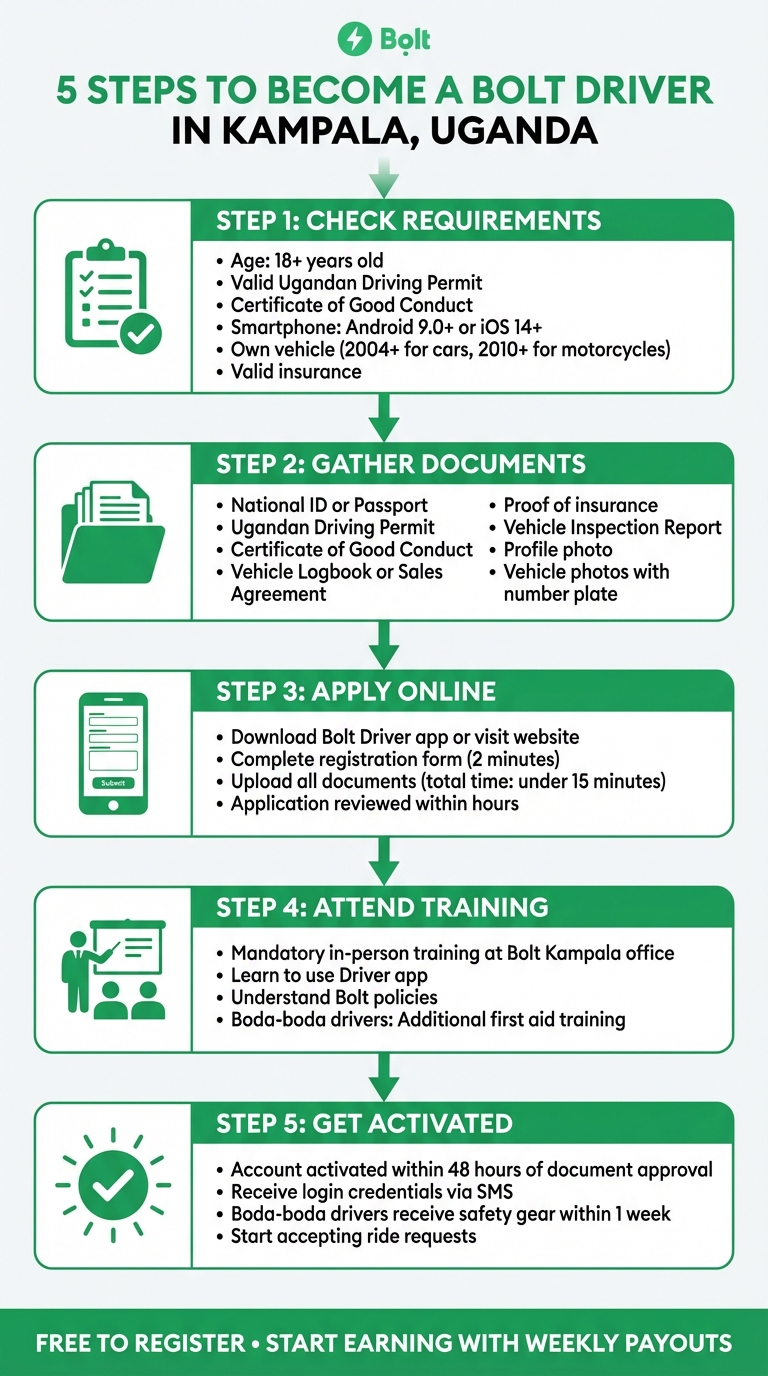
5 Steps to Become a Bolt Driver in Kampala
How to use the bolt driver’s app #bolt
sbb-itb-7bab64a
Requirements for Becoming a Bolt Driver
If you’re planning to join Bolt as a driver in Kampala, here’s what you need to know. Currently, Bolt Kampala only accepts drivers who own their vehicles.
Driver Qualifications
To qualify, you must be at least 18 years old and hold a valid Ugandan Driving Permit that matches your vehicle type. Additionally, Bolt requires a Certificate of Good Conduct, typically issued by Interpol Uganda, to ensure a clean criminal record. Your smartphone must also meet the minimum requirements: Android 9.0 or higher, or iOS 14 or higher, with GPS functionality.
Vehicle Specifications
Bolt has specific requirements for the vehicles used on its platform, depending on the type:
- Standard Bolt cars: Must be manufactured in 2004 or later, have four doors, and seat at least four passengers.
- XL vehicles: Must be from 2000 or later and provide seating for six passengers.
- Boda-boda motorcycles: Must be from 2010 or later and carry one passenger.
All vehicles must be in good mechanical condition and have valid third-party insurance. For boda-boda drivers, two helmets (one for the driver and one for the passenger) and a reflector jacket are mandatory. Bolt also provides additional safety gear for boda drivers within a week of activating their accounts.
Required Documentation
Before starting your application, make sure you have these documents ready:
- Personal documents:
- National ID or Passport
- Valid Ugandan Driving Permit
- Certificate of Good Conduct
- Vehicle documents:
- Vehicle Logbook or Sales Agreement
- Proof of vehicle insurance
- Vehicle Inspection Report or sticker
You’ll also need to upload a clear profile photo (without hats, sunglasses, or hoodies) and exterior photos of your vehicle showing the number plate. Ensure all images are clear, in full color, and of the original documents to avoid delays.
Opening a Bolt Driver Account is free, though you’ll need to cover the cost of obtaining official government documents. Once you’ve submitted your application, it’s typically reviewed within a few hours, and your account could be activated within 48 hours of document approval. With everything in order, you’re ready to register and complete the onboarding process.
How to Register and Complete Onboarding
Online Application
To get started, head over to the Bolt website or download the Bolt Driver app. The registration process is quick – you can fill out the initial form in about 2 minutes. During this step, you’ll provide basic details like your name, phone number, and email address. If you have all your documents ready, you can complete the entire application in under 15 minutes.
Make sure the images you upload meet the required standards. Once everything is submitted, you’ll move on to the verification and training phase to complete your onboarding.
Verification and Training
After submitting your application, Bolt will review your documents. This process usually takes just a few hours. They’ll check your Ugandan Driving Permit, vehicle insurance, Certificate of Good Conduct, and any other necessary paperwork. If something is missing or unclear, you’ll be notified via email or phone with instructions on what to fix.
Once your documents are approved, you’ll receive an invitation to attend a mandatory training session at Bolt’s Kampala office. During this session, you’ll learn how to use the Driver app, understand Bolt’s policies, and pick up tips for succeeding on the platform. If you’re signing up as a boda-boda driver, you’ll also need to complete an extra first aid training session.
Activating Your Account
After finishing the training, your account will be activated. Most drivers receive their login credentials via SMS within 48 hours of document approval. For boda-boda drivers, safety gear will be provided within a week of activation. Once you log in and set up your password, you’re all set to start accepting ride requests. With your account active, you’re ready to hit the roads of Kampala and begin earning as a Bolt driver.
Getting Around Kampala’s Roads
Traffic Patterns in Kampala
Kampala’s traffic can be overwhelming, especially for newcomers. The busiest times hit during 7:00 AM to 10:30 AM, when commuters head to work, and again from 5:00 PM onward as people make their way home. With nearly 2 million people entering the city daily for business, errands, and shopping, the roads see an average of 150 vehicles per kilometer, far exceeding the national average.
For a smoother driving experience, consider traveling between 10:30 AM and 3:30 PM, as these hours generally avoid peak congestion. If you want to skip the traffic altogether, aim to drive before 6:00 AM or after 10:00 PM. Fridays are particularly challenging due to residents heading to the countryside, while Mondays bring heavy traffic as people return to the city. Midweek – Tuesday through Thursday – offers relatively lighter traffic conditions.
When faced with traffic jams, it’s best to stick to main roads where traffic officers help manage the flow. Unmanaged shortcuts might seem tempting but can often lead to more delays. For faster alternatives, use the Entebbe Expressway to connect to Busega or the Northern Bypass for reaching Jinja Road without cutting through the city center. Knowing these patterns can help you navigate more efficiently and avoid high-demand zones during peak hours.
High-Demand Zones
Certain areas in Kampala consistently see a surge in ride requests, making them key zones for drivers. Downtown hotspots like Kisenyi, St. Balikuddembe (Owino) Market, and Namirembe Road are particularly busy. Suburban areas such as Kireka and Namanve, along with central taxi parks, experience significant activity throughout the day due to commuter traffic.
For safety, always keep your windows up and doors locked when driving through crowded downtown areas to avoid petty theft. The Bolt Driver app can be a game-changer here, offering real-time ride requests and heatmaps that highlight high-demand locations. Focus on these areas during peak times, especially Monday, Friday, and Saturday, to increase your trip volume.
Using Navigation Tools
To stay efficient on Kampala’s roads, take advantage of navigation tools integrated into the Bolt Driver app. These features guide you to pickup points and destinations automatically, helping you plan routes and avoid traffic. However, Kampala’s complex road network can sometimes lead to navigation errors. If the suggested route seems unclear, double-check directions with locals or your passenger.
A hands-free setup is essential for safe navigation, especially with the unpredictable movement of Boda Boda riders weaving through traffic. Keep in mind that the urban speed limit in Kampala is 50 km/h (31 mph), so plan your driving accordingly. Staying alert and combining navigation tools with local knowledge can make a big difference in navigating the city’s bustling streets.
How to Increase Earnings and Control Costs
This section provides practical tips to help you boost your income while keeping expenses in check.
Bolt’s Commission Structure
Bolt charges a commission on every trip, but the percentage varies depending on the market. For instance, drivers in Kenya pay an 18% commission, while in Nigeria and Ghana, it’s 20%. It’s worth noting that this commission does not apply to tips, bonuses, toll fees, or cancellation fees. By understanding how the commission system works, you can focus on strategies that increase your net earnings, not just your gross income. Once you’ve got that down, the next step is cutting unnecessary costs.
Reducing Operating Costs
Fuel is likely your largest controllable expense, often accounting for 30% to 40% of your monthly income. Simple adjustments to your driving habits can make a big difference. For example, accelerating gradually – taking 8–10 seconds to reach 25 mph – can cut fuel consumption by 15%, while maintaining a steady speed saves an additional 10%. Ian from Fido Money puts it best:
When you view petrol as your most considerable controllable expense, trimming waste becomes as essential as chasing five-star ratings.
Other tips? Check your tire pressure weekly – under-inflated tires can cost you a 5% fuel penalty. Refuel in the early morning when fuel is densest, giving you more for your money. Clear out unnecessary weight from your trunk; every extra 110 lbs reduces mileage by roughly 1%. Use engine braking when possible to conserve momentum and reduce wear on your brake pads. These small changes add up, leaving you with more money in your pocket.
Driving Strategies for Higher Earnings
Timing and location are everything when it comes to maximizing your earnings. Peak hours – like weekday rush hours, rainy days, and late-night or early-morning hours on weekends – are prime opportunities to earn more. Enabling the "Back-to-Back" rides feature in your app ensures you’ll receive new trip requests near your current drop-off point, minimizing idle time.
Positioning yourself in high-demand areas is another smart move. Use the app’s heat map to locate busy zones like airports, shopping malls, or event venues, especially during surge pricing periods. Keeping your acceptance rate above 60–80% is crucial, as falling below this threshold could lead to an automatic suspension. Check the "Campaigns" tab regularly for weekly bonuses, and remember that maintaining a passenger rating above 4.6 is key to staying on the platform. Small gestures, like greeting passengers warmly, can go a long way in securing good ratings and access to bonuses.
Customer Service and Driver Ratings
Your rating plays a crucial role in how many rides you receive and whether you can continue driving on the platform. Drivers with ratings below 4.5 stars face the risk of automatic account deactivation, and in some regions, the bar is even higher at 4.6 stars. The good news? Most rating issues can be addressed. A common cause of low ratings is impoliteness, so showing respect and courtesy to passengers can make a big difference.
Creating Good Customer Experiences
A positive first impression sets the tone for the entire ride. Greet passengers as they enter the vehicle, and confirm their name and destination before starting the trip. This small step prevents confusion, especially in busy areas, and demonstrates attentiveness. Wear clean, presentable clothing, and maintain a tidy appearance. To keep passengers comfortable, use air conditioning instead of driving with the windows down.
Take the extra step to assist passengers with luggage or mobility needs – don’t just sit in the driver’s seat. Allow passengers to adjust the radio or air conditioning to their liking, and respect their preference for conversation or silence. If they’re in the mood to chat, stick to neutral topics like the weather or travel, steering clear of sensitive subjects such as politics or religion. Before starting the trip, discuss route options and ask if they have a preferred path. If unexpected detours are necessary due to traffic or roadblocks, explain the situation clearly. These thoughtful gestures can enhance the overall experience and prevent misunderstandings.
Handling Difficult Situations
Challenges can arise, but handling them calmly and professionally is key. If a passenger isn’t at the pickup point, call them before canceling the ride – wait at least five minutes before taking action. When access is blocked by a gate or barrier, reach out immediately to agree on a nearby meeting spot. To avoid fare disputes, confirm the final destination at the start of the trip by asking, “Is this the final destination?”.
During disagreements, stay composed and avoid letting frustration take over – “road rage” won’t help your rating. If a passenger behaves inappropriately, don’t engage in conflict. Instead, report the incident through the "Help" section in the Driver app. Refrain from making negative comments about other drivers, and keep personal details about your life out of conversations. These strategies not only help resolve issues but also protect your reputation and rating.
Improving Your Rating
Consistent, quality service is the key to maintaining a strong rating, which translates into more ride requests and better earnings. A high rating builds trust with passengers, and platforms like Bolt reward top-rated drivers with increased visibility. To keep your rating high, make sure to arrive at the pickup point on time and within the estimated timeframe. Ensure your vehicle matches the details in the app, including the model and license plate, and keep your profile picture up to date. Use a phone holder for navigation and avoid distractions like checking social media or making personal calls while driving.
Maintaining a high acceptance rate is also important to ensure you continue receiving ride requests. A simple but effective tip? Confirm passengers’ names politely when they enter the vehicle – this small gesture can leave a lasting positive impression.
Safety Tips for Bolt Drivers in Kampala
Navigating Kampala’s busy streets requires more than just driving skills – it demands awareness, preparation, and smart decision-making. With traffic police data showing that over 2,600 pedestrians and cyclists lose their lives on Ugandan roads annually, safety isn’t something to take lightly. The good news? With the right tools and precautions, most risks can be minimized. By prioritizing these safety measures, you can confidently handle the challenges of Kampala’s dynamic roads.
Driving Safely in Kampala
Kampala’s roads are some of the busiest in Uganda, with traffic density soaring to an average of 150 vehicles per kilometer – ten times the national average. This congestion brings unique challenges, especially with the unpredictable behavior of commuter taxis and boda-boda riders. To stay safe, practice defensive driving by anticipating sudden lane changes and maintaining a safe distance. As Moses Mugerwa, Operations Manager at Bolt Uganda, explains:
Bolt strongly supports driver safety and believes in leveraging technology to develop ways of working that make transportation safer.
One such measure is Bolt’s 12-hour driving limit, which ensures drivers take a mandatory 6-hour break to prevent fatigue-related accidents. Experts also recommend taking a 45-minute break every 4.5 hours of driving. Avoid heavy meals that can make you drowsy, and keep your car in excellent condition by passing the annual NTSA inspection and routinely checking brakes, lights, and tires.
To protect yourself in traffic, keep windows up and doors locked, especially in slow-moving areas where thieves may attempt to snatch items. If you’re new to driving in Kampala, avoid high-risk spots like Kisenyi, St. Balikuddembe Market, and Namirembe Road, which are notorious for chaotic traffic and theft. Keep valuables out of sight and strictly follow traffic laws, even if others don’t – traffic violations can result in steep fines. While these measures protect you on the road, personal safety is just as important.
Personal Security
Driving at night requires extra caution. Stick to well-lit, populated areas and avoid dark, deserted streets where risks are higher. Bolt offers several built-in safety features to help drivers feel secure. One of the most useful is the "Driver Trip Sharing" feature, which lets you share your real-time location with trusted contacts via WhatsApp, SMS, or Telegram. Kenneth Micah, Bolt Eastern Africa Regional Manager, highlights its benefits:
The trip-sharing feature for drivers will improve the safety and well-being of drivers during a Bolt trip, and also act as a deterrent to people with potentially malicious intent.
Before starting a trip, check the "Rider Scores" to evaluate passenger behavior. Always verify the passenger’s identity using the pick-up code feature. If you ever feel uneasy during a ride, activate the audio recording option or use the SOS emergency button to access 24/7 security or medical assistance. Female drivers can opt into the women-only category, which connects them exclusively with female passengers for added peace of mind. To ensure access to these features, keep your phone charged and the Bolt Driver app updated. Beyond safety tools, being ready for emergencies is key.
Emergency Preparedness
Emergencies can happen anytime, so it’s essential to be prepared. Always carry a first aid kit, spare tire, basic tools, jumper cables, and drinking water. For boda-boda drivers, Bolt provides additional first aid training and safety gear, which should be used within the first week of activation. Keep your driver’s license, vehicle insurance, and up-to-date inspection report within reach to handle legal matters smoothly during accidents.
If your car breaks down, especially in congested areas, follow earlier advice to keep windows up and doors locked to deter theft. When dealing with traffic officials after an accident, stay calm and speak politely. If navigation apps fail, double-check directions by asking at least two people to avoid getting lost. To avoid financial stress from unexpected repairs, set aside part of your earnings for vehicle maintenance and insurance. And if you ever face an emergency, remember Kampala’s key emergency numbers: 999 or 112 from your mobile phone.
Final Tips for Success
Thriving as a Bolt driver in Kampala comes down to professionalism, preparation, and consistency. Treat every rider with respect, show up on time for pickups, and maintain a friendly, courteous demeanor throughout each trip. Building a solid reputation happens one ride at a time – passengers are far more likely to remember drivers who go the extra mile to make their journey pleasant and stress-free.
Make sure your vehicle is always in excellent condition. This means keeping up with mechanical maintenance and ensuring the interior and exterior are clean. A spotless car not only leaves a great impression but also boosts your ratings and helps passengers feel comfortable. On the practical side, regular servicing prevents breakdowns that could eat into your earnings. Keep in mind that Bolt takes a 20% commission from each trip, so staying operational is key to maintaining profitability.
Leverage the Bolt Driver app to your advantage. Focus on driving during peak hours, like morning and evening rush times, and position yourself in areas with high demand to increase the number of trip requests. Always confirm pickup details by calling riders, verify their names before starting the trip, and carry enough change for cash payments. These small but effective habits can enhance your driver profile and improve your ratings. Remember, maintaining a rating above 4.5 stars is critical to avoid deactivation.
Lastly, financial discipline is crucial for long-term success. Set aside a portion of your weekly earnings for essentials like fuel, insurance, and maintenance. With Bolt offering weekly payouts, careful budgeting ensures that your driving remains profitable and sustainable over time.
FAQs
How much does it cost to start driving with Bolt in Kampala?
Starting a driving career with Bolt in Kampala comes with a few initial expenses. These typically include vehicle inspection, licensing, registration, and safety gear. The exact costs can differ depending on the type of vehicle you have and your individual situation.
To get started, you’ll need to complete an online registration, upload the necessary documents, and attend a training session. While specific fees aren’t mentioned, it’s wise to set aside funds for these essentials to ensure you’re fully prepared and meet all requirements.
What should I do if my Bolt application gets rejected or delayed?
If your Bolt application gets rejected or delayed, start by ensuring that all the required documents were submitted properly. Rejected applications will include specific reasons in the app – review these carefully and address any problems. For delays or temporary blocks, you’ll need to wait for the review process to finish or follow the instructions provided in the app to resolve the issue. If you’re still stuck, reach out to Bolt support for help.
Can I drive part-time, and when are the best hours to work in Kampala?
Yes, you can drive part-time with Bolt in Kampala. One of the perks is that drivers have the freedom to create their own schedules. Whether you prefer working just a few hours here and there or picking up shifts more regularly, the choice is yours. If you’re looking to maximize your earnings, evenings and weekends tend to be the busiest times, as demand is usually higher. This setup is perfect for anyone wanting part-time work while still maintaining a reliable source of income.